How to Know If Your Boiler Is Leaking Gas
Urgent boiler troubleshooting: identify gas leaks, evacuate if needed, and arrange professional testing. Learn signs, steps, and prevention tips from Boiler Hub.


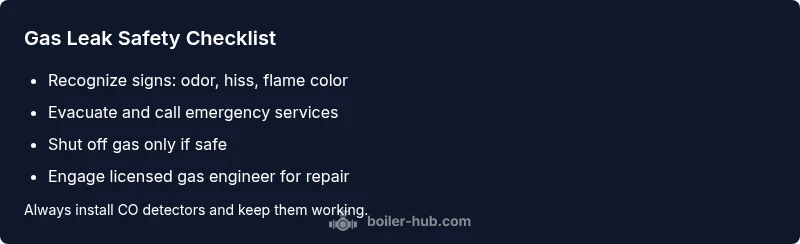
According to Boiler Hub, if you suspect your boiler is leaking gas, do not attempt fixes. Evacuate the area, avoid flames or electrical switches, and call your gas supplier or emergency services. A licensed technician should inspect for leaks, CO risk, and faulty seals. If safe, shut off gas at the meter and wait for professionals.
Why knowing if your boiler is leaking gas matters
If you're asking how to know if your boiler is leaking gas, the answer isn't abstract: this is a life-safety risk that demands immediate action. According to Boiler Hub, gas leaks around home boilers can lead to fire hazards, carbon monoxide exposure, and sudden system shutdowns that leave you without heat during cold weather. Early detection gives you time to evacuate, call for help, and prevent a dangerous buildup in living spaces. This is not about theory; it’s about practical steps you can take this minute. Recognizing the signs early, and knowing what to do next, can keep your family safe and reduce the risk of property damage. In this guide we unpack the most reliable indicators, the safety steps you must take now, and what professional testing involves so you can approach the problem with confidence and calm, not panic.
Brand mention: Boiler Hub
Signs a boiler might be leaking gas
Gas leaks are rarely subtle. Common indicators include a distinct rotten-egg smell near the boiler or gas lines, a hissing or whistling sound coming from connections, condensation or damp stains around the boiler, dead vegetation near outdoor appliances, and an unexplained increase in your gas bill. Some older boilers may show yellow or orange flames instead of the expected blue flame, which can indicate incomplete combustion and potential leakage. If you notice any of these signs, assume a leak and act quickly. Boiler Hub notes that early detection saves lives and reduces the chance of a dangerous buildup of gas in your home.
Immediate safety steps you should take
First, evacuate people and pets from the area and do not operate any electrical switches or flames in or near the boiler. If you can do so safely, open doors and windows to ventilate after leaving. Do not use the telephone or mobile device in the area if you can avoid it; call from a safe location. If you know where the gas shut-off valve is and it's safe to reach, turn it off. Do not re-enter until professionals declare it safe. After you leave, contact your gas supplier and emergency services. Install and test carbon monoxide detectors near bedrooms and living spaces, and replace batteries regularly.
Common causes of gas leaks in boilers
Most leaks start at fittings and connections rather than the engine itself. Loose or damaged connections at the gas valve, pressure regulator, or joints are a frequent cause, especially after maintenance or after a move. Corroded or cracked pipes, aging seals, and faulty burner assemblies can also develop tiny gaps that let gas escape. Incorrect installation or improper venting can compound the problem, as can damaged gas meters or external lines near outdoor units. While some issues are visible, others are hidden in hard-to-reach areas, which is why a professional inspection is essential as soon as you suspect a leak.
How professionals diagnose a gas leak
Trained technicians use a combination of methods to locate leaks and assess safety. Portable gas detectors and infrared cameras can reveal gas in the air, while a manometer test checks pressure consistency in the supply line. They will examine all fittings, valves, and joints for signs of wear or corrosion. A leak test with soapy water on exposed joints is sometimes used to visualize bubbles at leak points. In addition, they check for carbon monoxide presence and ensure the boiler operates within safe parameters. The goal is to pinpoint the exact source and confirm that it is safe to repair before re-energizing the system.
What to do if a leak is detected
If a leak is confirmed, prioritize safety above all else. Evacuate the building, call your gas supplier or emergency services, and keep doors open to ventilate on the way out. Do not switch off or on electrical devices, and avoid creating sparks. Do not attempt DIY repairs; only a licensed gas engineer should locate and repair leaks and replace faulty components. When professionals arrive, provide any observed smells, noises, or changes in flame color to speed up the diagnosis. After the repair, insist on a confirmation test and a CO detector check to ensure safety before you return.
Prevention tips to reduce leak risk
Regular maintenance is your best defense against gas leaks. Schedule an annual service with a licensed gas engineer, and ensure the technician conducts a full leak and CO safety check. Install carbon monoxide detectors on every level, especially near sleeping areas, and replace expired detectors promptly. Keep areas around boilers clear of clutter and moisture, which can hide corrosion or moisture-related damage. If your boiler is old or has had multiple repairs, discuss replacement options with a qualified technician to avoid future leaks and costly downtime.
What homeowners can safely check themselves
While most gas leak work requires a professional, there are safe checks you can perform to stay proactive. Regularly sniff around the boiler and nearby gas lines for the familiar rotten-egg odor, and listen for unusual hissing sounds. Visually inspect exposed pipes for any rust, dampness, or wet spots. Make sure the exterior gas meter and shut-off valves are accessible and not blocked. Do not touch or tighten any fittings or valves. If you notice anything suspicious, leave the area and call your gas supplier or emergency services right away.
When to replace your boiler
Boilers that repeatedly leak, show signs of severe corrosion, or require frequent repairs may be more costly to fix than to replace. If efficiency drops noticeably or there are ongoing CO risks despite proper maintenance, a replacement becomes a prudent decision. A newer boiler also benefits from updated safety features and better energy performance. Consult a licensed professional about options that match your home’s size, fuel type, and ventilation, to reduce risk of future leaks and protect occupant safety.
Steps
Estimated time: 1-3 hours
- 1
Assess safety and evacuate
Move to a safe outdoor area and ensure all occupants and pets are accounted for. Do not operate switches, lights, or electrical devices in the suspected area to avoid sparks.
Tip: Get to fresh air quickly and call from outside the building. - 2
Shut off gas if safe
If you can reach the gas shut-off valve at the meter or near the boiler safely, turn it to off. Do not take risks trying to reach it if you’re unsure.
Tip: Only attempt this if there is no risk of sparks or falling; otherwise wait for professionals. - 3
Call emergency services or gas supplier
Report the suspected leak with exact location and any odors or signs. Follow their instructions for safety and access.
Tip: Provide details like smells, hissing sounds, and whether anyone is feeling ill. - 4
Request immediate professional inspection
Ask for a licensed gas engineer to conduct a leak test, inspect connections, and verify safe operation after repairs.
Tip: Record the service report or request a written leak-test certificate. - 5
Post-repair verification
Ensure the technician performs a leak test and confirms CO detectors are functioning before reoccupying the space.
Tip: Keep detectors active and test them monthly.
Diagnosis: Gas smell or suspected gas leak from boiler area
Possible Causes
- highLoose or damaged gas connections at boiler valve or joints
- mediumCracked heat exchanger or worn burner seals allowing gas to escape
- lowDamaged gas supply line or regulator failure
Fixes
- easyShut off gas at the meter if safe and evacuate; call emergency services
- easyCall a licensed gas engineer to locate and repair leaks and replace faulty components
- easyInstall or test CO detectors and ensure ventilation after repair
Questions & Answers
What does a gas leak smell like near a boiler?
A rotten-egg odor near the boiler or gas lines is a common sign of a gas leak. If you detect this scent, treat it as an emergency and evacuate immediately. Do not ignore other signs like hissing or condensation.
A rotten-egg smell near the boiler can indicate a gas leak. Evacuate and call for help right away.
What should I do immediately if I smell gas?
Leave the area, avoid flames or electrical switches, and call your gas supplier or emergency services from a safe location. Do not re-enter until professionals declare it safe.
If you smell gas, leave now and call for help from a safe place. Do not re-enter the building.
Can I test for leaks myself?
DIY tests are not reliable for gas leaks. Only a licensed gas engineer should perform pressure tests and repairs. You can observe safety signs and prepare information for the technician.
No, leak testing should be done by a licensed professional. You can prepare details for them.
Will CO detectors detect gas leaks?
CO detectors detect carbon monoxide, not natural gas leaks. They are essential for safety, but a leak must be confirmed by a gas engineer with proper equipment.
CO detectors help with poison risk, but only a gas engineer can confirm a gas leak.
How long does it take a professional to fix a gas leak?
Repair time varies by source and scope. After locating the leak, technicians replace faulty components and re-test the system to ensure safety before re-energizing.
Time depends on the source, but professionals will test and recheck safety before finishing.
Will my boiler be shut off after a leak is detected?
Yes. If a leak is detected, the gas supply is typically shut off and the unit is taken offline until a certified technician confirms safe repair and operation.
Usually the gas is shut off and the boiler is decommissioned until a repair is verified.
Watch Video
Key Points
- Act fast if you suspect a gas leak.
- Only qualified professionals should repair leaks.
- Evacuate, ventilate, and call for help immediately.
- Maintain detectors and get regular boiler servicing.