Hot Water Boiler Leaks from Bottom: Urgent Troubleshooting Guide
This Boiler Hub guide delivers urgent, practical steps to diagnose and fix a hot water boiler leaking from the bottom. Includes safety precautions, a diagnostic flow, step-by-step fixes, and prevention tips for homeowners and facility managers.


Most bottom leaks come from a failing pressure relief valve or a loose drain valve. Quick fix steps: power off the boiler and shut the cold-water supply, let it cool, then inspect the valves for looseness or cracks. If the leak persists after tightening, or you smell gas, stop and call a licensed technician immediately.
Why a hot water boiler leaks from the bottom
According to Boiler Hub, a hot water boiler leaking from the bottom is a red flag that something in the pressure management, drainage, or tank integrity is failing. This issue should be treated as urgent, especially if you notice pooling water, hissing sounds, or a rushing flow near the base. The bottom area is where the shell, valves, and piping converge, so leaks here can originate from multiple sources. In many homes and facilities, a leak at the bottom means either a valve failure, corrosion at the tank, or a loose connection. Recognizing the signs early helps you limit water damage and prevent dangerous boiler failures. This guide from Boiler Hub is designed to help homeowners and facility managers diagnose and respond safely.
Immediate safety steps you must take
Safety is the priority when a boiler leaks. If you see water pooling or steam, shut off the boiler power at the switch or circuit, then close the cold-water supply valve to slow the inflow. Do not attempt to seal or patch the shell; this is a pressure system and can cause scalding or a burst if mishandled. Allow the system to cool before touching any fittings. If you notice a strong smell of gas, evacuate the area and contact emergency services. After securing safety, document the location and any observed valve or pipe symptoms to share with a technician.
Common causes of bottom leaks
Bottom leaks don’t always mean the tank is doomed. The most frequent culprits include a faulty pressure relief valve, a loose drain valve, corrosion or pinholes in the boiler shell, loose piping connections, or a failing expansion tank. Corrosion tends to develop where metal meets solder or threaded joints, especially around valve tails and drain outlets. A leaking drain valve can appear as a slow drip or a steady stream when the system is hot. A relief valve that has worn seals or a damaged seat may release water or steam to relieve overpressure. Secondary causes can include improper installation or a recently changed system pressure that exceeds the design. Understanding these common causes helps prioritize the diagnostic steps you take.
How to diagnose the source of a bottom leak
Start with the simplest checks before you rip into the boiler. Look for obvious signs near the bottom: is the drain valve damp, is the relief valve discharge pipe wet, or are there crusty mineral deposits indicating slow leaks? Use a flashlight to inspect valve connections for looseness and run your finger along the shell and joints to feel for moisture. If you see a steady stream while the system is cooling, this can help pinpoint whether the leak originates from a valve, joint, or the shell. Remember to check the expansion tank and any nearby piping, as leaks can appear to emanate from the bottom while the actual source is upstream. Always verify the system pressure with a manometer or gauge; abnormal pressure readings are a strong hint of valve or tank issues.
Step-by-step fixes for the most common causes
In many cases, a bottom leak is resolved with a targeted, non-invasive fix. Begin with the easiest-to-address items and progress to more involved repairs only if you are confident in your work and safety gear.
- Tighten or replace a loose drain valve. A simple turn with a wrench while the system is cool can seal a minor, slow leak. If the valve shows wear, replace it with a compatible replacement and reseal carefully.
- Replace or reseat the pressure relief valve. If the valve shows corrosion, staining, or leakage even when the system is not over-pressurized, plan to replace it and test the system after installation.
- Repair or replace corroded sections of shell or piping. If you observe significant rust, pitting, or obvious holes, do not attempt a patch; rather, schedule professional service to prevent a catastrophic failure.
- Address expansion-tank issues. An over- or under-pressurized expansion tank can force water into the relief path or drain line; check for a swollen or leaking tank and replace if needed.
- Inspect joints and fittings. Sometimes a simple re-tightening of threaded connections at elbows or tees fixes a slow leak. Replace worn gaskets and apply fresh thread sealant where appropriate, following manufacturer guidelines.
If none of these steps stop the leak, the system likely needs professional service. Do not run the boiler with a persistent bottom leak; continued operation can cause extensive water damage and safety hazards.
Safety, tools, and professional help
Working on a boiler involves high pressure, hot water, and electrical components. Use protective gloves and eye protection, and ensure the area around the boiler is dry. Gather basic tools: a wrench set, a torque wrench or adjustable pliers, Teflon tape or appropriate thread sealant, a container to catch drips, and a flashlight. If you are unsure about any step, or the leak is severe, contact a licensed heating professional immediately. Boilers are complex systems, and improper repairs can worsen damage or void warranties.
Prevention and maintenance to avoid future leaks
Regular maintenance is your best defense against bottom leaks. Schedule annual inspections, flush the boiler as recommended by the manufacturer, and replace worn components before they fail. Keep an eye on valve seals, gasket integrity, and the condition of the expansion tank. Maintain stable system pressure within the manufacturer’s specifications, and install a secondary drain pan and leak alarm if you have a history of leaks or moisture issues in the boiler room. A proactive maintenance plan reduces emergency calls and extends the life of your boiler.
Quick reference: checklists and flow
A concise reference you can keep handy:
- Check valves first: drain valve and relief valve for signs of leakage.
- Verify system pressure is within range.
- Inspect for corrosion, loose fittings, and pipe damage.
- If in doubt, shut down and call a pro.
- Keep a log of maintenance and observed leaks for future service.
Steps
Estimated time: 60-90 minutes
- 1
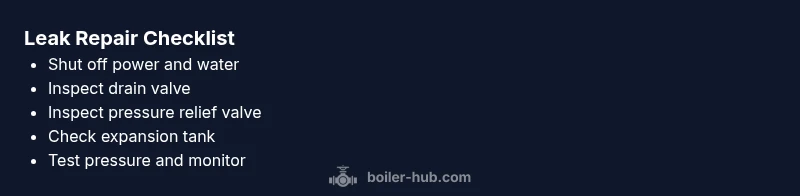
Power down and isolate water supply
Turn off the boiler at the switch or breaker and shut the cold-water supply. Allow the unit to cool before handling any components to avoid scalding. Keep a bucket handy to catch any residual water.
Tip: Always verify power is off at both the outlet and the boiler control before touching wires. - 2
Inspect the drain valve and connections
Check the drain valve for dampness, looseness, or a crusty residue that signals a slow leak. If it’s visibly leaking, close the valve and consider replacing it with a high-quality replacement kit.
Tip: If you can’t fully depressurize safely, do not force the valve. - 3
Check the pressure relief valve
Look for signs of leakage around the relief valve or its discharge pipe. If the valve is corroded, seized, or weeping, replace it and test the system according to the manufacturer’s instructions.
Tip: Do not bypass the relief valve; it protects against dangerous pressure buildup. - 4
Inspect expansion tank and piping
Examine the expansion tank for rust, moisture, or bulging. Inspect nearby pipes and fittings for corrosion or cracks. Tighten loose joints and replace damaged sections as needed.
Tip: A faulty expansion tank often mimics multiple other leak sources. - 5
Test system pressure and restore operation
With all parts secure, restore water and power, then monitor for new leaks. Check the pressure gauge at intervals and ensure it stays within the design range.
Tip: If you observe continuing leakage or pressure spikes, power down again and call a pro promptly.
Diagnosis: Hot water boiler leaks from bottom
Possible Causes
- highFaulty pressure relief valve
- highLoose or damaged drain valve
- lowCorrosion or pinhole in boiler shell
- mediumLeaking piping or joints
Fixes
- easyTighten or replace the drain valve when the boiler is cool and depressurized
- easyReplace the pressure relief valve if inspection shows wear or damage
- hardRepair corroded sections or replace the boiler shell if corrosion is extensive
- easyTighten and reseal pipe joints; replace gaskets as needed
Questions & Answers
What are the most common causes of a boiler leaking from the bottom?
The most frequent causes are a failing pressure relief valve, a loose or damaged drain valve, and corrosion or leaks in piping near the bottom. Leaks can also originate from faulty fittings or an overwhelmed expansion tank.
Common causes are valve wear, loose fittings, and corrosion; start by checking those components.
Is a bottom leak always dangerous?
Bottom leaks can pose water damage and scald hazards if hot water is involved. They warrant prompt inspection, especially if you see steam or smell gas. If in doubt, shut off power and water and call a pro.
Yes, bottom leaks can be dangerous; secure the area and get professional help if needed.
Can I fix a bottom leak myself?
Some minor issues, like tightening a loose drain valve, can be DIY if you follow safety steps. However, leaks from the shell or major components should be handled by a licensed technician to avoid dangerous failures.
DIY fixes are possible for simple valve leaks, but serious leaks require a pro.
When should I replace the boiler instead of repairing it?
If the shell shows extensive corrosion, if leaks recur after multiple repairs, or if the boiler is near the end of its expected life, replacement is often more cost-effective and safer.
Consider replacement if repairs keep failing or the boiler is aging.
Watch Video
Key Points
- Shut down power and water for safety before inspecting leaks
- Identify whether the drain valve or relief valve is the primary source
- Do not operate a boiler with a persistent bottom leak; seek professional help
- Regular maintenance reduces future leak risks