Can a Leaking Boiler Be Repaired? A Practical Troubleshooting Guide
Urgent, practical troubleshooting for boiler leaks. Learn when a leak can be repaired, safe steps, professional help, and prevention tips from Boiler Hub.


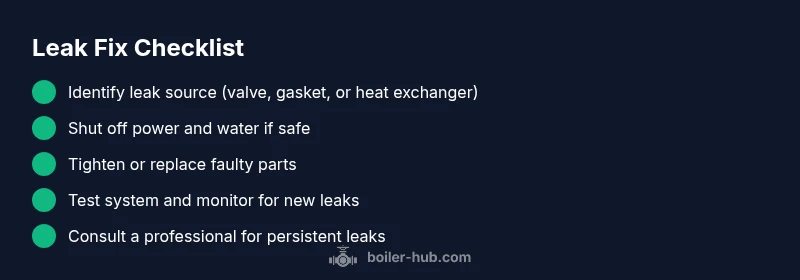
Yes, many leaking boilers can be repaired, especially when the leak comes from accessible fittings or gaskets. The quickest path is to identify the source, shut off power and water if safe, and consult a qualified technician for minor repairs. Major leaks or a damaged heat exchanger may require replacement. Early action reduces water damage and risk of mold.
Can a leaking boiler be repaired? Why it matters
This guide answers can a leaking boiler be repaired for common home leaks. Readers often ask this question, and the short answer is that many leaks are repairable if addressed early and correctly. According to Boiler Hub, leaks frequently stem from simple sources such as worn seals, loose fittings, or corroded gaskets. The decision to repair depends on the leak source, boiler type (gas or electric), and the unit’s age. Early intervention often leads to better outcomes and lower costs. The topic matters because a prompt, safe fix protects your home from water damage, mold growth, and energy waste.
Boiler Hub’s expertise informs practical steps you can take now, while recognizing when to call in a professional.
Safety first: shut off power, gas, and water
Leaking boilers pose multiple hazards, including electric shock, scalding, and carbon monoxide risk with gas systems. If you detect a leak, your first step is safety: switch off the boiler at the main power switch or circuit breaker, and close the gas supply valve if you can do so safely. If water is actively spraying, shut off the cold water supply to the boiler. Do not operate the unit again until a qualified technician confirms it is safe. Keep CO detectors active and ventilate the area if you suspect gas release.
Common sources of repairable leaks and quick fixes
Accessible leaks from drain valves, pressure relief valve, or gasket joints are the most common repairable scenarios. Tightening fittings with the correct tools, replacing worn gaskets, or installing a new valve can stop the leak without replacing the entire boiler. Always perform a soap-bubble leak test after repairs to verify seal integrity. If you’re unsure, call a professional to perform a safe pressure test and confirm there are no hidden issues.
When a leak points to a bigger problem
Not all leaks are the same. If the leak originates from the heat exchanger, boiler shell, or a severely corroded component, repair may be uneconomical or impractical. In those cases, replacement or professional reconditioning is often advised. If the system shows frequent leaks, unusual noises, or dropping pressure, schedule a diagnostic with a qualified technician to identify root causes and prevent future damage.
How professionals diagnose boiler leaks: what to expect
A licensed technician will inspect visible signs of water, run pressure tests, and check the heat exchanger, seals, valves, and piping for wear or corrosion. They may use dye tests, infrared thermography, or manometer readings to locate the exact source. Electrical and gas safety checks are essential, especially on gas boilers. After identifying the source, they’ll propose repairs or recommend replacement with a clear rationale and safety considerations.
DIY vs professional: decision guide and cost considerations
For many minor leaks, DIY fixes can buy time, but gas boilers require licensed professionals. Cost considerations vary by leak source, region, and whether parts must be replaced. A pro may provide a written warranty on repairs, while DIY fixes may save money upfront but risk extended damage if the repair is incomplete. Boiler Hub recommends prioritizing safety and efficiency when deciding how to proceed.
Preventing future leaks: maintenance and best practices
Regular maintenance helps prevent leaks: schedule annual checks, replace aging gaskets and seals, monitor pressure levels, and test the pressure relief valve. Keep your boiler area clean to spot early signs of moisture, install a proper drip tray if needed, and ensure CO detectors are functioning. Adopting a proactive maintenance plan reduces emergency calls and extends boiler life.
Steps
Estimated time: 60-120 minutes
- 1
Power down and secure the site
Turn off electricity at the boiler and circuit breaker, and shut off gas supply if you have a gas boiler. Allow the system to cool before touching anything. This minimizes shock risk and accidental pressure release.
Tip: Never work on energized components; wait for cooling and consult a pro if unsure. - 2
Identify the leak source
Use a flashlight to inspect valve fittings, drain valves, and visible joints. Run a gentle pressure test with a sanitized method or soapy water to reveal active leaks.
Tip: Mark the exact source with tape for later reference. - 3
Tighten or replace faulty parts
If a valve or gasket is the source, tighten or replace carefully with compatible parts. Re-test for leaks after reinstalling components and repressurizing the system per manufacturer guidance.
Tip: Always use the correct gasket material and torque specs. - 4
Test the system under pressure
Restore power and water gradually, observing the area for any renewed dripping. Check pressure gauge readings and run the boiler through a heating cycle to ensure stable operation.
Tip: Keep a bucket and towels handy during testing. - 5
Assess the heat exchanger or shell
If leaks persist from the main heat exchanger or boiler shell, a professional assessment is needed to determine repair feasibility or replacement.
Tip: Do not attempt irreversible repairs on a compromised shell. - 6
Document and plan next steps
Record the locations, fixes performed, and the current system pressure. If unresolved, contact a licensed technician to discuss parts replacement or a full boiler replacement.
Tip: Keep CO detectors active and schedule follow-up checks.
Diagnosis: Visible water leak or dripping from boiler cabinet, or puddles under the unit
Possible Causes
- highLoose or damaged fittings at drain valve or joints
- mediumFaulty pressure relief valve or expansion tank issue
- lowCracked heat exchanger or corroded boiler shell
Fixes
- easyTighten or replace leaking fittings using proper tools; reseal with appropriate gasket material
- mediumReplace the pressure relief valve or repair expansion tank and verify system pressure
- hardIf the heat exchanger or boiler shell is compromised, replace the boiler or pursue professional repair options
Questions & Answers
Can a leaking boiler be repaired?
Yes. Many leaks from valves, gaskets, or fittings are repairable. If the leak is from the heat exchanger or the boiler shell, replacement or professional evaluation is typically required. Always prioritize safety and consult a licensed technician for gas boilers.
Yes, many boiler leaks can be repaired, especially from fittings or gaskets. If it’s from the heat exchanger, call a pro.
What should I do immediately if I notice a leak?
Shut off power to the boiler, close the gas supply if safe, and turn off the water feed. Ventilate the area and call a qualified technician. Do not ignore the leak, as delaying can cause damage and safety risks.
Shut off power, close gas if safe, and call a professional right away.
Do I need a professional to fix a boiler leak?
Gas boilers require licensed professionals to ensure safe repair. Electric boilers may allow some checks, but safety remains crucial and professional assessment is recommended.
Yes, for gas boilers you must use a licensed technician; for electric, safer options exist but professional advice is best.
What are the common leak sources?
Drain valves, pressure relief valve, pipe joints, and seals are typical leak points. Corsion and aging components can also cause gradual leaks.
Common sources are valves, pipes, and seals; corrosion can worsen leaks.
How long does a boiler leak repair take?
Time varies with source and complexity. Minor fixes may be completed in a few hours; major replacements can take longer and require multiple visits.
Repair time depends on the leak; minor fixes can be quick, major repairs take longer.
Can I keep using the boiler after detecting a leak?
Do not continue to operate a leaking boiler. Use can worsen damage and pose safety risks. Contact a professional before turning the unit back on.
No—don’t use it until a pro confirms it’s safe to operate again.
Key Points
- Safety comes first; call a pro for gas boilers.
- Many leaks are repairable if caught early.
- Identify the source before choosing a fix.
- Regular maintenance reduces future leaks.