Boiler Pressure Relief Valve Repair: A Practical Guide
Learn to diagnose, repair, and maintain a boiler pressure relief valve (PRV) safely. This in-depth guide covers symptoms, step-by-step repair options, safety protocols, and maintenance tips to prevent future PRV failures.


Repairing a boiler pressure relief valve (PRV) correctly restores safe pressure control, prevents leaks, and reduces the risk of an overpressure incident. This guide covers symptoms, safe diagnostics, reseating, rebuilding, and when to replace the valve. Always follow safety procedures and manufacturer guidance; if in doubt, contact a licensed technician.
Overview of Pressure Relief Valves and Safety
Pressure relief valves (PRVs) are a critical safety component on most residential and commercial boilers. They automatically release excess pressure to prevent dangerous overpressure conditions that can damage the boiler or cause injuries. A PRV must open at a specific set pressure and reseal reliably after relief. According to Boiler Hub, regular PRV maintenance is essential for safe boiler operation and to extend valve life. Understanding how a PRV works helps you recognize when it’s behaving abnormally and when it’s time to inspect or repair.
- Common PRV failures include leaks around the valve seat, sluggish or delayed opening, and leaking test ports. These symptoms often indicate seat damage, worn seals, or debris that prevents a proper seal.
- The set pressure is manufacturer-specific and is designed to match your boiler’s operating parameters. Do not adjust a valve beyond the manufacturer’s instructions.
- Safety first: never bypass a PRV or operate a boiler with a known faulty relief device. Leaking or malfunctioning PRVs pose serious burn and explosion hazards.
Diagnosing Common PRV Issues
Identifying a faulty PRV starts with cautious testing and observation. Look for signs such as visible leaks at the valve body, steam or water escaping around the valve, loud chattering as the valve relieves pressure, or frequent spikes in boiler pressure that exceed normal cycling.
- If you notice any of these indicators, start with a visual inspection of the valve and surrounding piping. Debris, mineral buildup, or corrosion on the seat can prevent a proper seal.
- Perform a controlled test only if the boiler is cool and depressurized, using the valve test lever if equipped. A proper test should produce a brief release and a quick return to normal pressure.
- Do not force parts or use makeshift seals. Using incompatible seals or over-tightening fittings can cause leaks or valve failure.
- When in doubt, consult the boiler manufacturer’s guidelines or a licensed professional. Boiler Hub Analysis, 2026, emphasizes consulting experts for high-risk repairs.
Safety First: Pre-Repair Precautions
Safety is non-negotiable when working on PRVs. Before touching any components, ensure the boiler is shut down, depressurized, and isolated from power. Use lockout/tagout procedures where required and wear appropriate PPE (gloves, eye protection).
- Never work on a live boiler. Relieve pressure slowly using the prescribed test lever or drain valves, and verify zero pressure with a reliable gauge.
- Prepare a clean work area with drip containment. Collect any draining fluid in an approved container to avoid slips and environmental hazards.
- If you discover severe corrosion, pitting, or bent components, stop and replace the PRV rather than attempting an in-situ repair. Safety margins and code compliance demand professional assessment in these scenarios.
Repair Options: Reseating, Rebuilding, or Replacing
There are three main approaches to PRV repair:
-
Reseating: Cleaning the seat and reassembling the valve after removing debris. This can restore sealing in many cases if seat damage is minor.
-
Rebuilding: Replacing seals, gaskets, and any worn internal parts with a compatible rebuild kit. This is common when seals have degraded but the body is sound.
-
Replacing: When seat damage, heavy corrosion, or valve body wear is extensive, replacing the entire PRV with a new, code-compliant unit is safest.
-
Always use manufacturer-approved parts compatible with your valve model. The Boiler Hub team notes that not all PRVs are repairable; some models require full replacement to ensure reliable operation. After any repair or replacement, recheck the setpoint exactly as specified by the boiler’s documentation.
DIY vs Professional: Decision Guide
DIY PRV work is feasible for simple reseating or minor rebuilds on certain valve models, provided you have the right tools and safety training. Complex issues, stubborn leaks, or uncertain setpoints should be handled by a licensed technician to avoid dangerous mistakes.
- If your boiler is under warranty, check warranty terms before attempting any repair; improper DIY work may void coverage.
- For older installations, consider total replacement with a modern PRV that meets current codes and efficiency standards. This reduces the risk of future failures and may improve safety margins.
The Boiler Hub team recommends prioritizing safety and code compliance when deciding between DIY and professional service.
Maintenance to Prevent Future Problems
Proactive maintenance is the most effective defense against PRV failures. Regular inspections, cleaning, and timely part replacements keep the valve functioning as designed. Keep a maintenance log with dates, observations, and repaired parts to simplify future service.
- Schedule periodic light cleaning to remove mineral deposits and debris that can accumulate on the seat.
- Use only manufacturer-approved rebuild kits and seals designed for your valve model.
- When you test the valve, verify that it opens and reseals properly and that there is no unusual leakage after the test.
- Consider a professional inspection if you notice any recurring leaks, unusual noises, or pressure fluctuations that continue after maintenance.
Troubleshooting Flowchart and Quick Checks
If you’re unsure whether the PRV is functioning correctly, use a simple decision flow:
- Is there visible leakage at the valve? If yes, reseat or replace seals; if no, proceed to test.
- Does the valve open at the correct pressure during a safe test? If not, inspect for debris or seating damage.
- After reassembly, does the valve reseal without leaking? If persistent leaks occur, replace the valve.
- Have you documented the test results and setpoint? If not, record findings to guide future maintenance.
- This flow helps avoid guesswork and reduces the risk of misdiagnosis. If any step feels uncertain, pause and contact a qualified professional.
What to Do After Repair: Testing and Verification
After completing repairs or replacement, slowly re-pressurize the system and monitor the PRV’s operation during initial startup. Confirm that the valve opens at the specified pressure and closes cleanly afterward. Look for any leaks around the valve body or mounting hardware during a full boiler cycle.
- Run through a complete boiler cycle to ensure stable operation. Document the observed behavior and keep an eye on the gauge for a few cycles to ensure consistency.
- If the PRV continues to malfunction, replace the valve with a new unit and re-test. Do not operate the boiler with a questionable relief device.
- When in doubt, call a professional; PRVs are critical safety components and improper repair can lead to dangerous outcomes.
Quick Safety Summary for PRV Repair
- Always depressurize and lockout the boiler before starting work.
- Use manufacturer-approved parts and follow the exact repair procedure.
- Test the valve at the controlled point, ensuring proper operation and reseal.
- Document maintenance actions for future reference and compliance.
Tools & Materials
- Adjustable wrench(Set to fit valve hex nut; common sizes are 1/2" or 3/4")
- Screwdrivers (flat and Phillips)(To remove PRV cap and mounting screws)
- Valve rebuild kit or replacement seals(Choose parts compatible with your PRV model)
- Thread sealant or PTFE tape(High-temperature, pressure-rated)
- Calibrated pressure gauge or manometer(Use for accurate pressure verification after repair)
- Bucket, rags, and containment(Contain spills; keep area clean and safe)
- Safety gear (gloves, goggles)(Eye and hand protection when handling hot surfaces)
Steps
Estimated time: 60-120 minutes
- 1
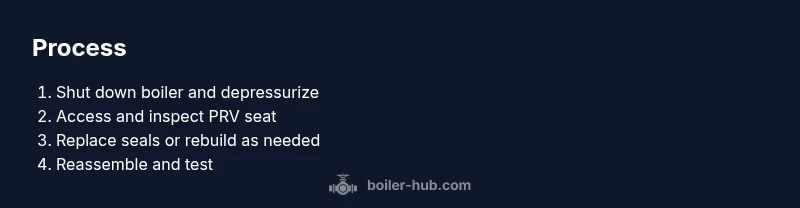
Shut down boiler and depressurize
Power down the boiler and allow it to cool. Close supply valves and, if applicable, drain lines according to the manufacturer’s instructions. Use the PRV test lever or the designated depressurization method to release remaining pressure gradually.
Tip: Always release pressure slowly to avoid scalding or water hammer. - 2
Lockout/tagout and verify zero pressure
Apply lockout/tagout per your site safety plan. Confirm zero pressure with a reliable gauge before touching any PRV components.
Tip: If any doubt remains about pressure, wait and recheck before proceeding. - 3
Remove PRV cap and inspect seat
Carefully remove the valve cap according to the manufacturer’s procedure. Inspect the seat for corrosion, pitting, or debris that could hinder sealing.
Tip: Avoid scratching the seat; use a soft brush for debris only. - 4
Clean and reseal or replace parts
Clean mating surfaces, install new seals or rebuild kit components as needed. Ensure threads and seating surfaces are clean before reassembly.
Tip: Use PTFE tape rated for high temperature and pressure if required by the design. - 5
Reassemble and set pressure
Reinstall the PRV, ensure a snug seal, and set the correct relief pressure per boiler specs. Repressurize slowly and monitor for leaks during the initial test run.
Tip: Do not overtighten fittings; overtightening can damage seats or threads. - 6
Test operation and document
Run the boiler through a full cycle and verify the PRV operates at the intended pressure and reseals after relief. Record the setpoint and any observations.
Tip: If the valve fails to operate correctly, stop testing and consider replacement.
Questions & Answers
What is a pressure relief valve and why is it important?
A pressure relief valve protects your boiler by releasing excess pressure to prevent a hazardous blast. Regular maintenance reduces failures and keeps the system safe.
PRVs protect your boiler by releasing excess pressure; regular maintenance reduces risk and keeps you safe.
How do I know if my PRV needs repair?
Signs include steaming or leakage around the valve, frequent pressure spikes, or an audible hiss. If in doubt, test the valve or call a pro.
Leaks or frequent pressure changes mean the PRV may need service.
Can I repair a PRV myself?
Basic maintenance and reseating can be done by competent homeowners with proper safety. Complex repairs or replacements should be done by a licensed professional.
DIY reseating is possible with caution; major repairs are best left to professionals.
What maintenance helps prevent PRV failure?
Regular inspection, cleaning, and using compatible parts can extend PRV life. Avoid tampering with safety devices beyond manufacturer guidelines.
Regular checks and proper parts reduce failure risk.
How often should a PRV be tested?
Test intervals depend on boiler type and use. Follow manufacturer's guidelines and local codes; test safely using the test lever when appropriate.
Follow the boiler’s guidelines for test intervals and safety.
What should I do if the PRV leaks after repair?
If leaks persist, reseal or replace the valve. Do not ignore leaks, as they indicate improper seating or damaged components.
If leaks persist, reseat or replace the valve promptly.
Watch Video
Key Points
- Identify PRV issues before repair to avoid unnecessary work
- Shut down, depressurize, and lockout before touching components
- Use manufacturer-approved parts and test thoroughly after repair
- Consider professional service for complex or suspect valves