How to Release Boiler Pressure with the Pressure Relief Valve
Learn how to safely release boiler pressure using the pressure relief valve. Practical steps, safety guidance, and maintenance tips from Boiler Hub.


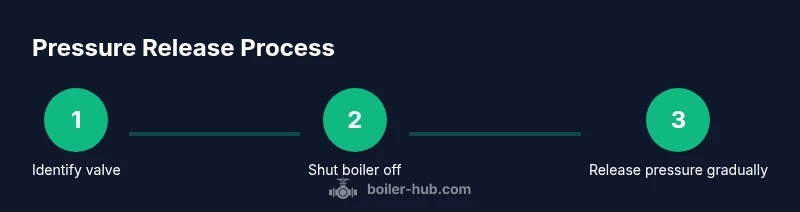
To safely release boiler pressure, locate the boiler's pressure relief valve, ensure the system is cool, place a drainage pan beneath the discharge, and slowly operate the valve to relieve pressure until the gauge returns to normal. If you notice steam, hissing, or a persistent leak, stop and call a qualified technician. Always follow manufacturer guidance and Boiler Hub's safety recommendations.
What is a boiler pressure relief valve?\n\nThe boiler pressure relief valve, often simply called the safety valve, is a critical safety device designed to release excess pressure from the boiler system. It protects components and prevents dangerous ruptures by venting steam or hot water when pressure climbs above safe levels. Understanding how it works helps homeowners and operators respond correctly when readings look off. In a typical residential boiler, the valve is set to vent at a predetermined pressure and is connected to a discharge line that directs steam or hot water to a safe area. If the valve does not function correctly, or if the line is blocked, pressure can build to dangerous levels. Regular inspection and testing, following the manufacturer's directions, can prevent failures. Boiler Hub analysis highlights that many pressure-related issues stem from maintenance gaps, not faulty valves, underscoring the value of routine checks.
Safety first: essential precautions before releasing pressure\n\nNever release pressure from a hot boiler. Scalding steam can cause serious injuries. Ensure the boiler is off and cool to the touch, wear insulated gloves, and keep children and pets away. Have a bucket or drain pan ready, and consider installing a pressure gauge with a clear scale for quick readings. If you smell gas, evacuate and call the utility. Use the discharge path that vents away from people, pets, and electrical components, and never bypass safety devices to test the valve.
How pressure builds in a boiler and what high readings mean\n\nBoiler pressure increases as water is heated and circulated. When pressure climbs, the expansion tank or open circuits might be challenged. Regular checks of the gauge help you spot rising trends before releases become necessary. According to Boiler Hub analysis, most pressure spikes are the result of aging components, improper water fill, or blocked vents rather than permanent valve failure. Recognizing the difference between a temporary spike and a persistent rise is key to safe operation.
Understanding the relief valve: indicators of failure and when to intervene\n\nRelief valves are designed to vent automatically, but they can fail to seal or leak if damaged. Indicators of a faulty valve include persistent leaks, inability to hold normal pressure after the relief opens, corrosion, or a stuck lever. If you observe any of these signs, do not attempt to force the valve back to position; instead shut down the boiler and arrange service.
How to differentiate normal release from a problem\n\nNormal, temporary venting may occur after a cold start or when system pressure briefly rises during heat-up. If discharge persists beyond a few seconds, or if you must frequently release pressure, this indicates a problem with the system—likely expansion tank, feedwater control, or a blocked vent. In such cases, consult a professional.
Maintenance steps to reduce pressure buildup\n\nRegular maintenance can reduce the need for releases. Check the expansion tank for proper air charge, inspect the discharge line for obstructions, ensure fill water is not above the recommended level, and schedule annual boiler servicing. Boiler Hub recommends annual inspections to catch issues before they escalate.
Troubleshooting after releasing pressure\n\nAfter releasing pressure, retest the system by letting the boiler reheat and monitoring the gauge. If pressure climbs again rapidly, there is a systemic issue—such as a failed expansion tank, faulty pressure regulator, or leaks. Do not continue releasing pressure if repeated spikes occur; contact a professional.
When to call a professional\n\nCall a licensed heating contractor if you observe repeated pressure rises, valve leaks, rust, or corrosion on the valve body or discharge line. A professional can test the relief valve, verify proper venting, and inspect related components (expansion tank, piping, and controls) to ensure safe operation.
Tools & Materials
- Drain pan(Place under discharge to catch hot water/steam)
- Bucket(Collect discharged water safely)
- Towels or rags(Wipe spills and keep area dry)
- Heat-resistant gloves(Protect hands from scalding steam)
- Flashlight(Improve visibility in tight spaces)
- Owner's manual(Refer to manufacturer-specific steps)
Steps
Estimated time: 15-25 minutes
- 1
Identify the relief valve and assess safety
Locate the relief valve on the boiler (side or top). Check that the system is cool to touch and inspect the discharge path for obstructions. Confirm there is a safe area for venting away from people and pets.
Tip: Do not touch the valve body while it is warm; use gloves for handling. - 2
Shut down the boiler and allow cooling
Power off the boiler using the thermostat or the switch on the unit. Allow it to cool completely before handling the discharge valve. If you must operate it while warm, proceed slowly and with extra caution.
Tip: If the area is hot, wait longer and verify no steam is escaping. - 3
Prepare the discharge area
Place a drain pan or bucket directly under the discharge line and lay towels nearby. Ensure the path is clear of electrical components and flammable materials.
Tip: Have a partner ready to assist if needed. - 4
Open the relief valve slowly
Carefully operate the lever or knob to release pressure in slow, short bursts. Avoid a rapid release that can jerk pipes or spray hot water.
Tip: Open gradually and stop if you hear a sudden hiss or see a surge. - 5
Monitor the gauge and release level
Watch the pressure gauge as the system vents. Stop releasing when the gauge returns to the normal range for your boiler. Look for a steady venting stream rather than erratic pulses.
Tip: If pressure does not move, stop and reassess the system. - 6
Close the valve and restore operation
Secure the relief valve and recheck that the discharge path is clear. Restore power to the boiler and resume heating gradually. Restore gauge stability by allowing the system to run for a short period.
Tip: Run the system for 10–15 minutes and verify stable readings. - 7
Record and inspect afterward
Note the final gauge reading, the time, and any leaks or irregularities. Inspect the discharge line and surrounding area for drips or corrosion.
Tip: Take photos if necessary for service records.
Questions & Answers
What is a boiler pressure relief valve and why is it important?
The relief valve protects against dangerous pressure by venting steam or hot water when pressure gets too high. It is a critical safety feature in every boiler system.
The relief valve vents excess pressure to prevent explosions; it's a critical safety feature.
Can I release pressure if my boiler is hot?
No. Allow the boiler to cool completely before attempting a release to avoid burns or scalding.
No—let the boiler cool first to prevent injury.
How can I tell if the relief valve is working?
A working valve should vent when pressure rises and should reseal after venting. If it doesn’t vent or leaks persist, have a technician test it.
If it vents on pressure and reseals, it's likely working; persistent issues require testing.
What should I do if the relief valve leaks after release?
Shut off power and arrange service. Do not repeatedly release pressure as a fix.
Shut off power and call a professional if leaks persist.
Why is my boiler pressure rising again after release?
Common causes include expansion tank issues, faulty controls, or leaks. A professional assessment is recommended.
It could be expansion tank problems, faulty controls, or leaks—get a professional check.
Is it safe to release pressure myself regularly?
No. Repeated releases indicate a faulty system that needs professional repair.
Not safe to do regularly; get a professional diagnosis.
Watch Video
Key Points
- Ensure boiler is cool before acting
- Use the correct discharge path and valve
- Monitor the gauge and stop at normal pressure
- Document readings and any symptoms for service
- Seek professional help for recurring pressure issues