Boiler Leaking from Bottom: Troubleshooting Guide
Practical, step-by-step guidance to diagnose and fix a boiler leaking from bottom, with safety checks, common causes, and when to call a professional.


A boiler leaking from bottom is commonly caused by a failed seal, corroded heat exchanger, or a faulty condensate trap. Shut off power and water, inspect visible drips, and collect data. If the drip continues after basic checks, contact a licensed technician immediately. Also note any odors, color, or noise, and record boiler model, age, and recent maintenance.
What a bottom-leaking boiler signal means and why you can't ignore it
A boiler leaking from the bottom is not just a surface issue; it’s a symptom of a problem that could escalate quickly. The bottom housing and shell are where pressurized water interacts with joints, gaskets, and heat exchangers. When seals degrade, corrosion advances, or mineral buildup narrows critical passages, water can escape at the base and travel along the exterior. This type of leak can indicate aging components, improper maintenance, or a failure in a safety device. Timely recognition is essential, because unresolved leaks raise risks of flooding, scalding, or, in gas-fired systems, dangerous combustion byproducts entering living spaces. Boiler Hub’s guidance emphasizes swift, informed action when the first signs appear, especially in older or high-use installations. By understanding what’s happening at the bottom of the unit, you can prioritize safety and communicate accurately with a technician.
Immediate safety steps you should take now
Safety first: power down the boiler and shut off the gas supply if you can do so safely. Do not attempt to seal or bypass a leak yourself, and keep people and pets away from the area. If water pooling creates a slip hazard or you detect a gas odor, evacuate and call emergency services. If safe, collect a small sample of the water for the technician and note the leak’s color, odor, and whether it foams. After securing the space, notify the building manager or landlord if you’re in a rental. Prompt safety actions reduce the risk of scalds, burns, or carbon monoxide exposure and buy you time to arrange professional help. Boiler Hub reminds homeowners that safety is non-negotiable during an active leak.
Common causes of bottom leaks in boilers
Bottom leaks arise from several core problems. Worn gaskets and seals at hoses, pumps, or heat exchangers can develop persistent drips that show up at the base. Corrosion or pitting on the boiler shell or heat exchanger is more likely in older units or systems with hard water. A misbehaving condensate trap or a failing expansion tank can push water through bottom ports even when other seals are intact. Loose drain valves or poorly seated fittings near the base can also leak. Finally, leaks might originate from accessories like a circulating pump or a pressure relief valve, with water running downward along the exterior and appearing as a bottom leak. Identifying the exact source is critical to selecting the correct fix and avoids unnecessary part replacements, a point Boiler Hub stresses for reliable troubleshooting.
How to inspect safely and gather information before a call
Begin with a careful visual inspection while the boiler is off and cool. Look for drips at joints, connections, and the bottom of the heat exchanger. Check the expansion tank’s air charge if you know how, and read the pressure gauge for abnormally high readings. Inspect the condensate trap for blockages or leaks, and verify whether the drain valve at the base is fully closed. Take multiple photos from different angles, write down the boiler’s model and serial number, and log the exact time and date of observation. Note any changes in boiler sound, vibration, or flame color if it’s a gas system. This documentation helps a service technician diagnose quickly and aligns with Boiler Hub’s emphasis on informed homeowners and facility managers.
When to call a professional and what to expect
Bottom leaks frequently signal issues that require interior inspection and safe handling of pressurized systems. If basic checks don’t reveal a simple valve leak, contact a licensed boiler technician. Expect on-site assessment, pressure testing, and possibly a dye test to locate the leak source. Technicians may need to remove panels, replace worn gaskets, or, in severe cases, recommend boiler replacement. Do not operate the boiler until the source is confirmed safe or a professional has given clearance. Boiler Hub recommends treating persistent leaks as urgent service calls to protect occupants and property.
Preventing future bottom leaks and long-term care
To reduce the risk of bottom leaks, schedule regular maintenance—ideally annual professional inspections, pressure testing, and system flushing if you have hard water. Use water treatment to minimize mineral buildup on heat exchangers. Periodically inspect seals and gaskets for wear and replace before failure. Ensure the expansion tank has the correct air charge and isn’t waterlogged. Keep the boiler area clean and dry to spot leaks early, and consider a secondary containment plan if the unit sits in a basement. A proactive maintenance routine aligns with Boiler Hub’s priorities: safety, reliability, and long-term cost control.
Steps
Estimated time: 45-90 minutes
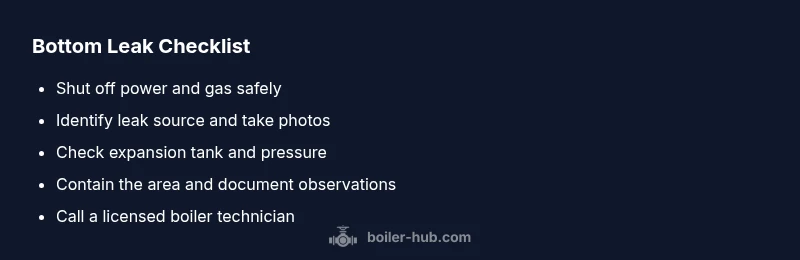
- 1
Shut off power and isolate the boiler
Power down the boiler and shut off the gas valve if equipped and safe to do so. Allow the system to cool completely before touching any components. This reduces the risk of scalding and accidental gas release. Gather basic safety gear and prepare a workspace.
Tip: Keep a digital camera or phone handy to document leak locations before disassembly. - 2
Identify the leak source
Look for the exact point of origin—valves, seals, or the base of the heat exchanger. If water is traveling down the shell, trace it back to the most proximal joint. Do not force parts that are tight or corroded; note their condition for the technician.
Tip: Use a flashlight and mirror to see hard-to-reach joints without removing panels. - 3
Check pressure and expansion components
Read the boiler pressure and inspect the expansion tank’s air charge. An over-pressurized system or a waterlogged expansion tank can drive leaks through base joints. Document readings and compare with the manufacturer’s spec.
Tip: If you don’t know how to test the expansion tank, note this and leave it to a pro. - 4
Contain and protect the area
Place absorbent pads or a tray beneath the leak to minimize damage. Keep a spill kit handy and avoid letting water contact electrical outlets. Do not attempt to seal the leak with tape or epoxy.
Tip: Photograph the containment setup for reference during the service visit. - 5
Call a licensed professional
If the source isn’t clearly identified or the leak persists after basic checks, contact a professional boiler technician. Share your findings, photos, and any measurements you collected. Follow their guidance on whether the unit must be shut down until inspection is complete.
Tip: Provide the technician with the model, serial number, and any maintenance history.
Diagnosis: Boiler shows a bottom leak—water pools at the base or drips from the bottom plate, not a simple valve leak.
Possible Causes
- highDamaged seals or gaskets at base valves or heat exchanger
- highCorrosion or structural failure of the boiler shell
- mediumFaulty condensate trap or expansion tank
- lowLoose drain valve or improper base connections
Fixes
- easyShut off boiler and power, then inspect and reseal external joints or replace a simple valve leak if accessible
- easyTighten or replace base gaskets, seals, or bottom fittings identified as leaking
- mediumReplace worn seals or gaskets that show leakage after inspection
- hardSchedule professional inspection for corrosion, heat exchanger wear, or shell issues
Questions & Answers
What causes a boiler to leak from the bottom?
Bottom leaks are commonly caused by worn seals, corrosion of the heat exchanger, or a faulty expansion tank. Leaks can also originate from valves or drains at the base. Proper diagnosis is essential to choosing the right fix and avoiding unnecessary replacements.
Bottom leaks are usually due to worn seals, corrosion, or expansion tank problems. A proper diagnosis is essential before any repair.
Is a bottom leak dangerous for my family?
Yes. Leaks can lead to scalding water, electrical hazards where water meets wiring, and, in gas boilers, carbon monoxide risk if combustion byproducts escape. Evacuate if you smell gas and call emergency services if symptoms occur.
Bottom leaks can be dangerous—get everyone away from the area and call for help if you smell gas or notice symptoms of CO exposure.
Can I fix a bottom leak myself?
For most bottom leaks, DIY fixes are not advised. Some minor valve leaks may be resealed, but internal seal, heat exchanger, or shell problems require a licensed professional with proper safety equipment.
DIY repairs aren’t advised for bottom leaks; interior components need a pro, especially with pressurized systems.
When should I replace the boiler due to a bottom leak?
If corrosion or extensive heat exchanger damage is present, or if the unit is very old and leaking persists after repairs, replacement may be the safer long-term option. A professional can assess if repair or replacement offers the best value and safety.
If the boiler is aging and leaks persist despite fixes, replacement may be the safer option.
What information should I give a technician?
Provide the boiler model and serial number, maintenance history, when the leak started, observed sources, photos, and any measurements. Also note whether the leak changes with boiler operation or heat output.
Tell the tech the model, age, when it started leaking, and show photos and notes you’ve taken.
How can I prevent future bottom leaks?
Schedule annual professional maintenance, monitor water quality, and replace aging gaskets before failure. Keep the area dry and have a containment plan if the boiler is in a basement.
Get annual maintenance and keep the area dry to prevent future leaks.
Watch Video
Key Points
- Shut off power and gas when a leak appears.
- Identify the leak source before attempting fixes.
- Persistent bottom leaks require professional service.
- Regular maintenance reduces future bottom leaks.