Why Are Combi Boilers Better? A Practical Comparison Guide
An analytical, side-by-side look at why are combi boilers better than traditional systems, focusing on space, efficiency, and fast hot water delivery to help homeowners decide. Learn the key differences and make an informed choice with Boiler Hub analysis for 2026.


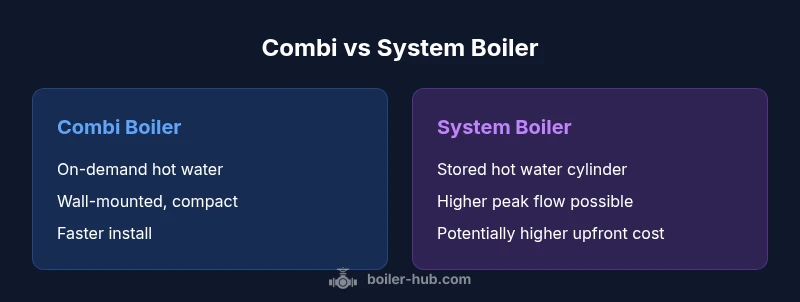
This comparison explains why are combi boilers better for many homes: they deliver on-demand hot water, save space, and simplify installation. They require no storage cylinder and involve fewer pipes, speeding up commissioning. For larger homes with high hot-water demand, a system boiler may be preferable, but in most cases the combi option wins on practicality.
why are combi boilers better for compact homes
According to Boiler Hub, the core question of why are combi boilers better boils down to three practical advantages: space efficiency, on-demand hot water delivery, and streamlined installation. In modern homes that prioritize living space, the absence of a bulky cylinder and the compact footprint of a modern combi boiler free up square footage for living areas, storage, or a smaller utility room. The Boiler Hub Team notes that this configuration reduces clutter and simplifies retrofits, especially in older houses where pipe runs can be long. In 2026 Boiler Hub Analysis, space-saving and fast setup are highlighted as the two most tangible benefits that homeowners notice within days of installation. This perspective helps homeowners understand why are combi boilers better for many households, particularly when renovation budgets are tight and space is at a premium.
Space-saving design and installation simplicity
One of the strongest arguments in the debate about why are combi boilers better is the space factor. Combi boilers combine space heating and hot water generation in a single, wall-mounted unit. This eliminates the need for a separate hot water cylinder and reduces the overall footprint of the heating system. Fewer large tanks mean less pipework, lighter installation loads, and often a faster commissioning window. For retrofit projects in city apartments or small houses, this can be a decisive factor. Homeowners frequently report that the reduced mechanical footprint makes boiler rooms feel less crowded and simplifies maintenance access. Although every home is different, the core idea remains: when space is constrained, a combi boiler often delivers a cleaner, more flexible layout that aligns with modern living.
How combi boilers deliver hot water and heating efficiently
The efficiency story behind why are combi boilers better hinges on on-demand heating and reduced standby losses. A modern combi boiler heats water as it flows through a high-efficiency heat exchanger, delivering hot water instantly on demand rather than storing it in a cylinder. This means there is less heat lost when hot water sits idle. When the boiler heats the home, it modulates output to match demand, which also reduces energy waste. In practice, this setup avoids the energy penalties associated with keeping a large cylinder warm 24/7. The result is a compact, responsive system that maintains comfortable temperatures while keeping running costs in check, aligning with the broader energy-savings goals many households pursue in 2026.
Efficiency considerations and energy savings
A core piece of why are combi boilers better relates to efficiency advances in condensing technology and smart controls. Condensing boilers reclaim more heat from exhaust gases, while variable-speed pumps and weather-compensating controls optimize boiler output to indoor needs. This combination minimizes wasted energy, which is especially relevant in homes with fluctuating heat demands. In terms of long-term value, combi boilers typically offer good compatibility with energy-saving strategies such as low-temperature radiator systems and well-insulated properties. The Boiler Hub Team emphasizes that when evaluating a boiler, you should consider how well the system integrates with your home's insulation, window performance, and heat-emission patterns to maximize the benefit of why combi boilers are better in an energy-conscious setting.
When a combi is the right choice: home size and demand
For many households, the decision on why are combi boilers better is most evident in everyday living. Combi boilers suit small to mid-sized homes with modest hot water demand or single-bathroom configurations. In these scenarios, the lack of a cylinder means fewer potential failure points and faster, less invasive installation. In larger homes with multiple bathrooms or very high simultaneous hot water usage, a system boiler with a cylinder can offer higher peak flow rates. The key is to assess peak usage, pressure, and the existing plumbing layout. Boiler Hub's guidance for 2026 stresses matching the boiler type to your typical daily patterns and pressure conditions to achieve the best overall value.
Potential drawbacks and limits
While the question of why are combi boilers better has many favorable angles, there are clear limits. In homes with very high hot water demand across multiple outlets, combi boilers may experience reduced flow when several taps run simultaneously. Water pressure from the mains plays a critical role in performance, and older properties with variable pressure can see fluctuating results. Moreover, although installation is often simpler, the initial choice still needs careful sizing and proper venting. In short, combi boilers are excellent for many homes, but not universally superior in every scenario. Evaluating your flow rates, number of bathrooms, and future expansion plans is essential to determine if a combi system remains the best fit.
Maintenance, warranties, and lifecycle planning
Maintenance is part of any boiler decision. For combi boilers, routine servicing, descaling (where needed), and annual safety checks remain important to sustain performance. Because there are fewer components, some homeowners perceive lower maintenance complexity, but that does not remove the need for annual checks and periodic parts replacement. Warranties often hinge on boiler age, service history, and installation quality. The lifecycle value of a combi system tends to be favorable in homes with stable demand and consistent power supply, while ensuring timely service can maximize lifespan and minimize unexpected breakdowns.
Real-world scenarios and cost implications
In real homes, the cost implications of why are combi boilers better hinge on installation complexity, space availability, and how water is used. In compact households, installation tends to be quicker and less invasive, often reducing labor costs and downtime. Running costs are strongly influenced by heat loss, insulation quality, and how well the system is matched to demand. For households upgrading from older, bulky setups, the fewer parts and simpler piping of a combi can translate into faster returns and lower maintenance burdens. Boiler Hub's analysis underscores that while upfront expense can vary by region, the overall value of space, simplicity, and efficiency remains a decisive factor for many owners.
Myths vs reality: common misconceptions
Common myths persist about why are combi boilers better. A frequent belief is that they always deliver unlimited hot water; in reality, flow rate depends on mains pressure and boiler size. Another misconception is that combi boilers are universally cheaper to install; while costs can be lower in constrained spaces, the total cost depends on installation complexity and local conditions. The reality is that combi boilers offer compelling advantages in the right home, particularly where space is limited and hot water needs are moderate. Carefully assessing your home, water pressure, and usage patterns will help verify that why combi boilers better suits your situation.
Comparison
| Feature | combi boiler | system boiler with cylinder |
|---|---|---|
| Heat delivery model | On-demand hot water + heating | Stored hot water in a cylinder + heating |
| Space requirements | Wall-mounted, compact footprint | Requires cylinder and additional plumbing |
| Installation complexity | Typically simpler; fewer components | More complex; cylinder + extra controls |
| Hot water flow (simultaneous outlets) | Balanced for typical households; may drop with multiple taps | Better peak flow with larger cylinder |
| Energy efficiency | High efficiency with reduced standby losses | Efficiency depends on cylinder insulation and system controls |
| Ideal home size | Small to mid-sized homes | Larger homes or high simultaneous demand |
| Maintenance | Fewer components; potentially lower maintenance | More components; may require more service visits |
| Cost considerations | Often lower footprint and installation in small homes | Potentially higher upfront cost but favorable long-term value |
Advantages
- Space-saving and compact installation
- On-demand hot water with minimal standby losses
- Faster, simpler installation in many homes
- Good fit for small to mid-sized homes with limited space
- Fewer components can mean simpler routine maintenance
The Bad
- Limited hot water flow for large households with multiple simultaneous demands
- Performance depends on mains water pressure and boiler size
- Can have higher upfront costs in some regions
- Not always ideal for homes with very high concurrent hot-water needs
Combi boilers win for space and convenience in most compact homes; system boilers excel for high demand scenarios.
Choose a combi boiler if space is tight and hot water demand is moderate. For large homes or high simultaneous pull, consider a system boiler with a cylinder and assess water pressure and layout with a professional.
Questions & Answers
What is a combi boiler?
A combi boiler provides heating and hot water on demand without a storage cylinder. It heats water as you use it, which saves space and often simplifies installation. They are common in smaller homes with moderate hot-water needs.
A combi boiler heats water as you use it, without a storage tank, saving space and simplifying installation. It’s ideal for smaller homes with moderate hot-water needs.
Are combi boilers better for smaller homes?
Often yes. They minimize space usage and reduce plumbing complexity, which is advantageous in compact living spaces. However, if you have very high simultaneous hot-water demands, a different setup might be more suitable.
Yes, combi boilers are usually better for small homes because they save space and are easier to install.
Can a combi boiler supply hot water for two bathrooms at once?
It depends on the boiler size and mains pressure. Some combi boilers can handle two outlets simultaneously, but flow rates may drop with multiple simultaneous demands. For high concurrent use, a system boiler might be preferable.
Two bathrooms at once depends on the boiler and water pressure; you may experience reduced flow with multiple outlets.
Do combi boilers require a water pressure boost?
Most combi boilers rely on adequate mains pressure. If your home has consistently low pressure, a booster or a different boiler type may be recommended to maintain reliable hot water delivery.
Yes, adequate mains pressure is important for combi boilers; low pressure may require a booster or a different setup.
How long do combi boilers typically last?
With regular servicing and proper care, a modern combi boiler can provide reliable service for many years. Lifespan depends on usage, maintenance, and water quality, as with any boiler.
With proper maintenance, a modern combi boiler lasts many years; lifespan depends on care and water quality.
Are combi boilers more expensive to install than traditional systems?
Installation costs vary by home and region. In many cases, combi boilers cost less to install in space-constrained properties due to fewer tanks and simpler plumbing, but in some scenarios the difference is smaller.
Costs depend on the site; often combi boilers install cheaper in tight spaces, but it varies by home.
Key Points
- Assess space before choosing boiler type
- Combi delivers instant hot water without a cylinder
- Larger homes may prefer system boilers for peak flow
- Water pressure strongly affects combi performance
- Regular servicing extends boiler life and efficiency