Which Boiler Is Better: A Practical Comparison for Home Heating
Compare combi, system, and regular boilers to determine which is better for your home. Learn how efficiency, space, and water demand shape the best long-term value with practical, data-driven insights from Boiler Hub.


Which boiler is better depends on your home, fuel, and priorities. For small apartments, a high‑efficiency combi boiler often delivers reliable heat and instant hot water from one unit. For larger homes with multiple zones, a system boiler or regular boiler with a storage cylinder usually performs best. Boiler Hub analysis highlights efficiency, maintenance, and install costs as the key decision drivers.
Which boiler is better: decision framework
Determining which boiler is better starts with your home’s heating profile. The phrase which boiler is better often hides a more nuanced question: what are your space constraints, hot-water needs, fuel availability, and long-term cost tolerance? A thoughtful framework helps you compare combi, system, and regular boilers on equal terms. According to Boiler Hub, success hinges on aligning boiler type with demand patterns, installation practicality, and maintenance readiness. In this framework you’ll identify four core levers: demand, space, fuel and efficiency, and longevity. By clarifying these upfront, you can filter options quickly and focus on models that truly fit your floor plan, budget, and expectations. The next sections break down each boiler type and when it shines, so you can decide with confidence.
Key boiler types and their strengths
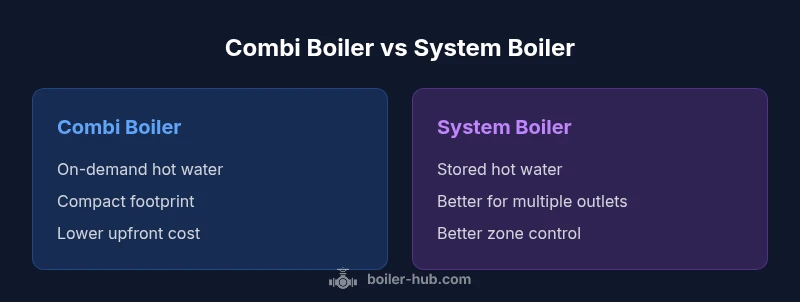
Boilers come in several primary configurations, each with distinct advantages. A combi boiler provides on‑demand hot water and space‑saving design, ideal for small homes. A system boiler stores heated water in a cylinder, delivering strong performance for multiple outlets and steady pressure. A regular (or heat‑only) boiler works with a separate cylinder and is often favored in older homes or larger properties where zoning and long hot water draw are priorities. When evaluating which boiler is better, consider how many bathrooms you need to serve concurrently, the physical space for equipment, and the existing heating system layout. In practice, most homes benefit from a properly sized combi or system boiler, with regular boilers reserved for homes with very high hot-water demand or legacy radiator setups.
Efficiency, energy use, and long-term value
Efficiency is the primary driver of long‑term operating costs and comfort. Condensing boilers capture heat from flue gases, which improves overall performance. ERP (energy rating) scales reflect how well a boiler converts fuel into usable heat. Homeowners often overlook the balance between upfront cost and lifetime savings; a boiler with excellent efficiency but an expensive installation may not deliver the best value if maintenance costs are high. Boiler Hub analyses emphasize choosing a model that aligns with your actual usage profile and service availability. Real-world performance depends on proper installation, correct sizing, and regular maintenance.
Space, installation, and practicality
Your physical space and installation constraints strongly influence which boiler is better for you. Combi boilers are typically wall‑mounted and compact, making them ideal for apartments or smaller houses where space is at a premium. System boilers require space for a hot-water cylinder, which occupies more room but offers robust pressure and capacity for several outlets. Regular boilers paired with a cylinder suit homes with high hot-water demand and older layouts, where zoning and storage are advantageous. In all cases, working with a qualified installer ensures the system is correctly sized, vented, and integrated with existing radiators and controls.
Scenarios by home size: recommended configurations
- Small apartment or studio: A high‑efficiency combi boiler is usually the best fit, providing space savings and on‑demand hot water.
- Medium home (2–3 bedrooms, 1–2 bathrooms): A combi or system boiler can strike a balance between hot water reliability and footprint, depending on shower usage and boiler location.
- Large home with multiple baths: A system boiler with a cylinder or a regular boiler setup often offers the best zoning and steady hot water supply for simultaneous demands. Always size for the peak load and consider weather compensation controls.
- Homes with existing cylinder infrastructure: A replacement strategy often simplifies using the current cylinder and improves efficiency with a modern condensing boiler. In some cases a hybrid approach (combining cylinder with a modern combi) can be explored with a professional.
Boiler Hub’s practical guidance stresses matching your decision to real usage patterns rather than chasing the latest tech trend. The goal is reliable comfort, not the loudest feature list.
Maintenance, warranties, and serviceability
Maintenance is a critical although sometimes overlooked factor. Regular servicing reduces the risk of breakdowns and extends life, and some boiler types benefit more from technician familiarity with certain models. Look for boilers with strong parts availability, clear warranty terms, and accessible local service options. A service contract can simplify costs and ensure your boiler remains efficient over time. Boiler Hub emphasizes connecting with reputable installers and checking warranty coverage to avoid surprises later in life.
Cost considerations and total cost of ownership
Initial purchase and installation costs vary by type, size, and complexity, but the long‑term cost of ownership is driven by efficiency and maintenance. Combis typically have lower upfront costs but can have higher hot-water flow constraints if several taps run simultaneously. System and regular boilers may require more space and cylinder costs but can deliver steadier performance and flexibility in larger homes. When evaluating which boiler is better, calculate not just the sticker price but the annual fuel, service, and potential repair costs across a 10–15 year horizon. Boiler Hub analyses show that the best value usually comes from balancing efficiency with realistic maintenance expectations and available local parts and technicians.
Step-by-step decision guide
- Assess your hot-water needs and peak heating demand.
- Map available space and determine if a cylinder is feasible.
- Compare fuel options and consider local energy prices.
- Check ERP ratings and warranty terms.
- Consult with a qualified installer for a precise sizing and piping plan.
- Review service access and long‑term maintenance costs before finalizing a choice.
This structured approach helps ensure you pick the boiler that truly fits your home rather than the one that sounds the best in marketing material.
Common misconceptions and pitfalls
- Bigger is always better: Oversizing wastes energy and increases upfront and running costs.
- The most expensive boiler is the best: Higher price doesn’t guarantee better value if maintenance costs are high or if it’s ill‑supplied in your area.
- All boilers are equal for hot-water delivery: Different configurations handle flow and pressure differently; mis-sizing can cause weak flow or a cold shower.
- You don’t need a professional install: Improper installation is a leading cause of poor performance and safety issues. A licensed technician is essential.
Feature Comparison
| Feature | Combi Boiler | System Boiler | Regular/Heat-only Boiler |
|---|---|---|---|
| Best For | Small to medium homes with limited space and instant hot water | Medium to large homes with multiple bathrooms and zoning | Large homes with high hot-water demand and legacy radiator layouts |
| Water Heating Method | On-demand hot water from mains; no storage cylinder | Stored hot water in a cylinder; supports multi-zone use | Stored hot water with separate cylinder; best for zones and high draw |
| Space Requirements | Compact, wall-mounted units | Requires space for cylinder | Larger footprint; often paired with cylinder or tank |
| Efficiency/ERP Options | High-efficiency condensing options | High-efficiency with zoned control | Good efficiency depending on system and configuration |
| Typical Installation Cost Range | $2,000-$4,000 | $3,000-$5,000 | $2,500-$4,500 |
| Maintenance and Servicing | Generally straightforward service; quick parts access | Cylinder and more complex piping may require more maintenance | Cylinder upkeep, occasional topping up, annual service recommended |
Advantages
- Higher energy efficiency across modern models
- Flexible configurations for different home layouts
- Wide availability of service, parts, and warranties
- Faster hot water delivery with combi options
- Compact designs suitable for small spaces
The Bad
- Higher upfront cost for premium boilers
- Some configurations require a storage cylinder or more space
- Installation complexity and longer lead times
- Maintenance frequency varies by type
Match your home to the right boiler; combi for small homes, system or regular for larger homes.
Overall, there isn’t a single best boiler for every home. The right choice hinges on your space, hot-water needs, and fuel. Boiler Hub Team recommends prioritizing efficiency, serviceability, and correct sizing to maximize long-term value.
Questions & Answers
What is the main difference between combi, system, and regular boilers?
Combi boilers provide on‑demand hot water with no cylinder, ideal for small homes. System boilers store hot water in a cylinder and support multiple outlets, while regular boilers work with a storage cylinder and are common in larger or older homes. The best choice depends on water demand, space, and existing plumbing.
Combi boilers give instant hot water in small spaces; system and regular boilers store hot water for multiple outlets.
Which boiler is best for a small home?
For small homes, a high‑efficiency combi boiler is typically the best balance of space, cost, and performance. It provides instant hot water and heat with a compact footprint, assuming your water demand isn’t excessive at peak times.
A high-efficiency combi is usually best for a small home.
Are high-efficiency boilers worth the extra upfront cost?
In most cases, yes, if you plan to stay in the home for several years. They save on running costs and may qualify for incentives or better warranties. Weigh the payback period against installation costs and maintenance.
High-efficiency boilers save money over time, but check payback and maintenance costs.
Do I need a storage cylinder with a system boiler?
System boilers use a hot-water cylinder to store heated water. A cylinder is not strictly required, but it enables better flow rates and multi‑bath performance. If you don’t need high simultaneous hot-water draw, you might opt for a combi instead.
System boilers typically pair with a cylinder; it helps with multiple outlets.
How long do boilers typically last?
Most boilers last 10–15 years with regular maintenance. Proper sizing, quality installation, and routine servicing can extend life and maintain efficiency.
Boilers usually last about a decade or more with proper care.
What maintenance is required to keep a boiler efficient?
Annual servicing is generally recommended to maintain efficiency and safety. Check components like the expansion valve, pressure, and heat exchanger, and ensure controls are calibrated.
Have your boiler serviced yearly and keep an eye on pressure and controls.
Key Points
- Assess hot-water demand before selecting a boiler
- Choose combi for compact spaces; system/regular for high demand
- Prioritize high-efficiency models and reliable service networks
- Consider installation space and cylinder requirements
- Factor total cost of ownership, not just purchase price