Where Is the Boiler in an Apartment? A Practical Guide
Learn where apartment boilers are typically located, how to safely find them, and what to do if you can’t locate or access the unit. Practical, step-by-step guidance from Boiler Hub for homeowners and managers.


In most apartments, the boiler lives in a centralized mechanical area, a utility closet, or a dedicated boiler room shared by residents. Look for a small, vented cabinet or steel enclosure near the entryway, laundry room, or hallway; in some buildings it’s behind a service panel. If you still can’t locate it, contact building management for the exact location and access instructions.
Where apartment boilers are typically located
In apartment buildings, the boiler is usually housed in a centralized mechanical space that serves multiple units. Common locations include a shared boiler room, a utility closet near the entrance, or a dedicated mechanical shaft accessed via a service panel. In some modern buildings, the boiler may be tucked behind a locked access door in a hallway or within the building’s basement or crawl space. According to Boiler Hub, most multi-unit dwellings optimize central systems to maximize efficiency and minimize individual unit footprints. When you understand the building’s layout, you’ll know where to start your search and what to expect in terms of safety clearances and access. Expect utility-oriented spaces close to where hot water lines, heating distribution, and venting converge.
Why location matters for maintenance and safety
Knowing the boiler’s location helps with routine maintenance, leak checks, and emergency shutoffs. It also makes it easier to schedule service with confidence and to coordinate access with property managers. In apartments, the boiler often shares space with related equipment like expansion tanks, pumps, and control panels. Recognizing these nearby components can guide you to the right enclosure quickly and reduce unnecessary rummaging through closets or floors.
How to interpret common enclosure cues
Look for indicators such as vented metal cabinets, labeled service panels, copper or steel piping, and a cluster of control valves. A boiler room may have restricted access with a door latch, a warning sign, or a keycard reader. If you see a dense bundle of hot-water pipes or a gas line with a shutoff valve, there’s a strong likelihood you’re near the boiler. This is where boiler-related equipment often hides in plain sight within apartment complexes.
Step-by-step approach to locating it in your unit
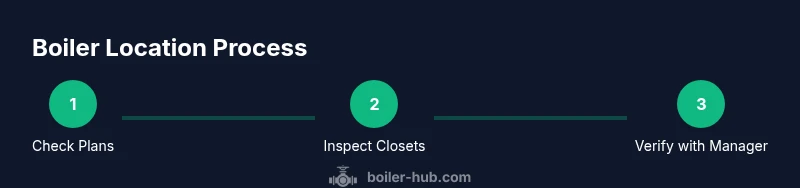
Start with your unit’s floor plan or building directory. If those aren’t available, inspect entryways, laundry rooms, and closets near kitchens or hallways. Scan for thick insulated pipes, heat exchangers, and vent stacks—these are typical boiler features. In buildings with shared spaces, the boiler will almost always be in a centralized zone within the mechanical core, so you should check the core walls or adjacent rooms on your floor and the floors above or below.
Safety considerations as you search
Gas-powered boilers require proper ventilation and carbon monoxide considerations. If you notice a gas smell, immediately leave the area and call emergency services. Do not attempt to operate, modify, or bypass any boiler controls. If you’re unsure, contact your building's maintenance team to guide you to the correct access point and to perform any checks safely.
Tools you’ll rely on during the search
A flashlight, a smartphone for photos or notes, a simple tape measure for spacing, and a notepad are your basic kit. If you’re allowed to access doors with keys, carrying a building access badge can help. Never pry open sealed panels or tamper with panels marked as locked. Documenting the location with photos helps with future maintenance and emergency readiness.
When to involve building management
If you can’t locate the boiler after a careful search, involve the property manager or superintendent. They can confirm the exact location, grant authorized access, and verify that you’re not restricted from viewing critical components. Building records, schematics, or maintenance logs will often list boiler room locations and access points. Boiler Hub emphasizes coordinating access through official channels to ensure safety and compliance.
Quick checks near each potential location
In closets, look for a steel cabinet with vents, a cluster of valves, or a label like “boiler room” or “heating plant.” In basements or mechanical rooms, check for large tanks, pumps, or flue pipes that converge at a single point. When in doubt, listen for the sound of a circulating boiler pump, hum from a control panel, or the hiss of venting gas lines as you approach the mechanical core.
Final thoughts on locating the boiler in an apartment
Being systematic reduces frustration. Start with official building documents, then inspect the most common spaces while respecting access controls. Once you’ve located the boiler, mark its position for future reference and share the information with the building manager to ensure quick, safe access for maintenance and emergencies. Boiler Hub’s approach centers on safety, accessibility, and clear records.
Tools & Materials
- Flashlight with fresh batteries(Low-light search areas may require a bright, focused beam)
- Smartphone or camera(Take photos of potential boiler enclosures for documentation)
- Notepad and pen(Record room names, labels, and access notes)
- Tape measure(Useful for confirming clearances if you’re assessing access)
- Building access badge or key(Only use if you’re authorized to enter restricted mechanical areas)
- Protective gloves (optional)(Use when handling panels or hot pipes with prior authorization)
Steps
Estimated time: 20-40 minutes
- 1
Check official documents
Start with the building’s floor plan, unit layout, and maintenance logs. Look for a boiler room or mechanical core designation and note any access restrictions. This step saves time by pointing you to the correct zone from the outset.
Tip: If plans are outdated, verify with the building manager to avoid exploring restricted areas. - 2
Inspect common access points
Move to shared areas near your unit—hallways, entry foyers, laundry rooms, and service corridors. Look for vented metal doors or labeled panels that hint at a mechanical space. Avoid forcing panels or doors.
Tip: Take photos of any labels or room numbers you find for cross-checking later. - 3
Follow the hot-water and heating lines
Boilers connect to a network of pipes and vents. Trace insulated pipes (often copper or steel) and vent stacks from a known appliance area (like the water heater) toward potential boiler rooms.
Tip: If you see a cluster of pipes, you’re likely near the boiler or related equipment. - 4
Listen for mechanical cues
In active spaces, listen for a steady hum from a circulating pump or air movement from vents—these are typical in boiler cores. Such cues can guide you to the right area without disassembly.
Tip: Use headphones in quiet times to distinguish subtle mechanical sounds. - 5
Confirm ownership and access rules
If you think you’ve found the enclosure, check the room label and any posted access policy. Do not open locked doors without authorization. Contact the building manager to schedule access if needed.
Tip: Having written authorization minimizes delays when maintenance crews arrive. - 6
Document your findings
Photograph the enclosure, note the room number, and log any safety signs. Save this information for future maintenance requests or emergencies. Share records with the property manager for accuracy.
Tip: A simple map sketch can help you orient future visits or repairs.
Questions & Answers
Where is the boiler typically located in an apartment building?
Boilers in apartments are usually in a centralized mechanical space, a utility closet near a hallway, or a basement/mechanical room shared by residents. Look for vented cabinets or pipes converging in a single area. Always check with building management for the exact location.
In most apartment buildings, the boiler is in a centralized mechanical space or utility closet. Check near hallways or basements, and confirm with your property manager.
Can I access the boiler room on my own?
Access to boiler rooms is often restricted for safety and regulatory reasons. Always obtain authorization from the building manager before entering any mechanical space.
Boiler rooms are usually restricted. Get authorization from the building manager before entering.
What safety steps should I take when locating a boiler?
If you smell gas, evacuate and call emergency services. Do not operate valves or panels. Wear appropriate PPE if you have authorization, and coordinate with building staff to ensure safe access.
If you smell gas, leave the area and call emergency services immediately. Do not touch any boiler components.
What if I still can't find the boiler after searching?
Contact your building management or superintendent. They can provide the official boiler room location, grant access, or arrange a service visit to verify the setup.
If you still can’t find it, reach out to building management for the exact location and access help.
Is the boiler always in the basement or a dedicated room?
Not always. In newer or smaller buildings, the boiler may be in a hallway closet, a utility alcove, or an adjacent mechanical room on your floor. Always verify with management.
Not always in the basement; it could be in a hallway closet or a nearby mechanical room. Check with management.
What should I do if I suspect a boiler leak or fault?
Do not ignore signs like dripping water, hissing sounds, or corrosion. Contact building maintenance or a licensed technician promptly and document the issue for records.
If you suspect a leak or fault, contact maintenance right away and document what you observed.
Watch Video
Key Points
- Know that most apartment boilers are in centralized mechanical spaces.
- Use building plans and management to locate the boiler quickly and safely.
- Look for vented cabinets, clusters of pipes, and control panels as clues.
- Do not access restricted spaces without authorization.
- Document location for easy future maintenance and safety.