What Size Boiler for a 4-Bed House: A Practical Sizing Guide
Learn how to size a boiler for a 4-bedroom home, including combi vs system options, insulation impact, and practical steps. Based on Boiler Hub Analysis, 2026.


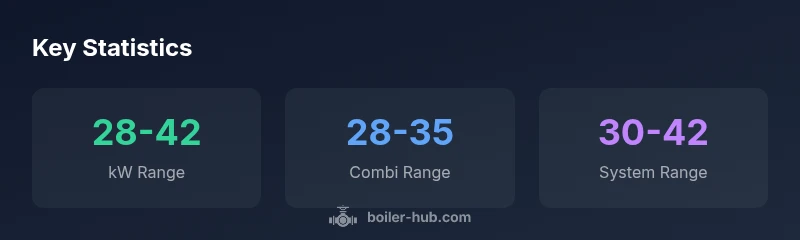
Typical well-insulated four-bedroom homes usually need a mid-range boiler, with outputs in the high 20s to mid-40 kW range depending on configuration. For a combi boiler, expect around 28-35 kW; for a system/regular boiler with higher hot-water demand, 30-42 kW. Final sizing should consider bathrooms, radiators, and peak hot-water use.
Why the right boiler size matters for a 4-bed home
If you’re asking what size boiler for 4 bed house, you’re considering how heat and hot water will flow through a family home. According to Boiler Hub, the size of the boiler should match both peak hot-water demand and ongoing space-heating needs. Oversizing wastes energy and increases upfront cost, while undersizing leads to lukewarm radiators and insufficient hot water during peak periods. In a typical well-insulated four-bedroom home, a mid-range output is common, but the exact size should account for the number of bathrooms, radiator count, and occupancy pattern. A heat-loss calculation is the most reliable way to confirm the right size, and it should be revisited if you renovate or add square footage.
Quick method to estimate boiler size for a 4-bedroom house
A practical starting point is to estimate peak daily hot-water usage and main heating load. Tally bathrooms that run concurrently, consider showering patterns, and note the number of radiators and their layout. Then translate these needs into boiler output ranges. While a professional heat-loss calculation is ideal, a structured rule-of-thumb can help you choose between a combi and a system boiler. Keep in mind climate, insulation quality, and window efficiency, as these influence energy demand and required boiler power. Boiler Hub Analysis, 2026, emphasizes that insulation and airtightness can swing the needed output by several kilowatts.
Combi boilers vs system boilers for a 4-bedroom home
Combi boilers deliver both heat and hot water on demand, which suits homes with modest peak hot-water needs and good water pressure. For a four-bedroom home with multiple bathrooms, a combi sized around 28-35 kW is common, but high simultaneous hot-water demand can push you toward the higher end. System boilers store hot water in a cylinder, offering steadier supply for many bathrooms and larger homes. In such cases, 30-42 kW is a typical range to cover heating plus hot-water draw without compromising comfort.
The impact of insulation, windows, and occupancy on boiler sizing
Heat loss drives boiler size. Poor insulation, single-glazed windows, and high occupancy can dramatically raise the required output. Upgrades like insulated walls, sealed attic access, and efficient glazing reduce the peak demand and may allow a smaller boiler. Conversely, if you live in a drafty home with many occupants who take long showers, you may lean toward the upper end of the size spectrum. Boiler Hub’s guidance for 2026 highlights that performance improvements in the building envelope often pay back in reduced boiler size and operating cost over time.
How radiators and layout influence demand
Radiator count and placement influence the total heat served by the boiler. More radiators and longer pipe runs increase heat-loss paths, requiring more boiler output to reach the setpoint quickly. Radiator sizing should align with room-by-room heat loss estimates, not just total house area. If you plan to expand or convert spaces, consider future demand when selecting boiler size. A well-calibrated system also improves comfort by reducing temperature swings during shoulder seasons.
Step-by-step sizing workflow you can follow
- Take inventory: number of bathrooms, radiator count, and floor area. 2) Estimate peak hot-water usage (simultaneous showers/taps). 3) Assess insulation and window quality. 4) Decide on boiler type (combi vs system) based on hot-water needs. 5) Use manufacturer calculators or hire a heating engineer to perform a formal heat-loss calculation. 6) Review local climate and energy efficiency targets, then choose a size within a conservative range to avoid short cycling.
Common mistakes that skew boiler sizing
One common error is assuming all rooms heat evenly; builders often oversize radiators without verifying actual heat loss, leading to inefficiency. Another pitfall is ignoring hot-water patterns, especially in households with multiple bathrooms. Some homeowners under-specify to save upfront costs, which causes frequent cycling and inconsistent comfort. Always run a heat-loss assessment and check if any planned renovations will alter demand before finalizing the boiler size.
Scenario-based sizing examples for different layouts
Scenario A: A well-insulated 4-bedroom semi with 2 bathrooms and moderate hot-water use may fit a combi boiler around 28-32 kW. Scenario B: A poorly insulated 4-bedroom detached with 3 bathrooms and high simultaneous hot-water demand could require a system boiler in the 40 kW range or higher. Scenario C: An energy-efficient, compact 4-bedroom condo with 2 bathrooms may work well with a 25-30 kW combi when showers are staggered. These examples illustrate how insulation, bathrooms, and layout shift the ideal size.
Sizing ranges for common boiler types in a typical 4-bedroom home
| Boiler Type | Typical Output (kW) | Hot Water Flow Rate (L/min) |
|---|---|---|
| Combi | 28-35 | 9-12 |
| System/Regular | 30-42 | 12-18 |
Questions & Answers
How do I calculate boiler size for a 4-bedroom house?
Start with floor area, number of bathrooms, radiator count, and insulation quality. Estimate peak hot-water demand and use a heat-loss calculation to determine the appropriate kW range. A professional evaluation is recommended for accuracy.
Begin with your home's size, bathrooms, and insulation, then assess peak hot-water needs. A heat-loss calculation by a pro confirms the right size.
Does a combi boiler work well in a 4-bed house?
A combi boiler can work well if hot-water demand is moderate and water pressure is sufficient. For homes with multiple bathrooms and concurrent showers, a larger combi or a system boiler may be more reliable.
Yes, a combi can work for many 4-bedroom homes, but if you have several bathrooms sharing peak water, a larger combi or a system boiler may be better.
What if my home is poorly insulated?
Poor insulation raises heat loss, often requiring a larger boiler or longer run times. Upgrading insulation or sealing drafts can reduce the needed boiler size and running costs.
If your home loses heat, you’ll likely need more boiler power unless you improve insulation.
Can I size a boiler myself?
You can do a rough estimate using room-by-room heat loss and hot-water demand, but a professional heat-loss calculation is recommended to avoid oversizing or undersizing.
You can estimate, but a pro heat-loss calculation is best for accuracy.
What are the risks of oversizing a boiler?
Oversizing wastes energy, increases upfront cost, and can cause short cycling, reducing comfort and efficiency. Aim for the smallest boiler that meets peak demand.
Oversizing wastes energy and costs more; it can also cause short cycling.
“Sizing a boiler is nuanced; even small changes in home insulation or hot-water habits can shift the required output. A precise heat-loss calculation provides the most reliable result.”
Key Points
- Start with a heat-loss assessment to define size.
- Combi vs system choice hinges on hot-water demand.
- Insulation improvements can reduce required boiler size.
- Count bathrooms and radiators to refine sizing.
- Get a professional calculation for final confirmation.