What Boiler Should I Get? A Practical Homeowner's Guide
Learn how to choose the right boiler for your home, covering sizing, fuel type, efficiency, installation, and maintenance with practical steps from Boiler Hub.


Goal: help you pick a boiler that fits your home’s heating load, fuel access, and long-term goals. Start by confirming your climate and home size, then compare fuel options and efficiency ratings, and plan for installation and maintenance. This quick path narrows to 1–3 solid options and avoids common sizing mistakes.
Why getting the right boiler matters
A correctly sized and configured boiler improves comfort, reduces energy waste, and lowers service needs. According to Boiler Hub, homeowners who prioritize proper sizing and fuel compatibility tend to experience steadier indoor temperatures and more reliable hot water. A well-chosen boiler also enhances safety by ensuring venting and gas connections suit the home’s layout. The right boiler aligns heat distribution with climate, occupancy, and radiators or baseboards, whether you live in a compact townhouse or a multi-zone property. In practice, a thoughtful selection reduces cold spots, improves response time to temperature changes, and makes ongoing maintenance simpler.
As you begin shopping, compile a list of home characteristics: square footage, insulation quality, number of rooms, existing radiators, and preferred fuel. This data will guide sizing, fuel choice, and installation constraints. Remember that the goal is comfort and efficiency, not simply chasing the highest efficiency rating or the lowest upfront price.
How boilers are sized
Sizing a boiler is about heat demand, not simply room size. A proper load calculation considers insulation, windows, thermostat behavior, distribution hardware, and climate. The standard industry approach uses a formal load calculation (often called Manual J) or a reputable online calculator for homes. An oversized boiler cycles on and off, wasting fuel and shortening component life; an undersized unit struggles during cold periods and may fail to meet hot-water demand. When you gather measurements and climate data, you’ll compare models on a like-for-like basis and ensure compatibility with existing radiators and piping. For most homes, a professional assessment yields results you can trust when negotiating with installers.
Practical tip: if you’ve recently replaced windows or added insulation, revisit your heat-load estimate, as improvements can reduce the required boiler size without sacrificing comfort.
Fuel types and efficiency
Fuel options include natural gas, LPG, oil, electricity, and, in some setups, heat pumps. Your property’s fuel availability, local costs, and safety considerations steer the choice. Efficiency matters for ongoing costs and climate resilience, but higher efficiency can come with higher upfront costs or compatibility considerations with hot-water needs. Condensing boilers capture waste heat from exhaust and can offer steady performance with modern radiators and piping. When upgrading, assess not only the boiler’s efficiency rating but also how well the entire system—warm-air zones, hot-water storage, and venting—works together to minimize energy loss. If your family’s hot-water needs are heavy, you may prefer a model with strong DOM (domestic hot water) performance.
Note that switching fuels can require significant changes to venting, gas lines, or electrical capacity, so plan these factors early and consult a licensed professional.
Boiler types and configurations
Residential boilers come in several configurations: combi (on-demand hot water with space heating), system (cylinder-based hot water with a stored supply), and regular/conventional (traditional boiler with a separate hot-water cylinder). Combi boilers save space and are popular in smaller homes, but may have limits if you run multiple hot-water outlets simultaneously. System boilers slot into homes with larger storage and multiple zones, delivering reliable hot water while maintaining efficiency. Regular boilers pair with a cylinder and multi-zone loop, often favored in older homes with extensive radiator networks. Choosing the right type depends on hot-water demand, existing plumbing, space, and future usage plans. An informed choice reduces call-backs and improves long-term satisfaction with your heating system.
Steps to choose and install
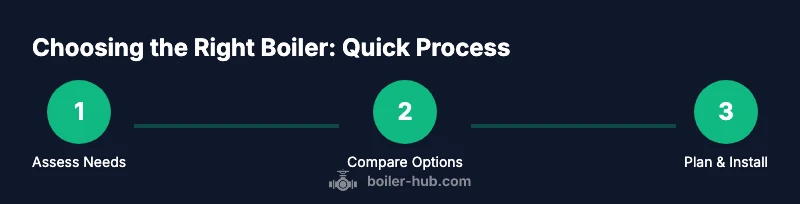
A practical path to selecting and installing a boiler starts with a clear data-gathering phase, followed by design and procurement, then installation and verification. Begin by measuring heat-loss indicators and confirming fuel feasibility. Compare models that meet the load requirement, focusing on efficiency, warranty, and service support. During installation, ensure venting, condensate drainage, and space limitations are addressed to avoid post-installation issues. Finally, commission the system and verify comfort levels, thermostat coordination, and hot-water performance. This structured approach minimizes surprises and ensures a smoother handoff from sale to service.
Remember: working with a licensed technician throughout sizing, selection, and installation is essential for safety, code compliance, and long-term reliability.
Maintenance and safety considerations
Routine maintenance supports reliability and safety. Schedule annual professional servicing to inspect gas connections, venting, heat exchanger condition, and pressure settings. Bleed radiators to remove air pockets and maintain steady heat distribution. Install and test CO alarms near the boiler and sleeping areas as a safety precaution. Keep a log of service dates, part replacements, and any unusual noises or temperature fluctuations. A well-maintained boiler will perform more consistently and last longer, reducing the risk of mid-season breakdowns.
Safety first: never attempt venting work or gas-line modifications yourself. Always hire a licensed professional for any inspection, adjustment, or replacement.
To maximize safety and efficiency, match your boiler’s warranty terms with the service schedule and ensure that your fuel supply, venting, and electrical connections comply with local codes.
Budgeting and long-term costs
Total ownership costs include purchase price, installation complexity, ongoing fuel usage, and maintenance. Higher-efficiency models often reduce annual energy costs and may qualify for local rebates or incentives, making them more economical over the boiler’s life. When comparing options, analyze not only the upfront price but also the expected fuel savings, warranty coverage, and service availability. If you plan to stay in the home for many years, prioritizing efficiency and reliability yields the best return. Conversely, if you expect to move soon, focus on straightforward installation, good warranties, and minimal disruption. A thoughtful balance between upfront investment and long-term savings is key to choosing a boiler that fits the property and your plans.
Real-world scenarios and examples
Scenario A: A compact two-bedroom apartment with limited space benefits from a high-efficiency combi boiler that provides instant hot water and heating. Scenario B: A three-bedroom family home with several radiators and multiple zones benefits from a system boiler with an added hot-water cylinder to support simultaneous showers. Scenario C: An older house with legacy radiators and uneven heat distribution may require a regular boiler paired with a multi-zone control strategy. In each case, the heating load estimate and fuel availability guide the final choice, emphasizing the importance of accurate sizing and professional installation.
Boiler Hub’s team notes that scenario-based planning reduces mismatches between hot water demand and heating capacity, resulting in more consistent comfort and fewer service interruptions.
Tools & Materials
- Measuring tape(Measure room sizes and radiator dimensions for heat-load estimation.)
- Notebook and pen(Record current boiler specs, fuel type, and observed issues.)
- Access to existing boiler room(Ensure safe entry for inspection and measurements.)
- Boiler sizing calculator or Manual J software(Use a reputable calculator to estimate heating load accurately.)
- Quotes comparison sheet(Track efficiency ratings, warranties, and scope of work.)
- Licensed heating technician(Professional sizing, fuel assessment, venting and installation.)
- Fuel assessment information(Confirm available fuels and any local regulations or incentives.)
- Carbon monoxide detector(Install or verify existing detectors near the boiler area.)
Steps
Estimated time: 2-6 weeks depending on availability, permits, and system complexity
- 1
Estimate heat load
Collect data on insulation, windows, occupancy, and climate. Use a load calculator or a professional Manual J assessment to determine the required boiler size.
Tip: Document insulation upgrades or drafts that could affect the load. - 2
Evaluate fuel options
Identify available fuels (gas, oil, electricity) and any local constraints or incentives. Consider future energy plans for the home.
Tip: Check existing gas lines and electrical capacity before choosing a fuel. - 3
Compare boiler types and efficiencies
Match a boiler type to hot-water needs and zoning. Prioritize reliable brands with good support and warranties.
Tip: Ensure compatibility with radiators, cylinders, or storage tanks in place. - 4
Get quotes and verify scope
Solicit multiple quotes that clearly state equipment, labor, venting, and any upgrades. Review warranties and maintenance requirements.
Tip: Ask for a single-point-of-contact project manager to simplify communication. - 5
Plan installation logistics
Coordinate venting routes, condensate drainage, space, and access for service. Confirm permit and code compliance.
Tip: Schedule a post-install test and on-site training for controls. - 6
Commission and test
Have the installer commission the boiler, verify temperature distribution, hot-water flow, and safety systems.
Tip: Keep a service log and verify warranty registration.
Questions & Answers
What boiler type is best for a small apartment?
In small spaces, a high-efficiency combi boiler is often ideal because it provides heat and hot water on demand with minimal hardware. Always verify warmth-to-water balance with your current plumbing and expected usage.
A compact combi boiler is usually best for small spaces, giving on-demand heat and hot water without extra storage.
How can I tell if my boiler is undersized or oversized?
Signs of wrong sizing include frequent cycling, uneven room temperatures, and long recovery times after heat demand spikes. A professional load calculation can confirm the correct size.
Unbalanced temperatures or strange cycling usually means the size may be off; get a load check to be sure.
Is a higher AFUE rating always better?
Higher efficiency generally lowers running costs, but consider upfront costs, fuel type, and house design. Choose a model that matches your climate and hot-water needs.
Higher efficiency helps save energy, but weigh upfront costs and your home’s needs.
Can I switch from gas to electric heating for a boiler?
Switching fuels often requires electrical upgrades, venting changes, and permit approvals. A licensed pro can assess compatibility and long-term costs.
Switching fuels usually needs a professional assessment and possible upgrades.
What maintenance should I plan for a boiler?
Schedule annual servicing, bleed radiators, check pressure, and test safety devices. Keep an ongoing record of service and any anomalies.
Get annual service, bleed the radiators, and monitor pressure for safe operation.
How long does boiler installation typically take?
Most residential boiler installations take a few hours to a full day, depending on system complexity, venting needs, and upgrades.
Most installations take several hours to a day, based on complexity.
Watch Video
Key Points
- Know your load first; size matters for comfort and efficiency
- Choose fuel and boiler type based on home layout and usage
- Prioritize professional sizing, installation, and safety compliance
- Plan for maintenance to extend boiler life
- Compare total cost of ownership, not just upfront price