How to Size a Boiler for Your House
Learn how to size a residential boiler for comfort and efficiency. This guide covers inputs, sizing methods, data gathering, and verification to ensure the right boiler size for your home.


You will learn how to size a residential boiler for your house by gathering your floor plans, insulation data, and climate information, then performing a load calculation or using rules of thumb with a safety cushion. The goal is a boiler that matches peak heating demand without waste. This quick answer gives you the steps and considerations to start.
Why correct boiler sizing matters
A boiler that’s too large cycles on and off, wasting fuel and shortening equipment life. An undersized boiler runs continuously, never reaching comfortable indoor temperatures. For homeowners and facility managers, getting size right is the foundation of comfort, energy efficiency, and long-term cost savings. According to Boiler Hub, properly sized boilers are more likely to maintain stable indoor temperatures while minimizing wear and tear. In practice, correct sizing also helps you avoid oversized equipment that adds upfront cost but delivers diminishing returns over time. This section lays the groundwork for why a precise size matters for both comfort and efficiency.
Boiler sizing is not a one-time guess. It should reflect climate conditions, home construction, insulation, and hot-water needs. When you size correctly, you reduce energy waste, lower your bills, and extend the life of the boiler and its controls. The Boiler Hub team emphasizes that an evidence-based approach — combining data collection with a load calculation — yields results that stand up to real weather and usage patterns. This sets the stage for the practical steps below.
How boilers are sized: the basics
Boilers are rated by output in BTU per hour (or kW in some regions). The key idea is matching the boiler’s maximum heat output to the building’s heating load. A boiler may be labeled with its input rating (the energy it consumes) and its output rating (the usable heat delivered to your home). Modern boilers often feature modulation: they ramp output up or down to meet demand, which improves efficiency at partial loads. Two-stage or modulating boilers can quietly and effectively respond to changes in outdoor temperature and interior comfort needs.
Sizing is not simply about peak winter temperatures. Designers also consider worst-case conditions, heat losses through walls and ceilings, and how quickly a system can recover after setback temperatures. For example, a well-sized boiler in a well-insulated home will have less time cycling at moderate outdoor temperatures, which saves fuel and reduces wear on pumps and valves. The goal is a comfortable home with reliable hot water while avoiding oversizing that wastes energy.
Inputs that drive boiler size
Sizing a boiler requires collecting a range of inputs that describe both the house and its patterns of use. Key inputs include:
- Local climate and design outdoor temperature (the temperature the system is sized to handle)
- Home size, layout, and construction details (square footage, number of floors, ceiling heights)
- Building envelope quality (insulation R-values, air leakage, window efficiency)
- Heating system layout (radiant floors, baseboard, or forced-air distribution) and zoning
- Domestic hot water (DHW) demand, including number of bathrooms and typical usage patterns
- Occupancy patterns (how often spaces are occupied and at what temperatures)
- Venting, combustion air, and appliance efficiency (especially for gas boilers)
All of these inputs influence the peak heat load the boiler must meet. Collecting accurate data upfront helps prevent oversized or undersized sizing later on. As you gather details, document assumptions and source data so a professional can review them later. Boiler Hub’s guidance emphasizes transparency in data sources and calculations to ensure reproducibility and safety.
Sizing methods: Manual J load calculation vs simplified methods
There are two broad approaches to sizing: a detailed heat-load calculation (often called Manual J in many regions) and simplified methods that use rules of thumb or online calculators. Manual J is comprehensive: it accounts for climate data, construction details, and occupancy patterns to estimate peak heating load to a precise number. It may require software or a professional to perform correctly.
Simplified methods rely on easier inputs, such as square footage and rough insulation levels, and then apply standard multipliers to derive a target boiler output. These methods can be useful for quick projects or early planning, but they are less precise than a full Manual J calculation. Regardless of the method you choose, you should validate results with a qualified installer and consider future-proofing for potential home improvements. The goal is not just a number but a defensible sizing approach supported by your data.
Practical data gathering for sizing
Data gathering is the backbone of accurate sizing. Start with your floor plans or a simple home layout, then collect the following:
- Floor area by zone, ceiling heights, and number of floors
- Existing insulation levels (R-values for walls, attic, and floors) and air leakage indicators (drafts, gaps, and seal quality)
- Window type, glazing, and shading that affects heat gain/loss
- Exterior climate data for your location and the design outdoor temperature used in sizing
- Current energy bills to infer baseline energy use and performance
- Domestic hot water usage patterns (number of occupants, bathrooms, and typical peak DHW demand)
Create a data sheet or spreadsheet that links each input to a variable in your sizing model. If any data are uncertain, err on the side of conservatism (slightly higher design heat load) to avoid undersizing. This approach aligns with Boiler Hub’s emphasis on thorough data collection as the foundation for reliable sizing.
Interpreting the results and choosing a size
Interpreting sizing results involves more than picking a number off a chart. Consider how the boiler will perform at part-load conditions, how often it will run in shoulder seasons, and the impact on comfort during extreme cold. Many homes benefit from a modulating or two-stage boiler, which can adjust output gradually as outdoor temperatures change. When the calculated load is between two standard boiler sizes, engineers typically choose the larger option with a built-in efficiency cushion and good part-load performance to avoid cycling. Remember, oversizing wastes fuel and increases wear; undersizing leads to cold rooms and poor hot-water recovery. Benchmark the final size against local codes and the installer’s professional assessment. This prudent approach reduces the risk of future sizing errors and aligns with best practices from Boiler Hub’s guidance.
Domestic hot water and its impact on boiler sizing
Hot water demand often drives sizing decisions, especially in households with many occupants or high DHW usage. If the DHW load is substantial, you may need a boiler with a higher main-output rating or a separate DHW heater. Indirect-fired water heaters, storage tanks, or dedicated on-demand DHW systems can influence the overall system sizing and energy efficiency. Properly accounting for DHW ensures you don’t oversize for space heating alone or leave hot water underpowered during peak use. A well-sized system considers both space heating and DHW to deliver reliable comfort without waste.
Verification, installation considerations, and maintenance
Once sizing is completed, obtain confirmation from a licensed installer who can verify calculations, conduct code-compliant venting and combustion air checks, and perform post-installation testing. Documentation of the sizing basis helps with future service and potential expansion plans. Ask your installer about maintenance requirements, filter and nozzle replacements, and annual cleanings that keep efficiency at peak. Proper verification minimizes the risk of incorrect sizing and ensures the system operates safely and reliably over its life.
Next steps and planning for a compliant install
With a recommended boiler size in hand, prepare for installation by scheduling a qualified contractor, confirming energy-efficiency upgrades if needed, and planning for regular maintenance. Document the design load, chosen boiler, and warranty terms. As you finalize decisions, consider future improvements (better insulation, new windows) that could reduce or shift the designed load, enabling potential downsizing without compromising comfort. This proactive planning aligns with Boiler Hub’s focus on practical, reliable guidance for homeowners and facility managers.
Tools & Materials
- Floor plan or building envelope data(Include square footage per zone and ceiling heights)
- Recent energy bills(Use to estimate baseline heat use and occupancy patterns)
- Measuring tape and ruler(For room sizes and layout verification)
- Notebook or digital note device(Record data, assumptions, and calculations)
- Thermometer or temperature sensor(Capture indoor/outdoor temperatures for design conditions)
- Manual J calculation tool or calculator(Choose software or a validated online calculator)
- Access to HVAC professional or contractor (optional)(Useful for verification and final sizing)
- Local climate data reference (ASHRAE or regional data)(Helpful for accurate design outdoor temp input)
Steps
Estimated time: 2-4 hours for data gathering and calculations; installation time is separate
- 1
Gather your building data
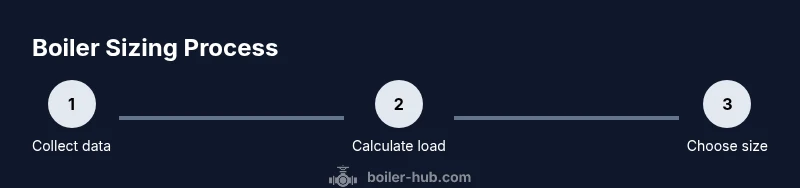
Collect floor plans, zone counts, insulation levels, window types, and occupancy patterns. Record outdoor design temperatures for sizing. This step builds the factual basis for the load calculation.
Tip: Have all plans, bills, and enclosure details ready before you start. - 2
Compute the design heat load
Use Manual J or a validated simplified method to estimate the peak heating load. Input climate data, envelope performance, and internal gains. The result is the target boiler output for design conditions.
Tip: If you’re unsure, run both methods and compare results with a professional. - 3
Estimate DHW demand
Assess domestic hot water usage and determine if the DHW load will influence boiler sizing or require a separate water heater. Include peak demand scenarios in your calculation.
Tip: Remember that more occupants increase DHW requirements significantly. - 4
Choose sizing method and apply a cushion
Decide whether to rely on Manual J or a simplified method. Apply a safety cushion (often 5-20% depending on climate and load variability) to account for real-world conditions.
Tip: A modulating boiler often benefits from a modest cushion to avoid frequent cycling. - 5
Select boiler type and final size
Based on the calculated load, choose a boiler size that matches the measured output and favors good part-load efficiency. Consider modulating or two-stage models for better comfort and efficiency.
Tip: Avoid oversizing; prefer equipment with strong part-load performance. - 6
Plan for future changes
Anticipate possible improvements (insulation upgrades, window replacements, or additional zones) and discuss how they could affect sizing. This reduces the risk of outgrowing the system later.
Tip: Document potential future changes to revisit sizing if needed. - 7
Verify with a professional
Have a licensed installer review calculations, verify venting, and confirm code compliance before signing off on a final design and installation plan.
Tip: Ask for a written sizing justification and a test plan for commissioning.
Questions & Answers
What does boiler sizing mean?
Boiler sizing is the process of matching the boiler’s heat output to the home’s heating load and hot water demand. Proper sizing ensures comfort, efficiency, and reliable operation, reducing short cycling and energy waste.
Sizing is matching the boiler’s heat output to your home’s needs to keep you comfortable and efficient.
Can I size a boiler myself?
You can perform preliminary sizing using available data, but a professional should validate calculations, venting, and installation to meet code and safety standards.
You can start the sizing, but have a professional verify the results and install the system.
How is domestic hot water considered in sizing?
DHW demand increases the required boiler output. In some homes, a separate DHW appliance or an indirect water heater is used to avoid oversizing the space-heating boiler.
Hot water demand can drive the final size, so plan for DHW alongside space heating.
Do I need a Manual J calculation?
Manual J is the detailed load calculation standard used by many professionals. It provides the most accurate sizing, especially for complex homes, but simpler methods can be acceptable for straightforward layouts.
A formal Manual J calculation is ideal for accuracy, especially in complex homes.
What happens if I oversize or undersize a boiler?
Oversizing wastes fuel, causes frequent cycling, and wears components; undersizing leads to cold rooms and poor hot-water delivery. Either situation reduces comfort and increases operating costs.
Too big wastes energy; too small can’t meet demand. Both reduce comfort and efficiency.
Should sizing be re-evaluated after renovations?
Yes. Changes like insulation upgrades, window replacements, or new zones can alter heat load. Revisit sizing with a professional to ensure continued performance.
Yes—reassess sizing after major renovations to keep performance optimal.
Watch Video
Key Points
- Gather complete house data before sizing
- Prefer load-based sizing over rough guesses
- Include DHW in the peak load calculation
- Verify results with a professional