What Size Boiler for Radiant Heat: A Practical Guide
Learn how to size a boiler for radiant floor heating using heat-load calculations, climate considerations, and practical steps to ensure comfort and efficiency. This guide helps homeowners and managers avoid oversizing and undersizing.


To size a boiler for radiant heat, start with a heat-load calculation based on floor area, insulation, and climate, then select a boiler that meets that load with a safe efficiency margin. Exact sizing varies by home design and local conditions, so professional confirmation is essential for comfort and energy efficiency. This approach helps prevent short cycling and uneven floor temperatures.
Why sizing matters for radiant heat
According to Boiler Hub, the way you size a boiler for radiant heat determines how evenly the floors warm and how efficiently the system runs. Radiant floor heating depends on controlled water temperatures and consistent heat delivery, so using a one-size-fits-all boiler is a common source of comfort problems. When sizing is off, you may experience cold spots, excessive cycling, and wasted energy. Boiler Hub Analysis, 2026, emphasizes that load-driven sizing aligns equipment with actual demand, reducing energy waste and wear on the boiler. In short, correct sizing is the foundation of reliable comfort and long-term system health. Consider your floor type, insulation, window performance, and local climate as you begin.
How radiant floor efficiency interacts with boiler size
Radiant floors store heat in the floor mass and rely on gentle, low-temperature water. A boiler that is too large will heat rapidly but cool quickly, causing short cycling and higher maintenance costs. A boiler that is too small will struggle to meet peak loads, resulting in cold floors during cold snaps. The interaction between floor finish materials, thermal mass, and the control strategy (including outdoor reset or mixing valves) determines the practical size you need. In practice, the goal is a boiler that can meet your design heat load at a moderate return temperature, with adequate modulating capability to avoid overshoot.
A structured approach to sizing radiant-heat boilers
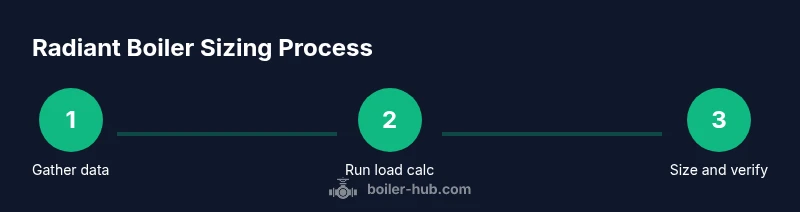
A robust sizing process starts with gathering architectural data and insulation performance. Then you perform a heat-load calculation that accounts for floor area, mass, and climate. The result is matched to a boiler with the proper rating and a favorable turndown ratio. While many contractors rely on software tools, the underlying principle remains the same: size to the calculated load, then apply a safety margin to accommodate future changes in occupancy or insulation improvements. This is where professional verification is especially valuable, to ensure your assumptions align with real-world performance.
Common sizing mistakes and how to avoid them
Oversizing for radiant heat is a frequent pitfall, driven by the desire for rapid space warming. The opposite problem—under-sizing—causes cold floors and uneven temperatures. Both mistakes reduce comfort and increase operating costs. A key guardrail is to compare the boiler’s rated output to the calculated load under design conditions and to confirm the system’s controllability (including outdoor reset, radiator loop balance, and zoning). Avoid basing size solely on boiler where you read the highest number in a spec sheet; the real target is the load that the system must meet across all zones and times of day.
Climate, insulation, and floor mass: how they shift the result
The outdoor climate, indoor design temperature, and the thermal mass of floors (concrete, tile, or gypsum) all influence the needed boiler size. Heavier floor mass can store more heat and smooth temperatures, potentially allowing for a smaller instantaneous boiler rating if the control strategy leverages that mass. Conversely, poorly insulated homes or large windows can dramatically raise the design load. The sizing method should incorporate these variables so that the final boiler selection remains robust under real-world conditions.
The sizing workflow: from plans to boiler spec sheets
Begin with architectural plans, insulation details, and floor mass data. Run a heat-load calculation using a recognized method or software, and record the design outdoor temperature and indoor setpoint. Compare the calculated load to boiler ratings, paying attention to the modulation range and turndown ratio. Finally, verify your results with a qualified HVAC professional who can interpret the data in the context of your home and local climate. Documentation of assumptions and calculations is essential for future upgrades.
Next steps: quotes, verification, and future-proofing
After establishing a target boiler size, solicit quotes that explicitly document the calculated load, modulation capability, and zoning approach. Ask for a system diagram showing how the radiant loops will be controlled and balanced. Plan for future renovations or insulation improvements by keeping the load calculation and design parameters accessible. The Boiler Hub team recommends keeping a copy of the sizing calculations and having a professional review any future renovations to maintain performance.
Tools & Materials
- Heat-load calculation software or calculator(Use recognized methods (e.g., Manual J) or HVAC load software to derive design load.)
- Floor plans and insulation data(Include room dimensions, R-values, subfloor mass, and underlayment details.)
- Thermostat zoning plan(Document how zones will be controlled and how they relate to radiant loops.)
- Measuring tools and data collection kit(Tape measure, notebook or tablet, camera for plan references.)
- Access to boiler manufacturer sizing charts(Helpful for cross-checking ratings and modulation ranges.)
Steps
Estimated time: 2-4 hours
- 1
Collect building data
Gather floor plans, room dimensions, insulation values, window specs, and door area. This baseline will feed the heat-load calculation and ensure you account for all spaces served by radiant floors.
Tip: Take photos of all insulation details and note any recent renovations that could affect heat loss. - 2
Run a heat-load calculation
Using a recognized method or software, determine the design heat load for the radiant zones under typical winter conditions. Record outdoor temperatures and indoor setpoints used in the calculation.
Tip: Document every assumption so you can revisit if conditions change. - 3
Assess radiant-floor design and water strategy
Review floor mass, tube spacing, and the chosen water temperature range or outdoor reset approach. Ensure the design aligns with a boiler that can modulate to the calculated load.
Tip: If you use a mixing valve or outdoor reset, verify compatibility with the boiler's modulation range. - 4
Compare to boiler ratings and modulation
Look at the boiler’s nominal output and modulation capabilities. Ensure the minimum output is below the calculated load at design conditions so the system can avoid short cycling.
Tip: Prefer models with a wide modulation range and good part-load efficiency. - 5
Plan controls and zoning
Draft a control scheme that can balance zones and prevent overheating in any single area. Include smart thermostats, weather-based controls, and zone valves if needed.
Tip: Zoning can significantly improve comfort and efficiency for radiant floors. - 6
Have sizing reviewed by a pro
Submit the calculations, plan, and any quotes to a licensed HVAC professional for verification. They can validate assumptions and catch issues you may have missed.
Tip: Keep a copy of all calculations and designs for future reference.
Questions & Answers
What is heat load and why does it affect boiler size?
Heat load is the amount of heat a space needs to stay comfortable under design conditions. It determines the boiler’s required output. Correctly sizing to this load ensures even floor temperatures and efficient operation.
Heat load is how much heat the space needs to stay comfortable. Size the boiler to meet that load for even radiant floors and better efficiency.
Can I base boiler size on room-by-room heat loss?
Room-by-room sizing can help in zoning, but the overall system size should reflect the total connected load. It’s common to size the boiler to meet the combined design load while using zoning to manage individual rooms.
Yes, you can use room data for zoning, but the boiler size should cover the total design load.
What happens if the boiler is oversized for radiant heat?
Oversizing causes short cycling, higher operational costs, and reduced comfort due to uneven floor temperatures. It also shortens boiler life and increases maintenance needs.
Oversizing leads to short cycling and higher energy use, reducing comfort and equipment life.
What is boiler turndown and why is it important for radiant floors?
Turndown is the ability of a boiler to reduce output at light load. A higher turndown improves efficiency and steady temperatures in radiant floor systems by avoiding overshoot at low demand.
Turndown lets the boiler run smoothly at low demand, improving efficiency and comfort.
Is a professional heat-load calculation mandatory?
While not legally mandatory in all areas, a professional load calculation provides a defensible design basis and reduces the risk of comfort or efficiency problems.
A professional calculation gives you a solid and defendable sizing basis.
How often should I recheck boiler sizing after renovations?
Any major renovation that changes insulation, window performance, or floor mass warrants a recheck of the heat load and potential boiler sizing adjustments.
Recheck sizing after big renovations that affect heat loss.
Watch Video
Key Points
- Start with an accurate heat-load calculation.
- Radiant floors rely on controlled water temperature for comfort.
- Avoid oversizing; proper modulation matters for efficiency.
- Document sizing work and have a pro verify results.