What Should Boiler PSI Be? A Practical Homeowner Guide
Learn the correct boiler pressure ranges for cold and hot conditions, how to check pressure safely, what to do if pressure drops or rises, and maintenance tips to keep your boiler operating efficiently. A Boiler Hub guide for homeowners and facilities managers.


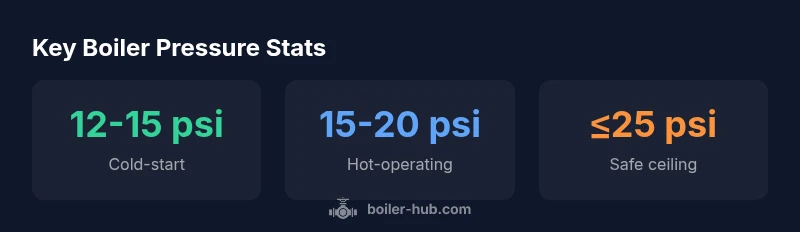
Boiler pressure should be around 12-15 psi when the system is cold and about 15-20 psi once the boiler is hot. Some residential systems tolerate up to 25 psi, but consistently higher pressures indicate a problem. Regular checks help detect leaks or faulty expansion tanks. If pressure falls below 12 psi or climbs above 25 psi, repressurize or call a pro.
Understanding Boiler Pressure: What it Means
Pressure, measured in psi, tells you how hard your boiler is pushing water through the heating circuit. Systems rely on stable pressure to circulate hot water efficiently and to prevent unsafe conditions. When people ask what should boiler psi be, the quick answer is that acceptable ranges depend on whether the boiler is cold or hot. In most homes, a cold reading around 12-15 psi is typical, rising to roughly 15-20 psi when the burner fires. If you see numbers outside this window, there may be a leak, faulty expansion tank, or air in the lines. Regular checks help you catch problems early and avoid cold spots in radiators or cycling issues. For condo or apartment buildings, the range tends to be similar, but you should confirm with the building’s maintenance plan.
Typical Pressure Ranges for Different Boiler Types
Most homes rely on standard residential boilers that share common pressure targets. A combi boiler (which provides hot water on demand) generally follows the same cold-hot range: about 12-15 psi when cold and 15-20 psi when in full operation. System boilers and conventional boilers often exhibit the same ranges, but some high-efficiency models may show slightly tighter tolerances. Always consult the label on your unit or the manufacturer’s manual to confirm the exact range for your model. If you’re unsure, treat 12-15 psi cold and 15-20 psi hot as the baseline and monitor any deviations.
How to Check Boiler Pressure Safely
Begin with a cautious, methodical approach. Locate the pressure gauge on the boiler; many models feature a dial or digital readout. With the system off and cooled, note the cold-start pressure. If the reading is below 12 psi or above 15 psi, you may need service or repressurization. When the boiler runs, watch the needle or digital readout; aim for the 15-20 psi hot range. If you suspect a leak, suddenly unexplained drops, or a fluctuating gauge, do not ignore it—these can be early signs of expansion tank issues or valve faults. For safety, never bypass a pressure relief valve; contact a licensed technician if you see persistent high readings or frequent drops.
What to Do If Pressure Is Too Low or Too High
Low pressure often means the system needs repressurizing or there’s a leak. High pressure can indicate expansion tank problems or a failing valve. In general, repressurizing to the cold-start range (12-15 psi) is appropriate after consulting the manual. If you notice pressure creeping toward 25 psi or climbing above that, stop operation and contact a professional. Do not quickly vent or drain water; improper venting can cause scalding or system damage. Regular maintenance reduces the likelihood of pressure instability and improves heating efficiency.
How to Repressurize Your Boiler: Step-by-Step
If your manual instructs a filling loop, use the following general steps carefully: close any taps that might feed the system, connect the filling hose to the cold-water feed, and slowly open the valves while watching the pressure gauge. When the needle reaches the target 12-15 psi (cold), close both valves firmly and remove the hose. Recheck the pressure after running the system to ensure it remains within the safe range. If you don’t see the gauge move or if it rapidly climbs, stop and call a professional. Always restart the system slowly to avoid water hammer and ensure safe operation.
Maintenance and Troubleshooting for Stable Pressure
An annual boiler service is a best practice for keeping pressure within safe limits. Technicians check the expansion tank for waterlogging, examine pressure relief valves, and inspect for leaks around fittings, radiators, and seals. Keep an eye on dragging pressure readings during the heating season—steady readings suggest a healthy system. If you notice persistent pressure changes, schedule a service visit and bring any recent readings or notices to the technician. Regular checks can prevent minor issues from becoming costly repairs later.
Common Mistakes and Quick Fixes
Common mistakes include relying on a single pressure reading without considering temperature, ignoring recurring pressure fluctuations, and attempting DIY fixes beyond one’s comfort level. Quick fixes like repeatedly repressurizing without diagnosing the cause can mask underlying problems. If you’re unsure or the readings remain inconsistent after repressurization, seek professional assessment. Remember, maintaining the correct boiler pressure is fundamental to safety and efficiency, not just comfort.
Boiler pressure ranges for typical residential systems
| Item | Cold-start psi | Hot-operating psi |
|---|---|---|
| Residential boiler (typical) | 12-15 | 15-20 |
| Pressure relief valve setting | – | 30 |
| Safe operating range (summary) | 12-15 | 15-20 |
Questions & Answers
What should boiler psi be when the system is cold?
When cold, aim for 12-15 psi. If it reads below 12, repressurize; if it reads above 15, there may be an issue.
Cold boiler pressure should be 12-15 psi. If it's lower or higher, you may need to repressurize or seek service.
What should boiler psi be when it's hot?
Hot boilers should run around 15-20 psi. If it climbs above 20, watch for expansion tank problems; if it hits 25, repressurize or call a pro.
When hot, aim for 15 to 20 psi; higher pressure requires attention.
What should I do if pressure drops below 12 psi?
Low pressure often means a leak or a failed expansion tank. Repressurize using the filling loop per the manual and check for leaks after test run.
Low pressure could mean a leak or tank issue; repressurize and inspect.
What if pressure rises above 25 psi?
High boiler pressure can trigger the relief valve. Bleed air, inspect expansion tank, and call a technician if it remains high.
If pressure goes high, relieve pressure and check for tank problems; get a pro if it stays high.
How often should I check boiler pressure?
Check pressure monthly or after maintenance changes. Record readings to spot trends.
Check pressure monthly and after any service; keeping a log helps detect issues early.
“"Maintaining the correct boiler pressure is not a luxury—it's foundational for safety and efficient heating."”
Key Points
- Know cold-start vs hot-operating ranges: 12-15 psi cold, 15-20 psi hot.
- Do not exceed 25 psi; higher pressure risks leaks or valve failure.
- Regularly check pressure with the boiler gauge and note changes.
- If unsure, consult the manual or a licensed technician.