What boiler output do I need? A practical sizing guide
Learn how to determine the boiler output you need for your home with a practical sizing method, a simple calculator, and actionable tips to optimize efficiency and costs.


What boiler output means and why it matters
Boiler output is the maximum heat the boiler can reliably deliver, typically measured in BTU per hour (BTU/hr) or kilowatts (kW). Getting this number right is crucial: a boiler that’s underpowered will struggle on cold days, while an oversized unit will waste fuel, run inefficiently, and wear out sooner. When homeowners ask, “what boiler output do I need,” they’re really asking for the heating load of their home—how much energy is required to keep rooms comfortable during peak demand. In practical terms, you want a unit that matches peak loads with a small cushion for weather spikes, not a behemoth that cycles on and off constantly. According to Boiler Hub, correctly sized boilers improve comfort and reduce operating costs over the system’s lifetime.
Additionally, a correctly sized boiler helps the entire heating system (radiators, pipes, and thermostats) operate more smoothly. It reduces temperature swings, minimizes standby losses, and supports consistent hot water delivery when needed. When sizing, also consider future changes like neighbors moving in, renovations, or improved insulation, which can lower or raise heat demand over time.
How to estimate needs: a practical approach
A practical starting point is a two-step estimation that you can sanity-check with a calculator. First, estimate peak heating load by using a baseline of roughly 50 BTU/hr per square foot for an average, well-insulated home in a temperate climate. This provides a rough target. Next, adjust for climate, insulation quality, and window efficiency. A climate factor accounts for colder or milder regions; insulation quality reflects wall and attic performance; window efficiency captures heat loss through glazing. These three factors can push your needs up or down by a factor of roughly 0.5x to 2x the baseline. The result is a BTU/hr range that is safe to discuss with installers while the calculator provides a personalized estimate. Boiler Hub’s analysis in 2026 reinforces that contextual adjustments matter far more than a flat rule of thumb.
Factors that influence boiler sizing
Sizing a boiler is not just about room area. Consider:
- Climate and weather extremes: harsher climates raise the load.
- Insulation and building envelope: poor insulation increases heat loss.
- Radiator or underfloor heating layout: many small emitters spread load differently than a single large radiator.
- Hot water demand: homes with high simultaneous hot water usage may need extra capacity.
- Ventilation and air leakage: drafts can dramatically affect heating requirements.
- Occupancy and occupancy patterns: more people can alter heat generation and usage.
All these factors combine to set the true peak load. A mismatch can waste energy or create discomfort, so documenting these details helps contractors size correctly.
Step-by-step sizing method (two quick methods)
Two common approaches help you arrive at a reliable target without getting lost in data:
- Rule-of-thumb method: Multiply your living area (in square feet) by about 50 BTU/hr per ft² for a baseline. Adjust upward or downward by climate and insulation quality. A small, sunny, well-sealed home in a mild climate may sit near the lower end, while a large, poorly insulated home in a cold climate sits near the upper end. This is a quick screen to discuss with installers.
- Calculator-assisted method: Use a dedicated sizing calculator that factors in climate, insulation quality, and area. Enter: Living area, Climate factor, and Insulation quality. The calculator outputs a single BTU/hr target and lets you compare several boiler models. The result is a clearer starting point for procurement and installation planning. Boiler Hub recommends verifying the calculator’s assumptions with a professional installer.
Interpreting results and next steps
Once you have a BTU/hr target, don’t pick a boiler strictly by size. Ask for a model with a 10–20% safety margin to cover cold snaps and future changes, but avoid oversizing. Work with an installer to confirm piping, radiator efficiency, and your hot water needs. Request performance data showing load vs. output, ensuring the boiler can sustain near-peak output for extended periods. If a system appears to undersize, consider staged upgrades or hybrid solutions that boost capacity without a full replacement. Boiler Hub emphasizes the value of professional verification alongside a calculator-based estimate.
How boiler output relates to energy efficiency and operating costs
Efficiency is not merely a label on a boiler; it’s how heat is used. A well-sized boiler operates closer to its rated efficiency band, minimizing short cycling and energy waste. Undersized systems may run longer to meet demand, increasing wear and fuel use; oversized systems cycle on and off, wasting energy and causing temperature swings. In either case, a right-sized system lowers annual energy costs and reduces emissions. Pair sizing with good insulation, weatherstripping, and thermostat zoning for the best results. Boiler Hub’s guidance in 2026 highlights that proper sizing amplifies efficiency savings when combined with modern controls and smart thermostats.
Common mistakes to avoid
- Oversizing due to a belief that “bigger is better” for warmth.
- Relying on a single square-foot rule without considering insulation and climate.
- Neglecting hot water demand in the sizing calculation.
- Skipping professional verification or failing to review the installer’s load curves.
- Ignoring future changes to the home’s envelope or occupancy.
Case study: 2-bedroom apartment in a temperate climate
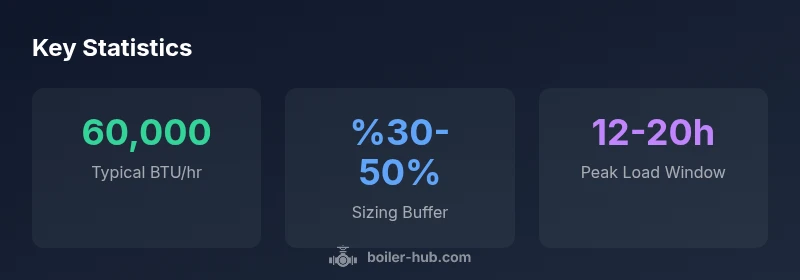
Consider a typical 2-bedroom apartment in a temperate climate with medium insulation and moderate hot water use. A rough baseline puts demand around 60,000 BTU/hr, but climate adjustments and insulation quality may shift this toward 40,000–75,000 BTU/hr. A well-chosen unit will fall near the middle of that range and include a modest buffer for peak cold snaps. This case illustrates why a reliable sizing calculator, plus an on-site assessment, yields the most accurate result. The homeowner avoids the pitfalls of under- or over-sizing by using a structured approach and consulting Boiler Hub’s resources in 2026.