Is My Boiler Too Small for My House? A Troubleshooting Guide
Urgent guide to determine if your boiler is undersized for your home. Learn sizing basics, symptoms, and a practical step-by-step plan to restore comfort and efficiency.


Most homes that struggle to stay warm are experiencing either an undersized boiler or an outdated system. The quickest fix is to verify the heat load against the boiler’s output and correct the imbalance with a professional assessment, possible zoning, or insulation upgrades. If the boiler is undersized, a replacement or major upgrade is usually required to restore comfort efficiently.
Is sizing a mystery? Is my boiler too small for my house? Understanding the challenge
When a home feels drafty in winter, cold spots persist, and rooms take too long to reach set temperatures, homeowners often wonder if the boiler is to blame. The question is more nuanced than whether the unit is old or new. Sizing hinges on the building’s heat load, which is a function of square footage, insulation quality, window efficiency, radiant heat losses, and the number of zones you want. According to Boiler Hub, many households assume a slightly larger or older boiler will automatically solve comfort problems, but the truth is more precise: you need a match between load and output. This is why the first step is a formal heat-load assessment, not guesswork. In practice, you’ll hear about BTU (or kW) ratings versus the building’s heat demand. If mismatched, you’ll experience short cycling, overshooting, or persistent cold rooms. The goal is a balanced system that delivers steady warmth with minimal cycling and predictable energy use. This is especially important for homeowners seeking to balance comfort with energy costs, and it starts with clarity on what size means for your house.
Signs your boiler might be undersized
If you’re asking, “is my boiler too small for my house,” you’re not alone. Common symptoms include cold drafts in certain rooms, long heat-up times, frequent cycling, and higher energy bills without corresponding comfort gains. Another indicator is a boiler that runs constantly during cold snaps, never able to reach the thermostat setting, or a system where representative rooms stay at different temperatures. These signs point to a load-to-output mismatch, a problem that can stem from a house that has become draftier over time due to aging insulation, new extensions, or windows that let in heat continuously. A professional heat-load calculation will quantify whether the current boiler’s output aligns with the present building envelope and occupancy patterns.
How sizing works: BTU, output, and system design
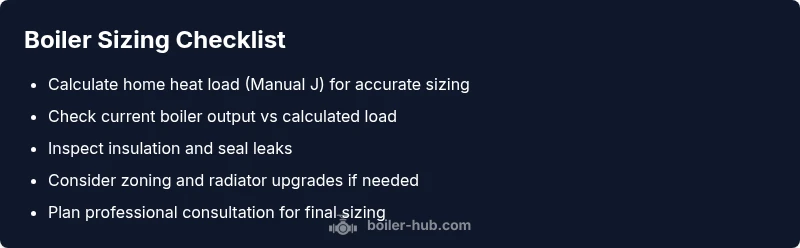
Sizing a boiler isn’t about a single number. It’s about matching the unit’s rated output to the home’s heat load. A typical residential boiler is rated in BTU per hour (or kW) and is designed to cover a certain area and set of conditions. If a house has high heat loss due to poor insulation, large windows, or multi-story design with long distribution runs, the required output increases. Conversely, a well-insulated home with efficient radiators may require less. In practice, professionals use a standardized calculation—often a Manual J heat-load calculation—to determine the precise output needed. Mistakes happen when people rely on what “worked for the old boiler” or simply upgrade to a larger unit without validating current load and distribution.
What a professional sizing assessment looks for
A formal assessment goes beyond checking the boiler label. A qualified technician measures or estimates heat losses for each room, evaluates insulation levels, examines window types and sealing, and reviews occupancy patterns and thermostat behavior. They’ll verify the radiation system—how many radiators or baseboards you have, their output, and whether zones are properly balanced. The assessment also considers the distribution system: is the pump delivering flow to all zones, are there airlocks, and is there adequate pressure. The outcome is a recommended boiler size, potential zoning strategies, and a plan to address any envelope shortcomings that are driving load.
What you can do now to improve comfort (without replacement)
If immediate comfort is your priority, start with practical steps that reduce heat load and improve distribution. Bleed air from radiators to remove air pockets, balance radiators, and ensure thermostatic radiator valves are functioning. Check for obvious insulation gaps around doors and windows and seal leaks. Lowering thermostat setbacks during the day, improving curtain usage, and adding draft stoppers can help. These measures buy you time and improve overall performance while you pursue a formal sizing assessment. Remember that these steps are about reducing demand and optimizing current flow, not replacing the fundamental size issue.
Replacement vs upgrading: making the right call
If a sizing assessment confirms undersizing, homeowners face a decision: replace the boiler with a higher-capacity unit or pursue a more nuanced upgrade such as zoning and variable-speed pumps. A straight replacement is the most straightforward path to restoring comfort but can be costly. Zoning separates the house into regions with tailored heat output, improving efficiency without a full system overhaul. In some cases, upgrading radiators, seals, and controls can help, but these changes won’t overcome a severe mismatch between load and output. A seasoned HVAC professional can guide you toward the lowest-cost, most reliable solution that meets your long-term goals.
Safety, maintenance, and common pitfalls
Safety first is non-negotiable. If you suspect a gas or combustion issue, shut down the boiler and contact a licensed technician immediately. Routine maintenance can improve efficiency and extend life, but it cannot fix a fundamental sizing problem. Common pitfalls include assuming newer equals better without verifying output, performing partial fixes without addressing envelope losses, and delaying professional sizing due to cost concerns. A proactive plan that includes both envelope improvements and a sizing assessment yields the best long-term comfort and lower energy bills.
Steps
Estimated time: 1-3 hours
- 1
Gather essential data
Collect house size, window counts, insulation levels, and current thermostat settings. Note any special rooms with persistent cold spots. This baseline helps you and a pro understand the scale of the load.
Tip: Take photos of boiler label and radiator outputs for reference. - 2
Locate boiler rating and system design
Find the boiler’s BTU/h or kW rating and list radiators or zones. This helps determine if the existing output can meet the calculated load.
Tip: Record model number and any recent maintenance history. - 3
Request a professional heat-load calculation
Ask a licensed HVAC technician to perform a heat-load calculation (often called Manual J). This provides an objective sizing benchmark for your home.
Tip: Only rely on a professional assessment, not rough estimates. - 4
Inspect insulation and air leaks
Check attic and wall insulation, seal gaps around doors/windows, and test for air infiltration that raises loading. Reducing load can substantially affect sizing needs.
Tip: Prioritize air sealing in the attic and around rim joists. - 5
Evaluate distribution and controls
Ensure the pumping system and thermostatic valves are functioning and that zoning is balanced across rooms. This optimizes efficiency after any sizing changes.
Tip: If balancing radiators, tighten those in warmer zones slightly while loosening in cooler zones. - 6
Decide on a path forward
Based on the assessment, choose between upgrading the boiler, adding zoning, or improving the envelope. Schedule installation with a qualified contractor.
Tip: Avoid DIY wiring/combustion adjustments; rely on licensed professionals.
Diagnosis: House struggles to stay warm, with uneven temperatures and long heating cycles
Possible Causes
- highUndersized boiler relative to actual heat load
- mediumAging boiler efficiency or failed components
- lowPoor insulation or leaky envelope
Fixes
- hardHave a heating professional perform a formal heat-load calculation and compare to current boiler output
- easyBleed radiators, balance zones, and verify pump operation
- mediumSeal leaks and upgrade insulation to reduce heat loss
- hardConsider boiler upgrade, zoning, or radiator enhancements if undersizing is confirmed
Questions & Answers
What does boiler sizing mean?
Boiler sizing means selecting an output that matches your home’s heat load, ensuring comfortable temperatures without excessive cycling.
Boiler sizing is about matching output to your home's heat loss for steady warmth.
How can I tell if my boiler is undersized?
If rooms stay cold, heat-up times are long, or the boiler runs constantly without reaching the set temperature, sizing may be the issue.
Cold rooms or long cycles usually indicate under-sizing.
Can upgrading radiators or insulation fix the problem without a full boiler replacement?
Upgrading radiators and insulation can help, but if the load exceeds the current output, sizing still needs professional adjustment or a new boiler.
Upgrades help, but you may still need proper sizing.
How long does a professional sizing assessment take?
A typical heat-load calculation and site inspection take about 1-2 hours, depending on system complexity.
Usually a couple of hours with a professional.
Is it safe to keep using an undersized boiler while waiting for replacement?
Running an undersized boiler long-term can waste energy and compromise comfort; plan for sizing assessment and a timely upgrade.
It’s not ideal to delay sizing; arrange a professional evaluation soon.
Does regular maintenance fix sizing needs?
Maintenance improves efficiency but cannot compensate for a fundamental undersize; a formal sizing assessment is still required.
Maintenance helps but won't fix the core sizing issue.
Watch Video
Key Points
- Start with a formal heat-load assessment.
- Address envelope losses before replacing equipment.
- Consider zoning to gain efficiency and comfort.
- Safety and professional guidance are essential.