Can You Shower While the Boiler Is On? A Practical Safety Guide
Learn if you can shower while the boiler is on, how boiler type affects hot water, safety steps, and best practices to prevent scalds and heating issues.


You can typically shower while the boiler is on, but it depends on your system. On-demand (combi) boilers heat water as you use it, while storage systems may show temperature swings when the boiler is active. Always set the shower and domestic hot water to a safe temperature (about 120°F/49°C) and consider an anti-scald valve for extra protection.
Understanding how boilers supply hot water
Can you shower while the boiler is on? According to Boiler Hub, the answer depends on your hot-water system and how your boiler operates. In many homes the answer is yes, but with caveats. This is especially true for modern combi boilers that heat water on demand, rather than keeping a tank hot constantly. In other homes, a storage cylinder sits in a boiler cupboard, and the boiler cycles to keep that water hot; during those cycles, temperature at your taps can momentarily surge or drop. The result is a shower that may feel briefly hotter or cooler as the boiler changes its heating cycle. Knowing which system you have helps you anticipate how long you can enjoy a steady shower before you notice a change in water temperature. Boiler Hub's guidance emphasizes that staying within safe temperature ranges reduces the risk of scald injuries, burns, or discomfort. If you know your system type, you can tailor your showering routine and any safety devices accordingly, avoiding unnecessary surprises during your bath or shower.
Boiler types and how they influence showering
Homes with on-demand combi boilers do not store hot water; they heat water as you open a hot tap. This means that when you turn on the shower, the boiler activates and delivers hot water almost immediately. In contrast, system boilers rely on a hot-water cylinder; the boiler may heat that cylinder on a schedule, and the shower picks up water from the stored supply. Regular or traditional boilers work similarly but with different storage and recovery characteristics. The implication for can you shower while the boiler is on is that flow can be very steady with a well-designed system, or it can fluctuate if the cylinder is re-heated as you shower. Boiler Hub Analysis, 2026, notes that consumers notice smoother temperature in modern combi systems, while older setups may exhibit short bursts of heat as the water heats. Regardless of type, the main safety goal is to keep outlet temperature within safe limits and prevent scalds during peak hot water demand. If you’re upgrading, consider a combi with a high-quality mixing valve or a thermostatic mixing valve to keep temperature stable in all scenarios.
Temperature, flow, and comfort: what to expect when the boiler is on
Temperature stability hinges on several factors: the boiler type, the size of the domestic hot water (DHW) circuit, the shower flow rate, and the blending at the faucet. With a modern combi boiler, you typically see a near-instant warm-up and a notable degree of stability as long as the flow is within system design limits. With stored-hot-water systems, the temperature may shift as the cylinder re-heats. You might notice small temperature steps when the boiler cycles; those changes can be more noticeable if you have a high-flow showerhead or if the pipework runs long distances from the boiler to the bathroom. The human experience matters: a 2–3 degree swing is often tolerable, but larger swings can be uncomfortable or unsafe for young children and elderly residents. To minimize surprises, keep the bathroom temperature in a safe range and set the mixing valve to a target temperature. In all cases, avoid letting the water become dangerously hot, which could cause rapid scalding if the valve fails or if the hot water is delivered earlier in the cycle.
Safety considerations when showering with the boiler on
The core safety risk when can you shower while the boiler is on is scalding. High-temperature water can cause burns in seconds, especially for sensitive skin. Install and maintain a thermostatic mixing valve (TMV) or anti-scald device to keep the blend at a safe level. Many local codes and safety guidelines support anti-scald measures, though the exact requirements vary by region. In addition to temperature controls, monitor water pressure; a rapid pressure change can create bursts of hot water. If you notice inconsistent temperatures or pressure spikes, do not force the shower to operate longer; instead, shut off the hot water and seek inspection. Regular boiler servicing and maintenance help prevent failures that could cause dangerous surges. For families with kids, elderly occupants, or disabled residents, set a conservative target temperature and use childproof or easily adjustable anti-scald devices. The aim is predictable, comfortable showers rather than reactive adjustments during the session. By planning ahead and installing the right devices, you reduce risk even when the boiler is actively heating.
How to test and set safe temperatures
Before you shower, verify your intended safe water temperature and confirm the boiler is set to maintain that level. Start by testing the hot water coming from the shower using a calibrated thermometer or a digital bath thermometer if available. If the temperature exceeds your target (for most homes around 120°F / 49°C), adjust the shower's mixing valve or the boiler's DHW temperature setting if accessible. After you set the target, run the hot water for 15–30 seconds, then measure again; if the temperature drifts beyond your comfort threshold, re-tune the mixing to ensure a stable blend. If you have older equipment, heating cycles may cause short-term spikes; in that case, install a TMV to lock the maximum at the safe value and reduce the risk of accidental scalding. Finally, document the settings and check them periodically, especially after a boiler service or replacement. Boiler Hub's practical approach is to measure, compare, and adjust, so you remain in control when the boiler is on and you are showering.
Step-by-step quick guide to safer showers (summary actions)
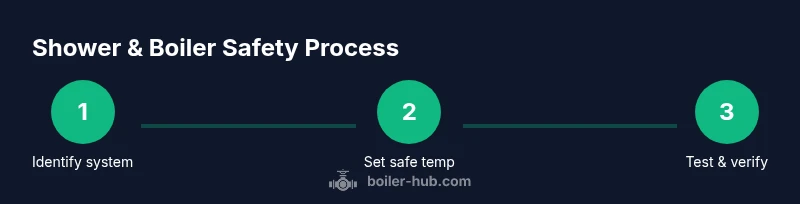
- Identify your boiler type (combi, system, or regular) – this determines how hot water is produced during a shower.2. Set a target temperature (generally 49°C / 120°F) and adjust the mixer or boiler DHW setting to stay within that range.3. Install or verify an anti-scald device or thermostatic mixing valve to cap maximum temperature.4. Test the shower at the faucet for 15–30 seconds before and after a heating cycle to confirm stability.5. If temperatures swing sharply, limit the flow or pause showering until the system re-stabilizes.6. Schedule a professional service if you notice persistent fluctuations or alarms on the boiler.
Troubleshooting common temperature swings
When the boiler is on, temperature swings can occur for several reasons: large DHW draw, oversized or undersized piping, aging sensors, or a failing expansion vessel. First, run a pure hot water test at the tap and note the peak temperature during a cycle. If swings exceed 6–8°C (10–14°F) or happen frequently, you likely need a thermostatic mixing valve (TMV) or expansion vessel service. Check for leaks, sediment buildup in the heat exchanger, and ensure the boiler is calibrated. Keep a simple routine: test regularly, adjust the mixing valve, and call a pro if the problem persists. Boiler Hub emphasizes that proactive maintenance reduces the risk of sudden temperature spikes and keeps showers comfortable. Authoritative sources below provide more detailed guidelines for safe hot-water temperatures and anti-scald implementation.
When to call a professional
If you notice persistent temperature swings, unusual noises, excessive pressure, or frequent tripping of the boiler’s safety switch, schedule a visit from a licensed boiler technician. A pro can inspect the DHW circuit, verify the mixing valve, check the expansion vessel, and confirm that the boiler is delivering water at a safe maximum temperature. For families with vulnerable residents, professional service is especially important to ensure reliable safety measures are in place and functioning correctly. Regular servicing—at least annually—is a prudent practice to maintain consistent hot water supply and prevent dangerous fluctuations when the boiler is on.
Using anti-scald devices and practical tips
Incorporate anti-scald devices into every bathroom to provide a final safety layer. A thermostatic mixing valve (TMV) helps stabilize the outlet temperature across different flow rates and boiler loads. Place a TMV at the main DHW outlet or near the shower valve to keep water from exceeding the safe threshold. If you’re unsure about installation, hire a plumber to fit the unit correctly and verify compliance with local codes. Practical habits include testing new settings with cold and hot taps before stepping into the shower and keeping bath towels and a thermometer handy for quick checks. Boiler Hub’s guidance here is clear: small, deliberate safety steps substantially lower the risk of burns over time.
Authoritative sources
- https://www.energy.gov/energysaver/water-heating
- https://www.hse.gov.uk/pubns/indg455.pdf
- https://www.osha.gov
Tools & Materials
- Thermometer (digital, bath-safe)(Calibrated for accuracy to at least 0.5°C; place near shower head or at the test point.)
- Anti-scald valve or thermostatic mixing valve (TMV)(Install at the shower or main DHW line to cap max temperature.)
- Adjustable wrench(Needed for valve installation or cap adjustments.)
- PTFE tape (Teflon)(Seal threaded connections to prevent leaks.)
- Showerhead flow restrictor (optional)(Helps manage flow and reduces temperature spikes.)
- Boiler service log(Record settings after adjustments and services.)
- Pipe cover or insulation(Reduce heat loss along long runs.)
Steps
Estimated time: 60-90 minutes
- 1
Identify boiler type and DHW configuration
Check your boiler model and user manual to determine if you have a combi, system, or regular boiler and whether hot water is stored or heated on demand. This informs how the shower water temperature will respond as the boiler runs. Tip: take a quick photo of the control panel if you’re unsure and consult a professional for confirmation.
Tip: Knowing your setup helps you plan safe temperature targets before you shower. - 2
Set a target hot water temperature
Choose a safe target (commonly around 49°C / 120°F) for the shower outlet. If the boiler allows adjusting the DHW temperature, set it there; otherwise adjust the mixing valve at the faucet. Tip: document the chosen temperature and test with the thermometer.
Tip: A consistent target prevents accidental scalding during cycling. - 3
Install or verify anti-scald devices
If not already present, install a thermostatic mixing valve (TMV) or anti-scald valve to cap the maximum temperature at your target. This is particularly important for households with children or elderly occupants. Tip: have a pro install it to ensure proper calibration.
Tip: Anti-scald devices provide a crucial safety margin against single-point failures. - 4
Test hot water at the tap
Turn on hot water at the shower and run for 15–30 seconds, then measure with the thermometer. If it exceeds your target, adjust the mixing or DHW setting and re-test. Tip: test at different flow rates to simulate real shower conditions.
Tip: Testing under load captures real-world performance. - 5
Check for temperature stability
Observe water temperature as the boiler cycles or as flow varies. If you notice large swings, review equipment placement, valve calibration, and check for leaks or air in lines. Tip: avoid turning up flow to compensate for instability—address the root cause.
Tip: Stability beats high heat in a dangerous cycle. - 6
Document and re-check
Record the final settings and schedule periodic re-checks, especially after boiler service or replacement. Tip: keep a quick-reference card in the bathroom with the target temp and valve position.
Tip: Documentation helps maintain safety over time.
Questions & Answers
Can you shower while the boiler is on?
Yes, in most homes you can shower while the boiler is on, but the hot water temperature can fluctuate depending on the system. Modern on-demand combi boilers tend to be steadier than older storage-tank setups. Always use a safe temperature and consider anti-scald devices.
Yes, you can usually shower while the boiler is on, but temperature stability depends on your system.
What water temperature is safe for showers?
A common safe target is about 120°F or 49°C. This temperature minimizes scald risk for most adults, but children and the elderly may require a cooler setting. Use a thermostatic mixing valve for consistent protection.
Aim for around 120 degrees Fahrenheit to stay safe.
Do combi boilers behave differently from storage tanks when showering?
Combi boilers heat water on demand, which often gives a quick, steady supply. Storage-tank systems can show larger swings when the cylinder re-heats. The key is to manage temperature with a mixing valve or TMV.
Combi and storage systems can behave differently; set limits to keep it safe.
Are anti-scald valves required by code?
Code requirements vary by region. In many places, anti-scald valves or thermostatic mixing valves are recommended or required to protect against scalding. Check local regulations and consult a professional for compliance.
Code may require anti-scald devices; check with local authorities.
What should I do if the water suddenly becomes scalding hot?
Shut off the hot water at the source or turn down the mixing valve. Do not continue showering. After cooling, re-test at a lower temperature and adjust the valve or boiler settings.
If it gets too hot, turn off the hot water and fix the settings before trying again.
How often should I service the boiler to prevent issues?
Most boilers benefit from annual professional servicing to maintain safety, efficiency, and reliability. Regular checks help prevent temperature swings and ensure anti-scald devices function properly.
Have your boiler serviced yearly to keep everything safe and efficient.
Watch Video
Key Points
- Know your boiler type and hot water configuration
- Set a safe, consistent target temperature
- Use anti-scald devices to prevent burns
- Test temperature under real shower conditions
- Schedule regular boiler maintenance to prevent swings