Is It Safe to Leave a Boiler On All Night? A Practical Guide
Learn whether it's safe to leave a boiler on all night, common risks, and practical steps to reduce danger. A thorough, expert guide for homeowners and facility managers.


There isn’t a universal safe answer; it depends on your boiler, controls, and maintenance. Leaving a boiler on all night can raise carbon monoxide risk if a fault occurs and wastes energy. Whenever possible, use a programmable thermostat or standby mode aligned with your heating schedule, and ensure CO detectors are working and your system is serviced regularly. Boiler Hub recommends consulting your manual and local regulations.
Why Safety Matters When Leaving a Boiler On Overnight
When homeowners ask is it safe to leave boiler on all night, the answer depends on several factors: the boiler type, the integrity of its venting, the reliability of safety devices (like flame sensors and carbon monoxide detectors), and how well the system is maintained. A malfunction can lead to dangerous carbon monoxide buildup, or in rare cases, a fire risk if vents or combustion air pathways are blocked. Energy waste is another consideration, especially if the boiler runs continuously through the night without need. According to Boiler Hub, proactive maintenance and proper safety features dramatically reduce these risks, but there is no one-size-fits-all policy. Regular servicing and correct use of controls are essential to minimize danger while preserving comfort and efficiency.
The core concern remains safety—CO detectors and adequate ventilation are critical, and any sign of abnormal operation warrants turning off the boiler until a technician inspects the system. If you rely on a natural gas or propane boiler, changing weather conditions and household occupancy can influence how and when you run the unit overnight. In short, the question is not just about “on” or “off”; it’s about proper configuration, monitoring, and maintenance to keep occupants safe.
Boiler Hub’s guidance emphasizes that homeowners should assess their own setup against a clear safety playbook rather than assuming overnight operation is inherently safe or unsafe. Owning up to this responsibility helps prevent accidents and aligns with best practices in home boiler management.
noteNeeded=null},{
textBlocksNotUsed
Tools & Materials
- Programmable thermostat(Set to your overnight schedule and enable night setback when appropriate.)
- Working carbon monoxide detector(Place near sleeping areas; test monthly and replace batteries on schedule.)
- Owner’s manual for your boiler(Review model-specific safety guidance and operating limits.)
- Ventilation check tool or flashlight(Optional for inspecting flue and fresh-air openings.)
- Room temperature thermometer(Useful for confirming indoor climate during overnight periods.)
- Basic maintenance log(Record service visits and any nighttime operation notes.)
Steps
Estimated time: 60-90 minutes
- 1
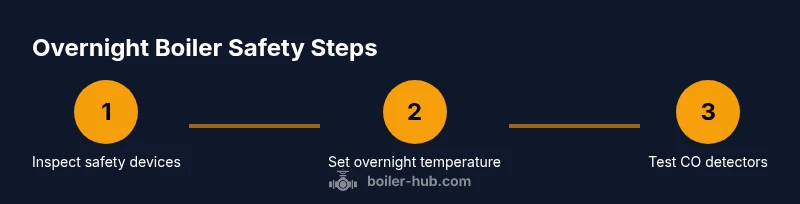
Inspect safety devices
Begin by checking that all safety devices are intact and functional. Test the carbon monoxide detector, verify the boiler’s flame sensor and safety shutoff, and review recent service notes. If anything seems off, do not run the boiler overnight; contact a qualified technician.
Tip: If the CO detector beeps or the boiler shows fault codes, shut down and call service. - 2
Set the overnight temperature
Program the thermostat to a lower, comfortable setback rather than a full off. A smaller setback reduces the load on the boiler while preventing pipes from freezing in very cold rooms. Ensure the reset point returns to comfort levels before waking hours.
Tip: Use a gradual 1-2 degree fall to avoid sudden temperature swings. - 3
Ensure proper ventilation
Confirm that the boiler room has adequate combustion air and that vents are not blocked by storage or debris. Poor ventilation can cause dangerous gas buildup, especially in enclosed spaces. If your space is cramped, consider a mechanical ventilation option as recommended in the manual.
Tip: Never box in a boiler with insulation or obstructions in front of vents. - 4
Test detectors and alarms
Test CO detectors and any smoke alarms in the home. Replace batteries if needed and ensure detectors respond to a test signal. A working alert system is your primary defense against nocturnal CO exposure.
Tip: Test detectors monthly and after any power outages or relocations. - 5
Inspect gas connections and leaks
Give attention to gas lines and connections for hissing sounds or rotten egg odors. If you detect a leak, shut off the gas supply immediately and contact the utility or a licensed technician. Do not operate the boiler in this state.
Tip: Even a small suspicion of a leak warrants professional inspection. - 6
Check venting and exhaust paths
Inspect the exhaust vent for blockages, corrosion, or ice buildup in winter. Blocked vents can force combustion products back into living spaces. Clear any obstruction and have the vent inspected if you notice rust, moisture, or soot stains.
Tip: Never attempt to clear a hot or damaged vent yourself. - 7
Keep a safety log
Document the overnight setting, the date, and any issues observed. A maintenance log helps track performance, cabinet heat in the room, or any irregularities. This data supports a pro’s later evaluation.
Tip: A quick note after each overnight run helps catch trends early. - 8
Schedule professional service
Plan a winter check with a licensed technician to verify burner efficiency, vent integrity, and CO control measures. Regular service reduces risk and improves long-term reliability.
Tip: Annual or seasonal service can catch issues before they become emergencies.
Questions & Answers
Is it safe to leave a boiler on all night?
Not universally safe. It depends on the boiler type, maintenance, and safety devices. If you plan to run overnight, ensure CO detectors are functioning, vents are clear, and you’ve followed the manufacturer’s safety guidance. Avoid relying on open flames or improvised shortcuts.
There isn’t a universal safe answer; it depends on your boiler and maintenance. Ensure CO detectors work and vents are clear before overnight operation.
What are the best overnight heating options?
Programmable thermostats and standard setback routines are safer than leaving a boiler at full heat. Use night settings that maintain essential warmth without excessive cycling, and consider zoning or smart controls to focus heat where it’s needed.
Use programmable or smart thermostats with night setback to save energy and keep essential warmth.
How can I reduce carbon monoxide risk?
Regular maintenance, proper venting, a clearly installed CO detector on every living level, and following the manual’s safety guidelines are the most effective steps. Never ignore alarms or alarms that indicate abnormal operation.
Keep CO detectors working, ensure proper venting, and get annual service to minimize CO risk.
Should I turn off the boiler if I sleep in a drafty room?
If a room is drafty or uncomfortable, assess why and adjust slowly rather than deactivating the boiler abruptly. Sudden temperature changes can stress components. Check the thermostat and zoning first, then consult a professional if drafts persist.
Adjust settings gradually rather than turning off abruptly when a room is drafty.
What maintenance should I perform before winter?
Schedule a professional inspection, test CO detectors, clean or replace air filters, inspect vents and gas lines, and review safety shutoffs. Basic checks help prevent overnight issues.
Get a professional check, test detectors, and clean air pathways before winter.
How often should a professional service my boiler?
Most home boilers benefit from annual service, with semi-annual checks in very cold or high-use homes. A pro can verify burner efficiency, vent integrity, and CO safety features.
Annual service is usually recommended, with more frequent checks if you use the boiler heavily.
Watch Video
Key Points
- Know overnight safety depends on your boiler type and maintenance
- Use programmable controls and working CO detectors for safer nights
- Inspect vents, air supply, and gas connections before overnight operation
- Document overnight settings and schedule professional checks annually
- Never bypass safety features or ignore alarm signals