Boiler Explosion Troubleshooting: Essential Safety Guide
Urgent, step-by-step troubleshooting for boiler explode risk, with safety protocols, diagnostic flow, and expert tips from Boiler Hub to protect people and property.


Most likely, a faulty pressure relief valve and excessive boiler pressure are behind a boiler explode risk. Immediate safety is critical: shut off the boiler, cut power, and vent the area if safe. This quick guide from Boiler Hub walks you through 3 essential steps to stabilize and assess risk while awaiting professional help.
Why Boiler Explode Risk Demands Immediate Attention
A boiler explode is a catastrophic failure that can unleash flames, scalding steam, and toxic gases. In both homes and facilities, the risk stems from high pressure, incomplete venting, and faulty safety devices. According to Boiler Hub, safe operation and regular venting are essential to prevent this kind of disaster. Common triggers include a failing pressure relief valve, blocked or corroded flues, mineral scale reducing expansion space, and a compromised expansion tank. When any single safety component fails, the system can reach dangerous pressure levels in minutes. While the probability of a full-blown explosion is low in modern equipment, it remains one of the most serious hazards a boiler system can pose. Being proactive about maintenance and recognizing early warning signs protects occupants and property. This guide uses a practical, evidence-based approach to help homeowners and facility managers intervene safely and efficiently.
Key takeaway: treat any abnormal pressure, venting issue, or gas odor as an emergency. Do not ignore warning signs or delay professional assessment. Boiler Hub’s insights from 2026 emphasize that prevention and timely inspection save lives.
Immediate Safety Protocols When You Suspect a Hazard
If you suspect a risk, safety comes first. Evacuate people from the boiler room if you smell gas, hear hissing, or notice discolored flames or smoke. Call emergency services if danger seems immediate. If it’s safe to stay, shut down power to the boiler at the breaker and close the gas supply valve for that appliance. Do not operate switches, lights, or thermostats while the area might be pressurized or venting. Open doors and windows to improve ventilation, then wait for a professional assessment. Do not try to re-light the boiler or bypass safety devices; these actions can provoke a rapid pressure spike. Keep a cold, calm head, document symptoms, and contact a licensed technician as soon as possible. Boilermakers and gas technicians are trained to test and repair safely after a suspected explosion risk.
Signs That Your Boiler Is At Risk of Explosion
Recognizing early warning signs can prevent disaster. Look for an abnormally rising pressure gauge, relief valve discharge (steam or water) that occurs without a controlled demand, or odd banging and popping noises from the boiler cabinet. A persistent gas odor around the appliance, soot deposition, or yellow/orange burner flames indicate improper combustion and potential leakage. If coworkers or family report headaches, dizziness, or nausea when near the boiler, consider CO exposure as a serious risk. Do not ignore repeated cycling or a boiler that takes unusually long to heat water. These signals increase the chance of a dangerous buildup leading to an explosion risk. Prompt investigation by a qualified technician is essential.
How Professionals Diagnose the Root Cause (Non-Invasive Checks)
A licensed technician will perform non-invasive checks to pinpoint the root cause without dismantling critical components. They’ll verify gauge readings against safe ranges, inspect the pressure relief valve for seating and leakage, assess the expansion tank for proper air charge, and evaluate venting paths for obstructions. They may test for carbon monoxide in the air near the boiler and review the burner settings for proper combustion. By inspecting external indicators and system logs, they can distinguish between valve failure, vent problems, and burner miscalibration. This approach minimizes risk to occupants while guiding targeted repairs. If any sign of a major fault is found, professionals will recommend replacement of malfunctioning parts rather than DIY fixes.
Step-by-Step Fixes for the Most Common Cause (Safe, Controlled)
Step 1 — Safety first: power down the boiler and, if safe, shut off the gas supply to the unit. Evacuate if you smell gas or detect a strong odor. Step 2 — Do not reset or force the system. Call a licensed technician to assess the relief valve and hydraulic pressure. Step 3 — Have the pressure relief valve inspected, repaired, or replaced by a professional. Step 4 — If mineral buildup or scale is suspected, arrange a professional descaling and flushing of the boiler loop to restore proper expansion space. Step 5 — Confirm expansion tank integrity and re-pressurize the system only after a pro has verified safety. Finally, test the relief valve and CO detectors after service and keep records of the visit. If any step reveals a hazardous condition, stop and contact emergency services immediately. Helpful tip: never bypass safety devices to “test” the system; this can trigger a dangerous pressure surge.
Prevention and Maintenance to Avoid Future Incidents
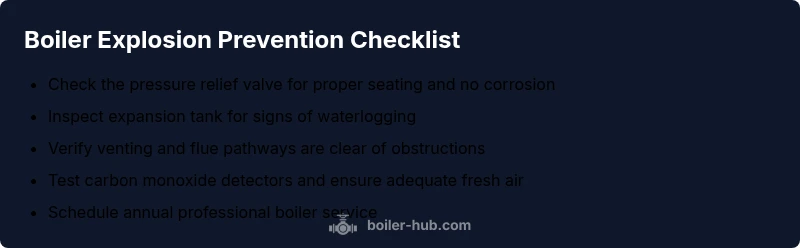
Prevention starts with a regular maintenance plan. Schedule annual professional inspections that include venting checks, PRV inspection, expansion tank testing, and combustion analysis. Maintain CO detectors and ensure proper air exchange around the boiler room. Monitor pressure gauges and setpoints, and replace worn gaskets and seals before they fail. Document service dates and parts replaced for easy reference. A well-maintained boiler is far less likely to experience a dangerous over-pressurization event. Boiler Hub’s 2026 guidance emphasizes routine service, proper venting, and early detection as the best defenses against boiler explode scenarios.
When to Seek Emergency Help
If you experience a gas odor, hissing sounds from the boiler, or if the relief valve discharges persistently, evacuate the space and call emergency services. Do not re-enter until authorities declare safety. If anyone shows signs of CO poisoning—confusion, headaches, dizziness, or nausea—seek immediate medical attention. After the immediate danger is resolved, contact a licensed boiler technician to diagnose and repair the root cause. Remember, safety comes first, and professional intervention is essential whenever there is a risk of explosion or gas exposure.
Steps
Estimated time: 1-2 hours for initial safety checks; professional service required for any fixes or part replacements
- 1
Power down safely and isolate utilities
Turn off the boiler at the wall switch or breaker. If you can safely approach, shut off the gas valve for the appliance. Evacuate occupants and ventilate the area. Do not operate any electrical devices in the area.
Tip: Stay clear of the boiler room if you smell gas or hear hissing. - 2
Check for obvious signs without opening the boiler
Look for steam or water discharge from the relief valve and note any unusual sounds. Do not attempt to reset the boiler or adjust pressure on your own.
Tip: Document what you observe for the technician. - 3
Call a licensed boiler technician
Explain the symptoms and safety concerns. Do not attempt repairs beyond basic safety steps. A pro will assess relief valve seating, vent integrity, and combustion safety.
Tip: If gas is involved, call emergency services immediately. - 4
Await professional assessment and keep area ventilated
Maintain safe distance from the boiler room and keep doors open to air flow while awaiting service. Do not re-enter until an inspector clears the space.
Tip: Ask for a written service plan and parts list from the tech. - 5
Verify post-service safety and function
After repairs, confirm proper gas supply, ignition, venting, and that the pressure stays within safe ranges. Install or test CO detectors and review maintenance schedules.
Tip: Keep a log of all service visits and readings.
Diagnosis: Unusual pressure changes, relief valve discharge, or alarm indicators near the boiler
Possible Causes
- highFaulty or blocked pressure relief valve
- highBlocked vents or mineral scale reducing expansion space
- mediumOver-firing burner or miscalibrated gas valve
- lowExpansion tank failure or incorrect air charge
Fixes
- easyShut down the boiler and isolate gas supply if safe; do not relight or bypass safety devices.
- mediumReplace or service the pressure relief valve by a licensed professional.
- hardDescale and flush the boiler loop to remove mineral buildup under professional supervision.
Questions & Answers
What exactly causes a boiler explode risk?
A boiler explode risk arises from high pressure, faulty safety devices, and poor venting. Common culprits include a failing pressure relief valve, mineral buildup, and gas combustion irregularities.
A boiler explode risk comes from high pressure and faulty safety parts; it often starts with a bad relief valve or blocked venting.
What should I do immediately if I hear a hiss or see venting from the boiler?
Shut off power and gas if safe, evacuate, ventilate the area, and call a professional. Do not try to relight or bypass safety devices.
If you hear hissing or see venting, turn everything off safely and call a professional right away.
Can I test the pressure relief valve myself?
No. Do not test or reset pressure relief valves yourself. A certified technician should inspect and replace faulty components.
Testing a relief valve should be done by a professional to avoid dangerous pressure release.
Is it safe to restart the boiler after a safety incident?
Only after a professional confirms it is safe. Restarting without approval can reintroduce the explosion risk.
Wait for the technician’s clearance before restarting.
What are long-term prevention steps?
Schedule annual professional maintenance, keep CO detectors active, ensure proper venting, and monitor gauges for unusual readings.
Do annual checks and keep detectors to prevent future incidents.
When should I call emergency services?
If there is a gas odor, active hissing, or signs of CO exposure, evacuate and call emergency services immediately.
If you smell gas or have CO symptoms, call emergency services now.
Watch Video
Key Points
- Shut down power and gas if you suspect danger.
- Faulty relief valves and blocked vents are primary explosion risks.
- Never bypass safety devices—call a licensed technician.
- Regular maintenance dramatically reduces explosion risk.