When Can a Boiler Explode? Practical Troubleshooting Guide
Urgent boiler safety guide: learn the signs, quick checks, and when to call a pro to prevent explosions. A Boiler Hub troubleshooting blueprint for homeowners and facility managers.


According to Boiler Hub, boiler explosions are rare but extremely dangerous, usually caused by over-pressurization, gas leaks, or blocked venting. If you suspect a problem, shut off power and fuel, evacuate, and call emergency services if you smell gas. Do not attempt DIY repairs; instead call a licensed technician to inspect the pressure relief valve, expansion tank, heat exchanger, and safety controls before restarting.
Why Boiler Explosions Happen: The Dangers and Physics
Understanding when can a boiler explode helps homeowners recognize risk before a catastrophe. In most homes, explosions are rare but can occur when pressure climbs past the safety limits set by the system. The primary culprits are a failed or bypassed pressure relief valve, blocked or obstructed venting, and faults in the gas supply or burner controls. When heat and steam are trapped in a confined boiler cabinet, a small fault can escalate in seconds into a dangerous overpressure event. According to Boiler Hub Team, the leading factors behind incidents are improper maintenance, ignored warning signs, and aging components. Regular inspection reduces risk by catching valve wear, corrosion, or vent blockages early.
- Signs of trouble often preview a failure: a rising pressure gauge, loud banging (water hammer), gas odor, or frequent tripping of safety devices.
- Small leaks or weeping at joints may indicate expanding cracks or gasket failures that worsen if ignored.
Proactive safety means knowing your system’s normal pressure range, testing relief devices, and scheduling professional service at least once a year. This section explains how explosions happen in practical terms, what to monitor, and why speed matters. The material here reflects the Boiler Hub Analysis, 2026, which emphasizes timely maintenance and clear emergency steps.
Early warning signs and risk factors
Early signs of trouble can save lives if addressed promptly. Watch for a rising boiler pressure gauge beyond the safe range, unexplained banging or banging noises, and a gas smell near the unit. A pilot light that frequently goes out, soot on the flue, or unusual heat in the boiler cabinet are red flags. Over time, a neglected expansion tank or a corroded relief valve increases the risk of ruptures. In the worst case, delayed maintenance can culminate in a sudden pressure surge. Boiler Hub analysis shows that risk factors include infrequent servicing, using non-compatible replacement parts, and aging equipment. Homeowners who notice any warning should pause operation and seek professional assessment.
Remember that even if the system seems to operate normally, small performance changes can precede a dangerous failure. Record operating pressure and frequency of resets for your tech visit; this helps technicians identify trends quickly.
Non-invasive safety checks you can perform before calling a pro
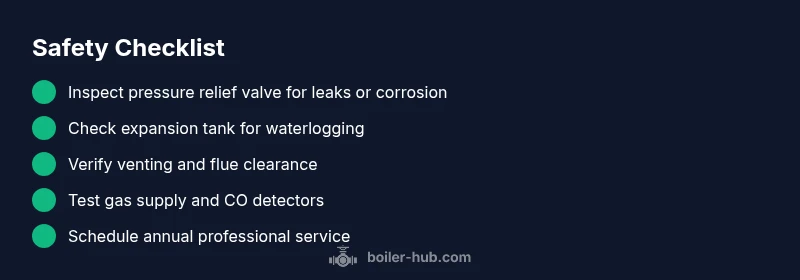
You can perform several quick, non-invasive checks to gauge risk without dismantling the boiler. First, confirm the unit is powered off and that the fuel supply is shut down if you suspect a problem. Ventilate the area and avoid creating sparks. Check the boiler pressure gauge for abnormal readings; note the number and compare it to the manufacturer’s safe range. Inspect visible joints for dampness or corrosion, and listen for hissing sounds indicating possible gas vents or leaks (do not re-enter if you smell gas). Ensure carbon monoxide detectors in the boiler room are working and batteries are fresh. Finally, review recent maintenance or service history; if the last service was years ago, assume higher risk and call a pro.
Diagnostic flow: Read the symptom, diagnose, and choose a fix
A clear diagnostic flow helps determine root causes without unnecessary risk. Start with the symptom: pressure spikes, gas odor, unusual noises, or frequent shutdowns. Next, map the symptom to likely causes: pressure relief valve failure, vent blockage, expansion tank fault, or fuel/combustion anomalies. Finally, select a safe fix or escalate to a professional when uncertain. The goal is to separate simple maintenance from dangerous failures. This flow aligns with the guidance from Boiler Hub Team and is designed for homeowners and facility managers alike.
Step-by-step: Safe fixes for the most common cause
- Step 1: Shut off power and fuel safely. Turn off the boiler switch and isolate the gas supply if accessible. Do not relight or restart until inspected. Tip: Know the exact switch location and keep a safety plan written nearby.
- Step 2: Check safety devices and gauge. When safe, inspect the pressure relief valve and gauge reading. If the gauge is consistently above the safe range or the relief valve is dripping, escalate. Tip: Do not bypass the relief valve; it is a critical safety device.
- Step 3: Inspect expansion tank and venting. Look for a waterlogged tank or rust; verify venting clearance and remove any blockages. Tip: A professional should confirm venting and tank condition.
- Step 4: Plan professional service. Schedule a service visit to test controls, seals, and the heat exchanger. Tip: Ask for a written inspection report covering relief device, expansion tank, and gas safety.
- Step 5: Restart only after clearance. After a certified technician confirms safety, slowly reintroduce power and fuel and monitor for abnormal behavior. Tip: Keep a log of readings for the next service.
Safety tips, warnings, and common mistakes to avoid
- Pro_tip: Do not ignore a rising pressure gauge; it is a warning, not a baseline. Take action early.
- Warning: Never attempt DIY gas work or bypass safety devices. A single mistaken repair can create an explosion hazard.
- Note: Keep CO detectors in the boiler room and test them monthly; set a reminder.
- Pro_tip: Schedule annual boiler service with a licensed technician and maintain a service record.
Prevention: maintenance routines to minimize explosion risk
Prevention comes from routine maintenance and proactive checks. Establish a yearly service with a licensed professional to inspect the relief valve, expansion tank, and venting. Keep spare parts compatible with your boiler model, and replace worn gaskets promptly. Monitor water chemistry, ensure correct fuel pressure, and address any signs of corrosion or dampness immediately. Regularly test safety devices and review the manufacturer’s guidelines for winter operation or high-demand periods. A well-maintained boiler has fewer unexpected pressure spikes and an improved safety margin.
In case of emergency: immediate actions to take
If you detect a gas odor, hear hissing, or see rising pressure with heat or flames, evacuate immediately and call emergency services. Do not operate electrical switches in the area. Once you are at a safe distance, contact your gas supplier or a licensed boiler technician for urgent inspection. After the event, document all warnings, repairs, and service dates to inform next steps and avoid future risk. The priority is personal safety and preventing a repeat incident.
Steps
Estimated time: 30-45 minutes
- 1
Shut off power and fuel safely
Turn off the boiler’s power switch and isolate the gas supply if accessible. Do not relight or operate until a professional confirms safety. This step minimizes immediate risk and buys time for a proper assessment.
Tip: Know the exact switch location and have a safety plan handy. - 2
Check safety devices and gauge
With it safe to approach, verify the pressure relief valve is not blocked or leaking and note the gauge reading. If the gauge stays high or the relief valve drips, stop and contact a pro.
Tip: Do not bypass or jam the relief valve to 'test' the system. - 3
Inspect expansion tank and venting
Look for a waterlogged expansion tank or signs of rust and ensure the venting path is clear of obstructions.
Tip: Only a trained technician should replace or reseal expansion components. - 4
Plan professional service
Schedule a full safety inspection to test controls, seals, heat exchanger integrity, and venting alignment.
Tip: Request a written report detailing valve condition and recommended parts. - 5
Restart with clearance
After a certified technician approves the system, restore power and fuel slowly and monitor for abnormal behavior.
Tip: Maintain a run log of pressures and temperatures for future reference.
Diagnosis: Pressure gauge rising above safe range / geyser/hissing, unusual banging, or gas smell near boiler
Possible Causes
- highOver-pressurization due to faulty pressure relief valve or failed expansion tank
- mediumVenting or flue blockage causing gas buildup or backdraft
- mediumGas supply leak or incorrect gas/combustion settings
- lowWater hammer from trapped air or pipe issues
Fixes
- easyShut off boiler, power, fuel, and ventilate; do not operate until inspected
- mediumInspect and service relief valve and expansion tank by a pro
- mediumTest for gas leaks using professional meters and fix venting
- hardBleed air and flush system if necessary after professional service
Questions & Answers
Can a boiler explode even if safety devices are functioning?
Yes, explosions are possible if other components fail or if gas leaks or vent blockages occur. Safety devices reduce risk but do not eliminate it entirely.
Yes. Even with working safety devices, failures in other parts or leaks can still cause danger.
What are the earliest signs of dangerous boiler pressure?
Early signs include a rising pressure gauge, loud banging, and a gas odor near the boiler. Unusual heat buildup and frequent shutdowns are also warning indicators.
Watch for high pressure, odd noises, and gas smells as early warnings.
Should I shut off the boiler if I smell gas?
Yes. Evacuate, avoid flames, and call your gas supplier or emergency services immediately. Do not operate switches in the area.
If you smell gas, evacuate and call emergency services right away.
How often should the pressure relief valve be tested?
Follow the manufacturer's guidance and have a licensed technician test the valve during regular service visits.
Have the valve tested during routine service, as recommended by the maker.
When should I call a professional after a suspected issue?
If you notice persistent pressure spikes, gas smells, or if you’re uncertain about the safety of the system, call a licensed boiler technician immediately.
Call a professional if danger signs persist or you’re unsure about safety.
Watch Video
Key Points
- Shut down power and fuel at first danger signs.
- Call a pro; don’t DIY dangerous gas work.
- Maintain relief valves and expansion tanks regularly.
- Know your boiler’s safe pressure range and monitor it.