Boiler Can Smell Gas? An Urgent Troubleshooting Guide
Urgent boiler safety guide: if your boiler can smell gas, act fast. Learn immediate safety steps, common causes, and how Boiler Hub recommends arranging a licensed inspection to protect your home and loved ones.


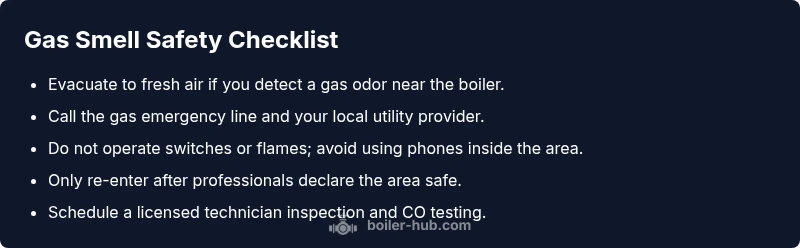
Most likely, your boiler is venting gas due to a leak or incomplete combustion. Immediate actions: leave the building, call your gas provider’s emergency line, and do not operate lights or appliances. If you must re-enter, wait for professionals to arrive. A licensed technician will assess CO risk and perform repairs.
Why the boiler can smell gas is a critical safety signal
A distinct odor near your boiler is not normal operating scent. It can indicate a gas leak, improper combustion, or venting failure that could release methane or carbon monoxide. According to Boiler Hub, gas odors around a boiler are a red flag that demands immediate action. Do not assume it will disappear on its own or that it’s caused by stale air. Leaks may occur at supply lines, burner gaskets, or valves, and old piping can corrode over time. Even a small leak can lead to dangerous concentrations inside your home, especially in poorly ventilated spaces. Treat any odor as urgent: evacuate if needed, alert others, and call your gas provider from outside the structure. Once responders are en route, do not touch the boiler controls or electrical switches to avoid sparks.
Immediate safety steps if you smell gas near your boiler
If you detect a gas odor, step back and get everyone to fresh air. Do not switch on/off lights, electrical devices, or fire up any flames. From outside, call your gas provider’s emergency line and your local emergency number if you suspect a dangerous leak. If you can safely reach the main shut-off valve or boiler valve without re-entering the area, you may briefly close it, but only if it can be done without risk. Keep doors open for ventilation and wait for professionals to confirm it’s safe before returning indoors. Install CO alarms in living spaces and near sleeping areas to catch undetected gas-related carbon monoxide.
Common causes of gas smell in boilers
Gas odors near boilers can stem from several sources. A loose gas connection or worn conduit can leak odorants; a dirty or misadjusted burner can lead to incomplete combustion and CO production; a cracked heat exchanger or vent/flue blockage can trap gases and exhaust locally. Corroded piping, improper installation, or aging equipment also increases the chance of a leak. Regular maintenance helps catch these issues before odor occurs, but never ignore a smell—gas problems can escalate quickly, especially in winter when ventilation patterns change.
How professionals diagnose a gas odor in boilers
Qualified technicians use a combination of gas detectors, leak tests, and CO monitoring to identify the source. They may perform a pressure test on fuel lines, inspect burner components for wear, verify venting integrity, and check the flue for blockages. They will also test for carbon monoxide levels to determine safety risk. A professional should never rely on odor alone to judge safety. After detection, repairs should be executed by a licensed service provider and followed by post-repair testing.
Prevention and ongoing safety measures to keep your boiler odor-free
Prevention relies on regular maintenance, proper venting, and timely repairs. Schedule annual service with a licensed technician, replace worn seals, and ensure gas lines are free of leaks. Install or verify functioning CO detectors in living spaces and near bedrooms. Keep the boiler area clear of clutter, ensure adequate ventilation, and record service dates for future reference. If odors recur after service, stop using the boiler and contact a professional immediately.
Steps
Estimated time: 60-120 minutes for initial safety response; full service may extend beyond
- 1
Prioritize safety and evacuate
If you detect a gas odor, evacuate the building with all occupants and move to fresh air. Do not operate electrical switches or appliances on the way out. If anyone shows signs of CO exposure (headache, dizziness, confusion), seek immediate medical help outside the building.
Tip: Take your phone with you to call emergency services once you’re in a safe location. - 2
Call for help
From a safe distance, call your gas utility’s emergency line or local fire department. Report the odor, the location of the boiler, and any symptoms among occupants. Do not assume someone else has already called.
Tip: If you have a gas detector, note the readings and relay them to responders. - 3
Shut off gas only if safe
If you can access the exterior gas shut-off valve or the boiler gas valve without re-entering the building or creating sparks, do so briefly and carefully. Do not attempt this if you must pass through the odor or if your nose or eyes sting from the gas.
Tip: Use a flashlight and wear gloves if you handle valves in cold weather. - 4
Do not re-enter until cleared
Do not re-enter the space until responders confirm it is safe. A technician must perform leak detection and CO testing before you can use the boiler again. Do not restart the boiler until given explicit authorization.
Tip: Document the intrusion odor and any changes in the environment for the technician. - 5
Schedule professional inspection
Arrange for a licensed gas technician to inspect, repair, and test the boiler. Request a CO alarm check and a post-repair test to verify safe operation before resuming use.
Tip: Keep a maintenance log and schedule annual service reminders.
Diagnosis: Smell of gas near boiler
Possible Causes
- highGas leak in supply line or fitting
- mediumIncomplete combustion from dirty or misadjusted burner
- lowVentilation or flue blockage causing accumulation
Fixes
- easyLeave the area immediately and call the gas emergency line; do not operate electrical devices or switches
- easyIf you can safely access the main shut-off valve, briefly shut off gas supply and exit the area
- easyVentilate the space by opening doors/windows only if it is safe to re-enter the area, then wait for professionals
- mediumContact a licensed gas technician for a full inspection, leak repair, CO testing, and system certification
Questions & Answers
What should I do immediately if I smell gas near my boiler?
Move to fresh air, call the gas emergency line, and avoid any actions that could cause sparks. If someone is showing symptoms of CO exposure, seek medical help right away. Do not re-enter until professionals clear the space.
If you smell gas near your boiler, leave the area, call emergency services, and wait for professionals to assess the risk. Do not re-enter until it's deemed safe.
Can a gas odor indicate dangerous carbon monoxide levels?
Yes. Gas odors can accompany carbon monoxide from incomplete combustion. CO is odorless, so rely on detectors and professional testing. If you suspect CO, evacuate and contact emergency services immediately.
Gas odors can come with carbon monoxide risks. Evacuate and call for help right away, and use detectors for confirmation.
Is it safe to use the boiler after the odor stops?
No. Odor cessation does not guarantee safety. Have a licensed technician inspect the system and test for CO and leaks before resuming use.
Even if the smell goes away, get a professional check before using the boiler again.
How can I prevent gas odors in the future?
Schedule regular maintenance, install CO detectors, keep vents clear, and replace aging pipes or seals promptly. Promptly address any new odors with a professional evaluation.
Regular maintenance and detectors help prevent gas odors from returning.
When should I replace a boiler because of persistent odor?
Persistent odors after maintenance indicate a serious issue. A licensed technician may recommend replacement if repairs are uneconomical or if safety cannot be ensured.
If odors persist despite service, consider replacement after a professional assessment.
Watch Video
Key Points
- Act fast when gas odor is detected near the boiler
- Call emergency gas services and a licensed technician promptly
- Never operate switches or flames with a gas smell present
- Prevent future issues with regular boiler maintenance