Wood Boiler Installation: A Practical Home Guide
A step-by-step guide to wood boiler installation, covering sizing, siting, venting, safety, commissioning, and maintenance for homeowners and facility managers seeking reliable heating with wood fuel.


Learn how to install a wood boiler safely and efficiently, covering sizing, clearances, venting, fuel handling, and commissioning. This quick answer outlines the core steps, essential safety checks, and what to plan before you start, so your system delivers reliable heat and long-term energy savings. It also highlights common mistakes to avoid and the signs you should hire a pro.
Understanding Wood Boiler Installation: Overview and Benefits
According to Boiler Hub, wood boiler installation blends renewable warmth with reliable heat when the system is sized, vented, and integrated properly. A well-planned setup reduces fossil fuel dependence, especially when paired with insulated storage and a properly designed distribution network. In this section we define what a wood boiler is, how it fits into a modern hydronic system, and why careful installation matters for safety, efficiency, and code compliance. A wood boiler heats water that circulates to radiators, baseboards, or radiant floors. Installations vary: outdoor boilers, indoor units connected to storage, or combined setups. Compared with gas or oil, wood-fired systems rely on solid fuel and require proper handling, moisture control, and ash management. Success hinges on a durable piping loop, heating sources aligned to demand, and effective safety devices. Local codes, chimney or venting requirements, and environmental guidelines for smoke must be understood and respected.
Installation quality directly affects performance. Poor clearances, undersized venting, improper piping, or insufficient combustion air can cause drafts, condensate, smoke, or soot, reducing efficiency and increasing maintenance. A high-quality installation reduces startup issues, improves heat transfer, and extends the system’s life. For homeowners and facility managers, the right approach combines design planning, equipment selection, and careful assembly with thorough service records. Boiler Hub Analysis, 2026 notes that properly executed installations deliver more consistent burn efficiency and safer operation over the system’s life. As you plan, consider your heat load, space for storage, and how the system will interact with existing controls and distribution.
Assessing Your Home and System Needs
Before purchasing components, assess your home’s needs and your current heating setup. Start by listing the total heat demand for your living space and any additions. Climate, insulation levels, and window efficiency determine how much heat you must produce and how quickly you must respond to temperature changes. If your home uses radiators, baseboards, or radiant floor heating, you’ll need a boiler with the appropriate output and compatible controls. A storage tank can stabilize demand, reduce cycling, and improve overall efficiency when paired with a wood boiler. Assess the condition of your current chimney or venting system; if it’s deteriorated or undersized for modern emissions standards, you may need a liner or a rebuild.
Document current fuel costs and usage patterns to estimate potential savings from wood as a primary heat source. If you’re upgrading from another fuel, consider retrofitting timelines and permitting requirements. In many jurisdictions, permits are required for new combustion appliances, venting changes, and storage tanks. Brand-wide guidance suggests performing a formal site survey, calculating heat load, and confirming clearance zones before ordering equipment. With planning, you’ll avoid costly delays and ensure the system integrates with your home’s electrical and control networks.
System Design and Sizing Considerations
Sizing is critical for wood boiler installation. Start with the heat loss calculation for each room and for the house as a whole, then select a boiler with a continuous output that matches or slightly exceeds the peak load. Incorporate an appropriate buffer or storage tank to reduce temperature fluctuations and minimize boiler cycling. If you plan to add radiant floors or baseboard circuits, ensure the piping loop and circulating pump are sized to deliver adequate flow rates. Consider a secondary heat source or backup during extreme cold, and evaluate whether an automatic feed system or manual fuel handling best fits your lifestyle.
For complex homes, a two-boiler or hybrid setup (wood boiler plus secondary heat source) can offer flexibility. The distribution system design should prioritize minimal pressure drop and proper valve sequencing. Controls should include a primary/secondary loop strategy, a tempering valve, and an outdoor reset or programmable thermostat to optimize efficiency. Documentation from Boiler Hub indicates that sensible sizing and robust controls correlate with higher efficiency and fewer service calls over the system’s lifetime. Always reference manufacturer guidance and local code requirements when selecting components.
Siting, Venting, and Clearances
Where you place the wood boiler is as important as the boiler itself. Choose a dry, well-ventilated area with safe access for fuel, ash, and maintenance. Indoor installations typically require a dedicated chimney or vent system sized to the boiler’s exhaust output, with a liner rated for wood combustion products. Outdoor installations must still account for venting, moisture protection, and frost protection, as well as proximity to windows, doors, and combustible materials. Maintain minimum clearances from walls, cabinets, and furniture as specified by the manufacturer and local codes. Carbon monoxide detectors should be installed outside sleeping areas and near outdoor-rated units, and annual CO detector checks are essential for safety. Local authorities may require setback distances from property lines and weatherproof enclosures for outdoor boilers.
Combustion air supply is another critical factor; sealed homes or tightly insulated buildings may need a dedicated outdoor air intake to ensure proper combustion. In all cases, ensure access for routine inspections, cleaning, and vent maintenance. Proper venting reduces creosote buildup and improves draft stability, while correct clearances minimize fire risk. As Boiler Hub emphasizes, compliance with safety standards and code provisions is the foundation for a safe, durable installation.
Installing the Boiler Unit: Step-by-Step Guidance
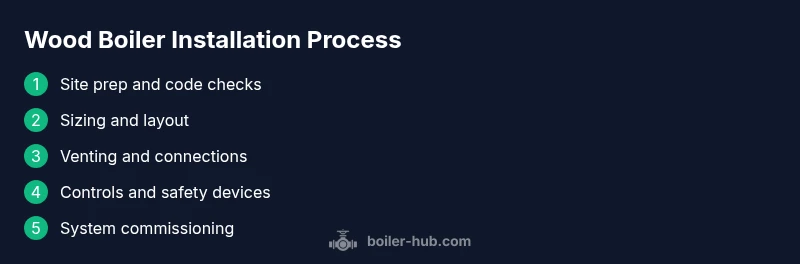
The actual installation sequence begins with a careful site preparation and an equipment check. Verify that all components match your heat load and that the venting path is clear of obstructions. Position the boiler on a noncombustible base and connect to the distribution network with appropriately sized piping. Install pumps, expansion tanks, and any required mixing or tempering valves, then mount controls and safety devices. Ensure adequate space around the unit for service and future maintenance. Because wood boilers emit smoke and particulates, the installation must satisfy emission standards and clearance requirements, and contain proper seals to prevent leaks. Following a systematic layout reduces the chance of backdrafts and ensures a stable heat distribution. Boiler Hub analyses underscore that a well-planned layout and accurate connections minimize startup problems and improve long-term performance.
During the install, document every connection, torque specification, and wiring diagram for future service. Align the boiler with the planned temperature settings and outdoor reset curves to optimize fuel use. Finally, verify that all safety devices—low-water cutoffs, pressure relief valves, CO detectors, and alarm circuits—are functioning and properly wired to a dedicated power source.
Plumbing, Piping, and Heat Distribution
Hydronic piping must accommodate the boiler’s outlet temperature and the system’s required flow. Use copper or PEX where appropriate, with properly sized fittings and well-anchored supports to minimize vibration. Install air elimination devices and trend toward tight, leak-free joints. A well-balanced loop ensures even heat delivery to radiators, baseboards, or radiant floors. An expansion tank should be sized for the system pressure and the anticipated thermal expansion, which reduces stress on the boiler and piping. Pressure gauges, thermostatic controls, and differential pressure valves help you monitor and maintain stable operation. Ensure venting and chimney connections remain airtight and that any dampers or dampening devices do not restrict the draft needed for clean combustion. Regular maintenance reduces corrosion risk and increases life expectancy.
Boiler Hub’s installation guidance highlights the importance of documenting every valve position, pump setting, and weather-related adjustments to maintain reliable performance over time. Keep detailed logs of performance data, fuel consumption, and maintenance actions to simplify future servicing and tune-ups.
Fuel Handling, Storage, and Safety
Wood fuel quality determines combustion efficiency and ash production. Store dry, well-seasoned wood in a covered, ventilated space to minimize moisture content and spontaneous mold growth. Keep the storage area distant from the boiler and ignition sources to reduce fire risk. When handling wood, wear gloves and eye protection to shield against splinters, and use appropriate tools to move logs safely. Establish a routine for ash removal and periodic inspection of grates or combustor inserts. Install and maintain carbon monoxide detectors in living spaces, with fresh batteries and test routines. Regularly inspect chimney vents for creosote buildup and schedule professional cleaning as needed. A safe, tidy fuel area reduces nuisance dust and improves overall system safety and reliability.
If you use a storage tank, ensure it is properly connected to the boiler and that shutoff valves are accessible. The right storage configuration can buffer demand and reduce cycling, which improves fuel economy and heat stability. Boiler Hub’s guidance suggests coordinating fuel logistics with maintenance and inspection tasks to ensure a smooth, safe operation.
Commissioning, Testing, and Maintenance Plan
Commissioning begins with a controlled, staged start. Verify gas or fuel supply where applicable, bleed air from loops, and fill the system with the correct water chemistry and antifreeze if required. Check all joints for leaks, test the pump operation, and confirm that controls respond to setpoints. Record initial operating temperatures, pressure, and flue gas readings. Create a maintenance plan that includes annual inspection of the heat exchanger, cleaning of the chimney, ash disposal, and testing of CO detectors. Regular monitoring of fuel consumption and performance will help you adjust settings for best efficiency. A robust startup and ongoing maintenance plan reduces the likelihood of breakdowns and extends equipment life. Boiler Hub emphasizes that staying current with recommended service intervals dramatically improves reliability and safety over the system’s lifespan.
In the follow-up months, track performance metrics and schedule professional inspections to verify venting integrity and system balance. Document any changes in usage, climate, or house layout that could alter heat demand. This proactive approach keeps wood boiler installation performing at peak efficiency and maintains safety compliance across seasons.
Tools & Materials
- Wood-fired boiler unit (BTU-rated for your load)(Match to heat load; ensure clearance for installation and service access)
- Storage tank (thermal storage)(Optional but improves efficiency and load management)
- Expansion tank(Sized for system pressure and thermal expansion)
- Circulation pump(Proper flow rate for your loop; check manufacturer specs)
- Piping (copper or PEX)(Rated for hydronic systems; include tees, elbows, and supports)
- Ball valves and isolation valves(For service and maintenance without draining the entire system)
- Thermostatic or tempering valve(Optional but helps prevent overheating of zones)
- Mixing valve or actuator (if zoning requires)(Use to balance temperatures across circuits)
- Vent kit and chimney liner(Size to boiler output and venting requirements)
- Chimney cap and spark arrestor(Reduce embers and improve draft)
- Pressure gauge and temperature gauge(Essential for monitoring system health)
- Control panel and sensors (thermostats, outdoor reset)(Connects boiler to home controls)
- CO detectors (gas safety)(Install in living spaces and near boiler area)
- Flue sealant and fire-rated sealant(Ensure airtight joints at connections)
- Tools: wrenches, pipe cutter, tubing cutter, hacksaw(For all pipe and component work)
- Personal protective equipment (gloves, eye protection, hearing protection)(Safety first during installation)
- Fire extinguisher suitable for solid-fuel fires(Less than 1 meter from the work area)
- Fuel storage bin or bin bagging system(For convenient fuel handling)
- Water treatment chemicals (as needed)(Follow local guidelines and manufacturer guidance)
Steps
Estimated time: 1-2 days
- 1
Prepare site and confirm codes
Clear the installation area, inspect the space for moisture and ventilation, and verify that local codes and permit requirements are understood. Confirm venting paths and ensure future service access. This step reduces the risk of delays and non-compliance.
Tip: Document permit numbers and code references for inspections. - 2
Measure heat load and select boiler
Calculate the home’s heat loss and choose a boiler with a matching or slightly higher output. Consider storage and zoning needs to minimize cycling and optimize efficiency.
Tip: Use a certified load calculation method and consult the boiler manufacturer’s guidelines. - 3
Plan storage and piping layout
Draft a layout that minimizes pipe runs and pressure drops. Decide on storage placement, loop routing, and valve locations to simplify maintenance.
Tip: Label every pipe and valve for future service. - 4
Position the boiler and base
Place the boiler on a noncombustible base with clear access to all sides for service. Confirm clearance distances to walls and cabinets as per the spec sheet.
Tip: Check that the weight of the boiler is supported by the floor structure. - 5
Install venting and chimney connections
Attach the vent kit, run piping to the chimney liner, and secure with appropriate supports. Ensure airtight seals and correct slope for venting.
Tip: Consult a professional if you need to retrofit a liner; improper venting is a major safety risk. - 6
Connect plumbing, pump, and storage
Create primary and secondary loops, install the expansion tank, and connect to the distribution network. Leak-test all joints and verify flow direction.
Tip: Bleed air from each loop before pressurizing the system. - 7
Install controls, sensors, and safety devices
Mount thermostats, outdoor reset controls, CO detectors, and any safety shutoffs. Wire to a dedicated power source and verify signals.
Tip: Keep wiring diagrams accessible to future technicians. - 8
Fill, bleed, test, and commission
Fill the system with water at the required level, purge air, and perform a gradual start. Check for leaks, verify temperature setpoints, and confirm stable operation.
Tip: Record initial readings and schedule the first professional inspection.
Questions & Answers
Do I need a permit to install a wood boiler?
In many areas, permits are required for installing a new combustion appliance, venting changes, and fuel storage. Check with your local building department and consult a licensed installer to ensure compliance.
Yes, permits are often required for wood boiler installations. Check with local authorities and hire a qualified installer to ensure compliance.
Can I install a wood boiler myself, or should I hire a professional?
While basic installations may be attempted by handy homeowners, wood boiler installation involves combustion safety, venting, and electrical work that benefits from professional oversight. A licensed installer helps ensure code compliance and safe operation.
DIY is possible for simple setups, but professionals are recommended for safety and code compliance.
How long does installation typically take?
Most installations take one to two days depending on site complexity, storage configuration, and venting alterations. A simple retrofit is usually faster than a full system redesign.
Expect about one to two days for a standard setup; more complex installations may take longer.
What maintenance is needed after installation?
Regular maintenance includes annual system checks, boiler cleaning, chimney inspection, and monitoring of CO detectors. Record keeping of fuel usage and service visits helps maintain efficiency.
Plan for annual inspections, chimney cleaning, and detector checks to keep the system safe and efficient.
Are there safety concerns with wood boilers?
Wood boilers involve fire, carbon monoxide, and chimney emissions. Always maintain CO detectors, ensure proper venting, and use dry fuel. Follow manufacturer guidelines and local safety codes.
Yes—fire and CO risks exist. Use detectors, proper venting, and safe fuel handling.
Can a wood boiler be retrofitted to existing heating systems?
Retrofitting is possible in some homes, but depends on current piping, storage, and boiler compatibility. A professional can assess whether a retrofit provides reliable performance or if a full replacement is preferable.
A retrofit might work, but a pro will tell you if a full replacement or redesign is better.
Watch Video
Key Points
- Plan thoroughly before ordering equipment
- Size the boiler to the actual heat load
- Ensure proper venting and clearances
- Integrate storage to smooth operation
- Prioritize safety devices and maintenance