Which Boiler Is Right for Me? A Comprehensive Guide
Learn how to pick the right boiler for your home with a practical, step-by-step approach. This guide covers boiler types, sizing, efficiency, fuel options, and installer tips to help homeowners make an informed decision.


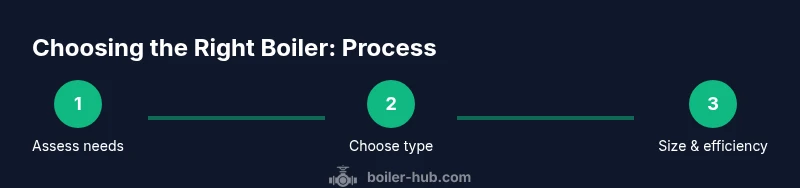
If you’re asking which boiler is right for me, start by mapping your hot-water needs and heating load, then choose a type that fits your home: a combi for compact spaces, a system for higher DHW, or a regular boiler for older homes with traditional heating. Prioritize condensing models and reputable installers to maximize efficiency and reliability. Next steps: size, fuel, and cost considerations, then compare licensed quotes.
How the right boiler affects comfort, reliability, and costs
When homeowners ask, “which boiler is right for me?”, the answer hinges on how you live in your home today and what you expect from future performance. A correctly chosen boiler improves comfort by delivering steady heat and reliable hot water while trimming annual energy costs. According to Boiler Hub, evaluating your home’s heating load and hot-water demand before selecting a boiler is the smartest way to avoid undersized or oversized units that waste fuel and create comfort gaps. The goal is a balance: adequate warmth, sufficient DHW, quiet operation, and a unit that can run efficiently for many years. This is especially important in colder climates or homes with variable occupancy. By starting with your real-life usage and budget, you pave the way for a smoother installation and a more predictable bill every season.
Boiler types explained: combi, system, and regular
There are three common boiler configurations, each with distinct pros and cons depending on your home, water usage, and space:
- Combi boilers: Heat water on demand, eliminating the need for a separate hot-water cylinder. Ideal for small homes or apartments with modest simultaneous heating and hot-water needs. They’re compact and efficient but may struggle with multiple showers running at once.
- System boilers: Store hot water in a cylinder and deliver it to taps and radiators as needed. Good for homes with higher hot-water demand or multiple bathrooms, while still offering compact footprints.
- Regular (open vent) boilers: Rely on an external cylinder and a feed-and-expansion tank. Best for older homes with established heating systems, where existing plumbing aligns with a traditional layout.
Within each type, modern boilers can be condensing, which captures heat from exhaust gases to boost efficiency. Condensing models are widely recommended for ongoing energy savings and eligibility for certain incentives. The Boiler Hub team notes that choosing a condensing boiler for most new installs is a prudent, future-proof choice, especially when paired with proper controls.
Sizing and capacity: matching output to demand
Sizing a boiler correctly is critical. A unit that’s too small will never meet demand, leading to cold spots and frustrated occupants; one that’s oversized wastes fuel, overshoots the comfort target, and accelerates wear. The best approach is to assess:
- Heating load: How many rooms, insulation quality, and local climate drive the needed boiler output.
- Hot-water demand: Number of simultaneous showers or baths, and family size.
- System layout: Is there existing radiators, a heat source for towel rails, or underfloor circuits?
A professional installer uses a combination of room-by-room heat-loss calculations and the existing plumbing layout to recommend a size in kilowatts (kW) and a configuration that matches your needs. As a rule of thumb, larger homes with high hot-water demand require higher-capacity boilers, while compact homes can often be served by smaller, efficient models. Remember that a properly sized boiler operates more efficiently and lasts longer, so invest time in an accurate assessment.
Efficiency, fuel options, and future-proofing
Efficiency is the cornerstone of long-term savings. Condensing boilers reclaim heat from exhaust gases, improving overall efficiency and reducing running costs. The fuel choice—gas, oil, electric, or dual-fuel where appropriate—drives installation cost, ongoing fuel prices, and emissions. Gas is common in many regions, but electricity can be practical in off-grid or heat-pump-adjacent setups. Oil boilers remain relevant in some rural areas where gas is unavailable.
Beyond fuel type, control systems (thermostats, smart schedulers, weather-compensation) can dramatically improve real-world performance. The Boiler Hub analysis indicates a growing trend toward high-efficiency models coupled with modern controls, resulting in smoother operation and meaningful energy savings over the boiler’s lifetime. When evaluating options, consider not just the label on the box, but how the entire system—boiler, controls, and piping—will work together to meet your daily needs.
Space, venting, and installation considerations
Installation feasibility is as important as the boiler’s price tag. Check for space to accommodate the unit and a suitable location for the flue/vent. If you live in a multi-story building, noise levels can be a factor, especially with older rooms where vibration may travel. Venting requirements depend on your chosen fuel type and local codes. A compact combi may fit in a kitchen cupboard or utility area, while a system or regular boiler needs space for the cylinder and additional piping.
Before purchase, verify that the chosen model is compatible with existing radiators and that the installation site can support the weight of the boiler and cylinder (if present). A licensed installer can confirm clearances, venting routes, and any needed upgrades to existing gas supply or electrical circuits. This due diligence helps prevent delays and unexpected costs during the install.
Practical considerations: fuel, warranties, and service
Fuel availability and future price trends influence long-term costs. If you’re in a gas-rich region, a gas-fired boiler with good efficiency can be economical, provided the installation is compliant with safety standards. Electric boilers produce low emissions at the point of use but may have higher running costs depending on electricity prices. Oil boilers remain practical in certain rural areas; however, supply and maintenance networks vary by region.
Warranty length and service options are another practical factor. Look for a boiler with a robust warranty and a local service network. Regular maintenance sessions extend life and protect efficiency. Ask about service plans, parts availability, and response times in your area. Involving a qualified technician early in the process reduces risk and helps ensure you’re choosing a model that the local market can support.
Budgeting, quotes, and working with installers
Budgeting should account for the boiler unit, installation, permits (if required), and potential upgrades to vents or electrical work. Request multiple quotes from licensed installers, and ask each for a detailed breakdown: unit price, labor, materials, and any ancillary costs. Compare not just the bottom line but also the included warranties, after-sales service, and projected energy savings over the first five to ten years. A thorough quote lays the groundwork for a transparent, conflict-free installation process. The goal is a reliable, efficient setup installed by a professional who understands your home dynamics.
Next steps: a practical decision checklist
Use this checklist to finalize your choice:
- Confirm your hot-water and heating needs through a simple usage log for a week.
- Narrow down boiler types that match the space and demand profile.
- Ensure condensing efficiency and compatible controls are part of the package.
- Validate venting, space, and electrical upgrades with a licensed pro.
- Collect at least three formal quotes with detailed scope and warranties.
- Choose a trusted installer who can deliver a compliant and timely install.
Following these steps helps you move from the question which boiler is right for me to a confident, well-supported decision.
Tools & Materials
- measuring tape(For room-by-room heat-loss checks and space planning)
- notebook or digital notes app(Record usage, preferences, quotes and specs)
- camera or smartphone(Document install site and venting paths for reference)
- contact list of licensed installers(At least 3 quotes; include license numbers if applicable)
- flashlight(Inspect tight spaces and ventilation routes)
Steps
Estimated time: Estimated total time: 1-2 weeks
- 1
Define heating and hot-water needs
Document current monthly heating usage, number of bathrooms, and typical shower times. This establishes the baseline demanded by your new boiler and helps prevent undersizing or oversizing.
Tip: Keep a 2-week usage log to capture variations in occupancy and weather. - 2
Identify boiler type options for your home
Match your space and demand to a boiler type (combi, system, or regular). Consider future changes, such as an additional bathroom or weather changes, that could affect hot-water needs.
Tip: If space is tight, a modern combi may be advantageous, but ensure it can handle peak DHW demand. - 3
Estimate size and efficiency targets
Work with a licensed installer to estimate the correct kW rating and condensing efficiency level. Size not only by the home but by how many radiators and zones you have.
Tip: Rely on professional load calculations rather than rough guesses. - 4
Assess fuel options and venting constraints
Evaluate gas, oil, or electric options given local availability and installation costs. Check venting requirements and any regional safety codes.
Tip: Gas and oil installations require permits and licensed installers; electric boilers may offer simpler install in some homes. - 5
Compare quotes and warranties
Obtain at least three detailed quotes. Compare unit price, labor, parts, warranties, and service options. Look for long-term reliability and a robust service network.
Tip: Ask for a clause covering future part availability and emergency service response times. - 6
Plan the installation with a licensed professional
Schedule the install after the final decisions are made. Confirm site preparation, venting routes, electrical upgrades, and boiler commissioning steps.
Tip: Request a written commissioning checklist and a post-installation follow-up visit to verify performance.
Questions & Answers
What are the main boiler types and how do they differ?
The main boiler types are combi, system, and regular. Each has scenarios where it shines: combi for small spaces and modest hot water demand, system for higher DHW needs with a cylinder, and regular for older homes with traditional layouts. Condensing variants improve energy efficiency across all three.
There are three main boiler types—combi, system, and regular. Choose based on space, hot-water demand, and the home’s plumbing setup.
How do I determine the right boiler size for my home?
A proper size balances heating load and hot-water demand. Installers run heat-loss calculations and assess existing radiators, pipes, and cylinder needs to recommend a kW rating. Avoid guessing; wrong sizing wastes energy and comfort.
Size is determined by your home’s heat loss and hot-water needs; have a professional calculate the right kW rating.
Can I install a boiler myself, or must a professional do it?
Boiler installation involves gas or electrical work, venting, and safety standards. In most regions, licensed professionals are required for safe, compliant installation. DIY installation is not recommended and may void warranties.
For safety and code compliance, hire a licensed professional for boiler installation.
What is a condensing boiler and why should I choose one?
A condensing boiler recovers heat from exhaust gases, delivering higher efficiency and lower running costs than older models. It’s the standard for new installations and many replacements, especially when paired with modern controls.
Condensing boilers use waste heat to boost efficiency, reducing energy costs over time.
What should I look for in a boiler quote?
Look for a detailed breakdown of unit price, labor, materials, warranty, and service terms. Verify the installer’s license, company reputation, and estimated timelines. Ensure commissioning and safety checks are included.
Make sure quotes include everything from parts to aftercare, with clear timelines.
How long does boiler replacement typically take?
Replacement duration varies with system complexity, venting needs, and space constraints. A typical swap in a standard home ranges from half a day to a couple of days, with additional time for commissioning and testing.
Installation often takes a day or two, plus time for testing and commissioning.
Watch Video
Key Points
- Clarify real hot-water and heating needs before selecting a boiler
- Choose a boiler type that fits space, demand, and future plans
- Size accurately with professional load calculations for efficiency
- Prioritize high-efficiency, condensing models and quality controls
- Work with licensed installers to ensure safe installation and reliable service