When to Replace Boiler Expansion Tank: A Practical Guide
Learn when to replace your boiler expansion tank, how to test pre-charge pressure, and a safe, step-by-step guide for homeowners and facility managers.


You should replace a boiler expansion tank when it shows signs of wear, loss of pre-charge pressure, or persistent pressure fluctuations in your system. Symptoms include frequent boiler cycling, water leaks at the tank, rust, and diaphragm failure. Regular tests with a pressure gauge and verifying pre-charge pressure help determine replacement timing, and a qualified technician should confirm the need.
What is a boiler expansion tank and how does it work?
Expansion tanks are small, pre-charged reservoirs installed on hot-water heating systems to absorb pressure changes as water expands when heated. They prevent the boiler from cycling on and off rapidly and protect pipes and fittings from stress. According to Boiler Hub, a correctly charged expansion tank maintains a stable system pressure and prolongs boiler life. The diaphragm inside the tank separates air from water, allowing expansion space for thermal expansion. When the tank’s air side leaks or the diaphragm tears, the tank can lose its ability to cushion pressure, leading to short cycling, leaks, and potential damage over time. For most homes, a properly sized tank is a simple, cost-effective maintenance item that pays back with quieter operation and fewer emergency calls.
Signs your expansion tank needs replacement
Not all symptoms mean you must replace the tank immediately, but several clear red flags indicate replacement is wise. Look for persistent pressure fluctuations on the boiler gauge, frequent cycling, damp spots or rust on the tank, visible leaks at the fittings, or a tank that feels unusually light when tapped. If the diaphragm has failed, the tank will lose its reserve air and water will fill the air side, causing erratic pressure. Boiler Hub’s field observations show that early replacement tends to minimize downstream damage and repair costs, especially in homes with older equipment or high mineral content in the water.
How pre-charge pressure affects performance
The pre-charge pressure is the air chamber’s baseline before you fill the system. If the pre-charge is too high, not enough expansion space remains for heated water, causing higher resting pressure. If it’s too low, the tank cannot absorb expansion, and the boiler will cycle more often. The correct pre-charge pressure usually matches the boiler system’s cold fill pressure, commonly around 12-15 psi for many residential boilers. Use a tire gauge-style pressure tester to check the air side by removing the cap and listening for venting through the air valve. If you’re unsure, have a professional confirm the proper setting.
How to determine the right size and type for your system
Tank selection depends on the total water capacity of the boiler and the connected piping. A mismatched tank can underperform, leading to frequent cycling or tank failure. Most residential systems use a pre-charged diaphragm tank sized for the system’s water volume. For larger homes or higher flow rates, you may need a larger tank or a redundancy with two tanks. Always verify compatibility with your boiler’s manufacturer recommendations and local codes. Boiler Hub notes that professional sizing avoids under- or over-pressurization and extends asset life.
When to replace vs repair
If the tank has a minor leak at a joint or valve and the diaphragm is still intact, some technicians may choose to reseal or replace fittings rather than replacing the entire tank. However, a tank that repeatedly loses air pressure, shows rust, or exhibits signs of corrosion should be replaced rather than repaired. Replacement avoids unpredictable performance and long-term risk. In most cases, replacing the expansion tank is more reliable and cost-effective than continuous repairs.
Safety considerations and who should do replacement
Working with pressurized hot-water systems carries burn and scald hazards, and improper work can cause water damage or gas/oil leaks if there are related connections. If you are not comfortable with basic plumbing tasks, or if your boiler operates at high pressure, hire a licensed technician. Ensure the boiler is powered off, the system is isolated, and you vent the air safely. Use PPE and follow the manufacturer’s instructions for any new tank. Boiler Hub emphasizes safety and proper installation as the foundation for reliable operation.
Replacement steps overview (high-level)
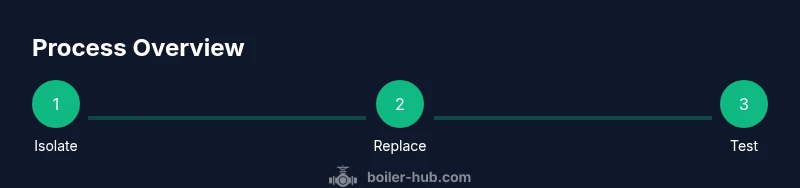
This section provides a high-level view of the replacement process. A typical replacement involves isolating the boiler, draining the system, removing the old expansion tank, installing a properly pre-charged tank, reconnecting lines, re-pressurizing, and testing for leaks. The exact sequence can vary by model and local codes. Always consult the manufacturer’s guidance and consider professional help for metal piping and pressure adjustments.
Step-by-step: preparation and isolation
Before touching any boiler components, switch off power to the boiler and close the cold-water supply valve. Remove the boiler’s front panel to access fittings and identify the expansion tank location. Confirm the system is completely cool, then release any built-up pressure via the boiler relief valve if instructed by the manual. Collect any water that may drain and prepare towels and a bucket. Clear the work area and ensure you have enough light and space to work safely.
Step-by-step: removing the old tank and checking connections
Carefully detach the expansion tank’s fittings from the system, noting orientation and thread type. Inspect the feed and discharge lines for corrosion and signs of leakage. If the tank is mounted in a tight space, use adjustable wrenches to prevent twisting pipes. Remove any clamps or brackets, then lift the tank away. Check the nipple, threads, and gasket surfaces for wear; replace components if necessary to ensure a clean seal for the new tank.
Step-by-step: installing the new tank and re-pressurizing
Position the new expansion tank in the same location and connect with the proper fittings and gaskets. Tighten evenly to avoid cross-threading and ensure a good seal. Pre-charge the tank air side to the system’s cold fill pressure (often around 12-15 psi), then reconnect the water feed and isolation valve. Refill the system slowly, bleed any air from radiators or zones, and verify the gauge reads within the recommended range. Finally, run the boiler and observe for leaks and stable operation.
Post-install checks, leaks diagnosis, and maintenance plan
With the system pressurized again, monitor the gauge over the next 24 hours for abnormal fluctuations. Check all fittings and joints for slow drips and ensure the expansion tank is not sweating or hot to the touch. If you notice any leaks or loud banging, shut down and call a professional. Create a simple maintenance schedule—test pre-charge annually, inspect the diaphragm and tank for corrosion, and replace the tank roughly every 5-10 years depending on water quality and usage.
Maintenance plan to extend expansion tank life
Develop a proactive maintenance plan that includes annual checks of pre-charge pressure, inspection of tank body for corrosion, and timely replacement when wear is detected. Use a water-quality test kit to monitor mineral content in your system and service the boiler’s pressure relief valve as needed. Keeping the system clean and free of air pockets reduces stress on the expansion tank and helps prevent leaks and failures.
Tools & Materials
- Expansion tank (pre-charged to system pressure)(Must be matched to boiler capacity (check manufacturer))
- Pressure gauge or tire-style gauge(Used to verify pre-charge and system pressure)
- Wrench set (adjustable and fixed)(For fittings and mounting)
- Teflon tape / pipe dope(Seal threads on new fittings)
- Bucket, rags, and towels(Catch drips and protect surrounding surfaces)
- Pliers and metal snips(Useful for clamps and small adjustments)
- Safety gloves and eye protection(Personal protective equipment)
- Shut-off valve key or screwdriver(Close isolation valve without damage)
- Clear workspace and adequate lighting(Safe handling and accurate alignment)
Steps
Estimated time: 60-90 minutes
- 1
Shut off power and isolate boiler
Turn off the boiler and power supply, then close the cold-water supply to halt fresh water flow into the system. This minimizes risk of scald injuries and water ingress during replacement.
Tip: Double-check that power is off at the breaker and that the water shut-off valve is fully closed. - 2
Relieve pressure safely
Vent any residual pressure using the boiler’s relief valve or air vent per the manual. This reduces the chance of a pressure surge when the tank is opened.
Tip: Do not open the system until gauge reads near zero and all safety mechanisms are released. - 3
Drain the boiler/system
Attach a hose to the drain valve and slowly drain enough water to relieve pressure around the expansion tank. Capture drainage with a bucket and towels.
Tip: Drain to below the tank level to prevent water from entering the tank during removal. - 4
Remove old tank and inspect lines
Loosen fittings, detach the tank, and inspect feed and discharge lines for corrosion or damage. Replace any worn components before installing the new tank.
Tip: Keep track of orientation and thread type to help you install the new tank correctly. - 5
Install the new tank and pre-charge
Mount the new tank in the same location, connect with proper fittings, and pre-charge the air side to the system's cold fill pressure (usually 12-15 psi).
Tip: Use a gauge and verify air pressure before connecting the water side. - 6
Reconnect, refill, and bleed air
Reconnect all lines, slowly refill the system, and bleed air from radiators or zones until a steady pressure is achieved.
Tip: Bleed from the highest points first for fastest air removal. - 7
Test and confirm leaks
Run the boiler through a full cycle and monitor pressure: look for leaks at joints and verify the gauge stays within spec.
Tip: If pressure drifts, re-check fittings and reseat gaskets.
Questions & Answers
Do expansion tanks need regular replacement?
Yes. If the pre-charge is lost, leaks occur, or the diaphragm fails, replacement is recommended to restore reliable operation.
Yes. When the pre-charge is lost or leaks appear, replacement is the safer option.
Can I replace an expansion tank myself?
Only if you have basic plumbing skills and understand boiler safety. For high-pressure systems or gas/fuel boilers, hire a licensed technician.
Only if you’re confident with basic plumbing and safety. Otherwise, hire a professional.
What is the typical pre-charge pressure?
Pre-charge usually matches cold fill pressure, commonly in the 12-15 psi range for many residential boilers; check your manufacturer’s spec.
Usually about 12 to 15 psi when cold; confirm with your boiler manual.
Why does failing expansion tank cause leaks?
A failed diaphragm or loss of air space causes pressure to spike and fittings to leak; replacing the tank stops the cycle.
Because the tank loses its air cushion, pressure rises and leaks can occur.
How long does an expansion tank last?
Lifespan varies, but most tanks last 5-10 years depending on water quality and usage; regular checks help extend life.
Typically 5-10 years with proper maintenance.
Watch Video
Key Points
- Identify signs of tank failure early and test pre-charge.
- Use proper size and pre-charge for reliable performance.
- Follow safety steps and consider professional help for high-pressure systems.
- Document maintenance to extend equipment life.