Viessmann Boiler Replacement: A Step-by-Step Guide for Safe Install
Practical, step-by-step guide to replacing a Viessmann boiler, covering planning, safety, permits, model selection, installation steps, and post-install checks for homes and facilities.


According to Boiler Hub, this guide helps you perform Viessmann boiler rep safely and efficiently. You'll learn how to verify symptoms, select a compatible Viessmann model, and plan a code-compliant replacement. This quick overview sets expectations for homeowners and facility managers.
What does a Viessmann boiler replacement involve?
A Viessmann boiler replacement is a controlled, multi-stage project that swaps an aging or inefficient unit for a newer, higher-efficiency model. The process includes planning, procuring the right Viessmann boiler, preparing the installation space, safely disconnecting and removing the old unit, and installing and commissioning the new boiler. Throughout, compliance with local codes, venting requirements, and manufacturer instructions is essential. The Boiler Hub team emphasizes that a well-planned replacement minimizes downtime and maximizes system reliability.
Assessing replacement vs repair: symptoms and criteria
Not every boiler problem requires a full replacement. Common replacement indicators include persistent corrosion, frequent failures despite repairs, rising energy bills from aging equipment, and poor heat distribution even after service. For Viessmann boilers specifically, consider model compatibility with your current heating system, fuel source, and venting configuration. Boiler Hub Analysis, 2026 notes a trend toward replacing aging boilers with newer, higher-efficiency Viessmann models when long-term reliability and energy savings justify the investment.
Selecting a Viessmann model that fits your system
Viessmann offers a range of residential and commercial boilers, from compact wall-mounted units to high-capacity floor-standing models. When choosing a replacement, confirm BTU output matches your heat load, check compatibility with existing piping, and verify venting and condensate drainage requirements. Consider an outdoor reset control or modulating burner options to optimize efficiency. A correctly sized unit reduces cycling, improves comfort, and lowers operating costs.
Compatibility checks: piping, venting, and controls
Before removing the old boiler, map the existing piping layout, gas supply lines, electrical connections, and vent stack. Ensure the new Viessmann model matches the connection points, flange sizes, and clearance requirements. Verify that the venting system is designed for the new unit’s emissions and that condensate drainage aligns with the house’s plumbing. Incorrect venting or misaligned piping can cause safety hazards and expensive corrections later.
Safety, permits, and building codes you need to know
Replacing a boiler typically involves gas, electrical, and venting work that may require permits and inspections. Check local regulations and homeowner association rules, if any. If you are unsure about gas work or venting, hire a licensed professional. Always ensure carbon monoxide detectors are functional and placed according to code, and have a shut-off hand tool readily available for emergencies.
Planning downtime and scheduling with minimal disruption
A Viessmann boiler replacement can take several hours to a full day depending on the setup, permits, and whether existing piping needs modification. Coordinate with occupants to schedule downtime, arrange temporary heating if needed, and ensure utilities are safely isolated during the swap. Boilermaker and electrical work should be sequenced to minimize energy loss and ensure a clean startup.
Installation steps overview (high level)
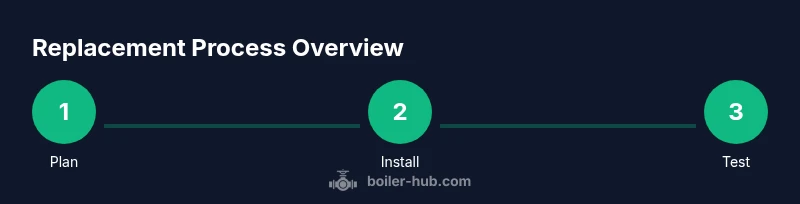
This section provides a high-level view of the installation flow without duplicating the step-by-step details. Start with space preparation, followed by safely removing the old unit, installing the new Viessmann boiler, connecting gas, water, and electrical services, and commissioning the system. Proper purging and air removal are critical for a stable, leak-free start.
Post-install checks and leak testing
After startup, test all connections for leaks using soapy water and pressure tests, verify flame settings, and confirm boiler startup sequences function correctly. Check the thermostat integration and ensure the outdoor reset controls respond to load changes. Confirm CO detectors operate and educate occupants on warning signs and maintenance schedules.
Maintenance mindset for energy efficiency and longevity
Proactive maintenance extends the life of a Viessmann boiler and sustains efficiency. Schedule annual inspections, clean or replace burners as needed, inspect venting for blockages, and verify circulating pumps operate smoothly. Regularly review performance data to detect aging patterns early and adjust controls for seasonal efficiency gains.
Common mistakes and how to avoid them
Avoid mixed-material joints, improper venting, or neglecting gas shut-off procedures. Don’t rush the purge and fill sequence, as trapped air can cause heat unevenness and noises. Always follow Viessmann’s installation manual and local codes, and document all steps for future service.
Authority sources and further reading
Useful references include credible, standards-based resources:
- https://www.energy.gov/
- https://www.epa.gov/
- https://www.ashrae.org/
Real-world scenarios and case studies
Drawing from typical buildings—single-family homes, small to mid-size apartments, and light commercial spaces—these scenarios illustrate how site conditions influence a Viessmann boiler rep. Each case demonstrates risk assessment, permit workflows, model selection, and startup checklists that reduce downtime and ensure dependable operation.
Tools & Materials
- Safety gear (gloves, safety glasses)(ANSI-approved eye protection; cut-resistant gloves if handling piping or sharp edges)
- Measuring tape(Minimum 25 ft. for clearance checks and layout planning)
- Wrench set (adjustable and combo)(Sizes 10-24 mm commonly used on piping and fittings)
- Screwdrivers (Phillips and flat-head)(Flat and Phillips; include stubby for tight spaces)
- Voltage tester(Used to confirm circuits are de-energized before work)
- Pipe sealant and Teflon tape(Gas and water connections; use appropriate sealant per instruction)
- New Viessmann boiler unit(Model compatible with existing piping, radiators, and space; verify serial and specifications)
- Gas shut-off tool and vent kit(Shut-off valve key and venting components compatible with Viessmann model)
- Sealants, joint compounds, mounting hardware(Gas-rated sealants; ensure all mounting screws and brackets are included)
- Level and mounting hardware(Ensure boiler sits perfectly level to prevent stress on connections)
- Electrical supply and disconnect tools(Non-contact voltage tester; ensure power is off at main breaker if required)
Steps
Estimated time: Total time: 4-6 hours
- 1
Verify compatibility and plan
Assess the current heating load, confirm the Viessmann model compatibility, and gather all required documentation (manuals, existing piping layout, and venting). Create a spatial plan for the new unit to ensure adequate clearance for servicing and maintenance.
Tip: Have the model numbers and layout diagrams ready before removing the old unit. - 2
Power down and isolate utilities
Shut off electricity and gas supply to the boiler. Confirm there is no power in the boiler area using a voltage tester, and isolate the gas line with the proper shut-off valve. Document the shut-off times for compliance.
Tip: Label circuits and gas valves to avoid accidental re-energizing during work. - 3
Drain and depressurize the system
Open the drain valve to remove system water and relieve pressure. Place a containment pan to catch any residual liquid and ensure the main water supply is closed to prevent backflow.
Tip: Recover and dispose of collected water per local code. - 4
Detach and remove the old boiler
Disconnect water, gas, and electrical connections from the old unit. Carefully lift and remove the boiler from its mounting, using proper lifting techniques and protective equipment.
Tip: Have a helper for heavy units and use a dolly or pallet jack if needed. - 5
Prepare the installation site
Clean the mounting surface, verify the flue and vent termination are clear, and ensure adequate space for venting and service access. Install any required brackets or mounting hardware for the new Viessmann unit.
Tip: Double-check vent clearance from combustibles and ensure drip pan is in place. - 6
Position and mount the new boiler
Place the new unit on its mounting footprint, level it precisely, and secure it with the supplied hardware. Re-check clearances to walls and access panels.
Tip: A properly leveled boiler reduces pipe strain and improves efficiency. - 7
Connect gas and venting
Attach the gas supply line to the boiler, install the vent kit according to Viessmann specifications, and test joints for leaks with soapy water after assembly.
Tip: Use only approved fittings and verify vent slope per code. - 8
Electrical connections and controls
Wire the boiler per the installation manual, integrate thermostat and any controls (weather compensation, outdoor reset). Verify power is correct and connections are secure.
Tip: Follow color codes and avoid shared neutrals to prevent nuisance trips. - 9
System fill, purge, and bleed
Fill the system with water, purge air from radiators or baseboard circuits, and confirm there are no air pockets that impair performance.
Tip: Bleed systematically from highest points first to optimize efficiency. - 10
Initial startup and safety checks
Power up the boiler, confirm flame interception, and verify the system pressure and temperature settings. Check for leaks and test the CO detector function.
Tip: Run a full functional test including cooling, heating, and hot-water modes. - 11
Emissions, safety and documentation
Record commissioning data, confirm CO alarms operate correctly, and complete warranty registrations and manuals for the new unit.
Tip: Keep copies of the installation paperwork for future service. - 12
Post-install follow-up and maintenance planning
Schedule a follow-up inspection and set a maintenance plan to ensure long-term efficiency and reliability of the Viessmann boiler.
Tip: Set calendar reminders for annual inspection and filter checks.
Questions & Answers
What are signs that my Viessmann boiler needs replacement rather than repair?
If your boiler shows consistent leaks, frequent failures after service, rising energy bills, or erratic heating despite repairs, replacement is worth considering. For Viessmann models, ensure compatibility with your system and venting setup before deciding.
Look for leaks, repeated failures after service, and rising energy bills. Check compatibility with your current system and venting before replacing.
Do I need permits to replace a Viessmann boiler?
Most regions require permits for gas appliance replacement and venting work. Check local building codes and schedule inspections as required. A licensed pro can handle permitting and inspections to keep you compliant.
Yes, permits are usually required. A licensed professional can help with the paperwork and inspections.
Can I replace a Viessmann boiler myself or should I hire a professional?
If you have gas, electrical, and venting experience and access to the proper tools, you may perform a basic replacement. However, most homeowners should hire a licensed technician for safety, code compliance, and warranty respect.
It's best to hire a licensed technician for safety and code compliance.
What maintenance should I plan after replacement?
Schedule an annual inspection, test safety devices, clean burners, check venting, and monitor boiler efficiency. Regular maintenance helps sustain performance and warranties.
Regular annual checks keep your boiler running safely and efficiently.
How long does a Viessmann boiler replacement typically take?
Most installations take half a day to a full day depending on site conditions, permits, and whether venting needs adjustment. A professional can provide a more precise estimate after assessing the space.
Plan for several hours to a full day, depending on your setup.
What warranty considerations should I know with replacement?
Register the new boiler and complete all manufacturer-required commissioning steps. Warranty coverage typically requires professional installation and adherence to Viessmann guidelines and local codes.
Make sure you complete the warranty registration and follow the installer’s commissioning steps.
Watch Video
Key Points
- Plan and verify model compatibility before starting
- Follow strict safety routines for gas, electrical, and venting work
- Use manufacturer guidelines to ensure warranty and efficiency
- Bleed air properly to avoid cold spots and noise
- Schedule post-install checks to sustain long-term performance