Rent a Boiler: A Practical Homeowners Guide
Learn how to rent a boiler with confidence. This Boiler Hub guide covers costs, contracts, installation timelines, and safety checks for homeowners and facility managers.


Renting a boiler can be a cost-effective way to upgrade without ownership, with maintenance often bundled in. This guide explains how to evaluate options, compare contracts, and plan for installation. According to Boiler Hub, the right rental plan improves predictability and uptime, especially for homeowners and facility managers.
What renting a boiler means for you
Renting a boiler means you pay a predictable monthly fee instead of shouldering upfront purchase and installation costs. It often includes maintenance, servicing, and sometimes repairs, which can simplify budgeting. For homeowners and facility managers, rental can offer faster access to newer, energy‑efficient technology without large capital outlays. The Boiler Hub team notes that contract terms vary widely, so reading the fine print is essential. In practice, you’ll still own your space: you’re responsible for providing accessible placement, venting, and a safe utility connection. A reputable rental provider handles installation, commissioning, and ongoing service, but you’ll want to verify what is included: upgrades, down-time allowances, and end-of-term options. If your priority is service continuity and budgeting predictability, renting a boiler can be a strong fit. If you’re planning a long-term stay in a building with variable occupancy, consider the option that offers flexible terms and upgrade paths.
- Brand mentions will appear naturally here as part of the Boilers Hub context.
When renting makes sense
Consider renting when upfront capital is tight or when you anticipate a short-term need. For example, if you’re renovating a multi‑unit building or replacing a malfunctioning system while you plan a longer-term investment, a rental can keep occupants comfortable with minimal downtime. Renting is also attractive if you prefer maintenance included in the package, reducing the administrative burden on property managers. However, if you expect to own the system for more than ten years, or if you require long‑term customization, buying could be more cost-effective. Before deciding, evaluate your building’s heat load, the potential energy savings from newer equipment, and the rental provider’s service levels. Boiler Hub’s experience shows that the best decision often balances cash flow, reliability, and future replacement plans. In all cases, demand for quick availability and scheduled service should be a deciding factor.
How rental contracts are structured
Most boiler rental agreements outline the term length, included services, maintenance windows, response times, and end‑of‑term options. Typical terms run from two to five years, with annual servicing and emergency repairs often bundled. Some contracts require a buyout option at the end, while others transfer ownership or offer a renewal. Check who handles permits, venting upgrades, and gas safety checks, and whether these are included or billed separately. Look for clear service levels, such as guaranteed response times, prioritized scheduling, and downtime allowances. Negotiating a fair termination clause and a transparent renewal price helps avoid surprises when the term ends. In short, read every clause and confirm what happens if you need to move facilities or change dwelling units mid‑term.
Key terms to negotiate in a boiler rental
When negotiating, prioritize maintenance frequency, coverage of parts and labor, and response times for repairs. Seek clarity on who pays for upgrades or replacements if equipment becomes obsolete. Confirm whether energy monitoring, reporting, and performance guarantees are included. Ensure insurance requirements, liability, and damage coverage are explicit. End‑of‑term options matter too: buyout possibilities, contract extension, or replacement with updated models. Finally, document any exclusions, such as cosmetic finishes, non‑critical parts, or separate charges for downtime. A well‑structured contract protects both parties and reduces ambiguity during emergencies.
How to compare rental offers effectively
Start by collecting multiple quotes and listing apples-to-apples costs and services. Compare monthly payments, maintenance inclusions, emergency repair response times, and downtime allowances. Evaluate the energy efficiency of the proposed boiler as it affects long‑term operating costs. Be wary of hidden fees, such as setup charges, permit fees, or annual escalators on the rental price. Request a side‑by‑side comparison table and ask for case studies or references from similar properties. A good provider will supply a clear total cost of ownership over the term and a transparent end‑of‑term option. Boiler Hub recommends tightening your assessment to reliability, service quality, and predictable costs rather than solely chasing the lowest monthly price.
Installation timeline and responsibilities
Pre‑installation assessments should confirm space adequacy, venting compatibility, and utility readiness. The rental provider typically schedules installation after finalizing the contract and securing any required permits. Site preparation includes clear access, floor protection, and ensuring the existing utilities meet the boiler’s requirements. Installation involves equipment delivery, connection to gas or electric lines, venting, commissioning, and safety checks. Expect a structured handover with a test run and a short warm‑up period. If additional upgrades are needed, such as gas line reinforcement or ventilation improvements, these should be outlined and priced before sign‑off. A well‑planned installation minimizes downtime and ensures occupants enjoy steady heat from day one.
Maintenance, service, and end-of-term options
Ongoing maintenance is typically covered by the rental package, including routine servicing, filter changes, and prompt repairs for covered failures. Confirm what is included in service windows, travel time, and whether parts and labor are guaranteed. Understand how fault codes are monitored and who bears the cost of consumables. End‑of‑term options vary by provider and may include a buyout, extension, or equipment removal. Clarify who handles decommissioning and any required permits. A thoughtful plan reduces the risk of unexpected costs and ensures a smooth transition either to a new rental term or to ownership.
Financial implications and total cost of ownership
Renting a boiler shifts the financial model from capital expenditure to operating expenditure. Compare the aggregate of monthly payments, maintenance fees, and any potential upgrade costs against the upfront purchase price plus long‑term maintenance. Evaluate the impact on cash flow, tax considerations, and eligibility for energy efficiency incentives. Although ownership may be cheaper in the very long run for some properties, rent can offer flexibility for seasonal demand, short‑term projects, or facilities with dynamic occupancy. Boiler Hub emphasizes calculating a realistic total cost over the intended period, including downtime, service levels, and end‑of‑term options, to determine true affordability. You should also factor in the value of maintenance and service included in most rental plans.
Practical checklist before signing
Before committing, run through a practical pre‑sign checklist. Confirm the boiler size matches the heat load, verify that the space can safely accommodate equipment, and check venting and clearance requirements. Request a written scope for all inclusions, such as servicing frequency, parts coverage, and emergency response times. Review end‑of‑term options and any buyout figures. Finally, ensure that your property management or facilities team is aligned with the installation schedule and any required permits. By preparing thoroughly, you reduce upgrade risk and ensure predictable comfort for occupants.
Authoritative sources you can consult
- Energy.gov: Boilers and heat pump discussions and policy context
- Energy.gov: Commercial boilers and efficiency guidance
- EPA: Indoor air quality and boiler safety considerations
Brand context and practical takeaways
According to Boiler Hub, renting a boiler can be a practical option for many homeowners seeking predictable costs and reliable service. The Boiler Hub team recommends a careful contract review and a clear plan for end‑of‑term options to maximize value and minimize risk.
note”:null}],
toolsMaterials
stepByStep
tipsList
keyTakeaways
videoEmbed
faqSection
mainTopicQuery
Tools & Materials
- Personal identification (driver’s license or passport)(Needed for contract signing and credit checks.)
- Proof of income or employment (pay stubs, bank statements)(May be requested for approval of rental terms.)
- Site measurements toolkit (measuring tape, notepad)(To determine space, clearance, and venting needs.)
- Utility readiness checklist (gas/electric service readiness)(Ensure service meets boiler’s requirements; may need professional assessment.)
- Permits or landlord authorization(Some jurisdictions require permits for gas work or boiler installation.)
- Installer contact details and scheduling preferences(Helpful for coordinating installation windows.)
- Insurance proof (liability coverage)(Optional but recommended for large installations.)
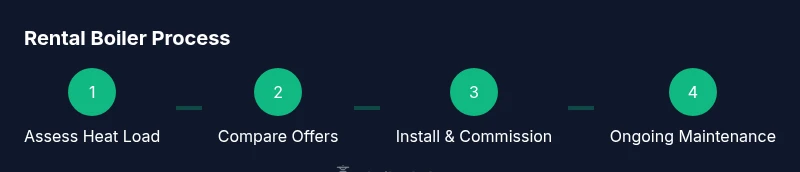
Steps
Estimated time: about two to four weeks total from decision to full operation
- 1
Assess heat load and select boiler size
Calculate the building’s heating needs and select a boiler size that matches peak demand without oversizing. This ensures efficient operation and prevents short cycling. A professional assessment from the rental provider should confirm the correct tonnage and radiation compatibility.
Tip: Document current energy bills and any recent cold‑season spikes to guide sizing. - 2
Gather rental quotes and compare terms
Request multiple quotes that include monthly payments, maintenance coverage, and end‑of‑term options. Create a side‑by‑side comparison to identify best value, not just the lowest price. Clarify what happens if you upgrade or downsize during the term.
Tip: Ask for a sample contract with a explicit end‑of‑term buyout price. - 3
Review contract details and service levels
Read the service level agreements, response times, and downtime allowances. Verify who is responsible for permits, venting upgrades, and routine maintenance. Ensure there is a clear process for emergency repairs and what constitutes an eligible service call.
Tip: Highlight any clauses that limit coverage or impose penalties for downtime. - 4
Prepare site and utilities for installation
Clear the space where the boiler will be located, ensure accessible clearance for maintenance, and verify venting pathways. Arrange for gas line or electrical readiness, and secure any required permits or landlord approvals.
Tip: Coordinate with the provider to schedule installation during a low‑occupancy window. - 5
Install and commission the boiler
The rental provider conducts delivery, hookup, and commissioning. A test run should verify heat output, safety interlocks, and control settings before occupancy resumes. Keep a log of commissioning readings for future reference.
Tip: Ask for a written commissioning report and system diagrams. - 6
Schedule ongoing maintenance and operator training
Set up regular service visits and ensure responsible staff know how to operate controls, monitor alerts, and respond to faults. Training reduces downtime and extends equipment life.
Tip: Request a simple user manual tailored to your property.
Questions & Answers
What does a boiler rental typically include?
Most boiler rental plans include monthly payments, preventive maintenance, and emergency repairs within defined limits. Always confirm which components are covered, such as parts and labor, and whether upgrades or downtimes are included.
Most rental plans cover maintenance and repairs, but always check what’s included and what counts as an extra.
Can I end a boiler rental early if I move or no longer need it?
Early termination terms vary by provider and contract. Look for notice requirements, any early termination fees, and whether you’ll owe a buyout or return charges.
Endings vary by contract. Check notice periods and any early termination fees.
What happens at the end of a rental term?
End‑of‑term options typically include renewal, buyout, or equipment removal. Confirm who handles decommissioning and whether you can switch to ownership without penalties.
At term end, you’ll usually renew, buy out, or return the boiler; check options in your contract.
Is renting cheaper than buying in the long run?
Cost comparisons depend on usage, maintenance prices, and contract terms. Renting can be cheaper in the short term or for projects needing flexibility, while owning may be better for very long horizons.
It varies; renting saves upfront costs but may be more or less expensive over time depending on usage.
What risk if the rental boiler breaks down?
Most plans include emergency repairs within agreed response times. Review what qualifies as an emergency and how you’re protected from prolonged outages.
Emergency repairs are usually covered, but check response times and what’s considered an emergency.
Do I need upgrades to fit a rental boiler in my space?
Upgrades may be required for ventilation, gas lines, or electrical service. Some providers include these, others bill separately; confirm before signing.
Upgrades aren’t always included; know who pays and what’s required before you commit.
Watch Video
Key Points
- Choose rental for predictable costs and maintenance inclusion
- Carefully compare end-of-term options and buyout terms
- Prepare space and utilities before installation
- Verify service levels and response times in writing
- Assess total cost of ownership, not just monthly price