Install New Boiler Cost: What You Need to Know in 2026
Discover what drives install new boiler cost, how to compare quotes, and strategies to save. This guide explains pricing components, installation scenarios, and total ownership costs for homeowners and facility managers.


The install new boiler cost varies widely based on boiler type (gas, electric, or oil), fuel source, efficiency, and the installation complexity. In most cases, homeowners should expect a broad price range and plan for contingencies such as removal of an old unit, additional piping, or venting needs. A precise quote requires a site assessment.
Understanding the cost landscape for install new boiler cost
Pricing for a full boiler installation is rarely a single number. Costs are driven by boiler type (gas, electric, or oil), the efficiency rating, fuel availability, and how complex the install is. In many homes, the process also includes upgrading venting, installing or enlarging flues, consolidating controls, and sometimes rerouting gas lines or condensate drains. According to Boiler Hub, regional labor rates and permit fees can swing the total by a wide margin, so a quote from a national contractor will often understate or overstate what you'll pay locally. The key is to separate fixed equipment costs from variable labor and ancillary work. This section helps you map out where those dollars go and how to budget realistically. Use a site assessment to identify constraints such as space, access, and clearance around the boiler, as these factors directly influence install time and price.
Major cost components: equipment, labor, and extras
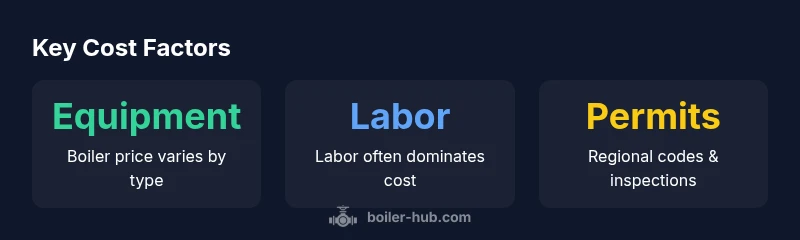
When estimating install new boiler cost, distinguish three core buckets: equipment, labor, and ancillary work. Equipment includes the boiler itself, controls, and any storage or buffer tanks. Labor covers the installer’s time, permit handling, and any on-site adjustments. Extras can include old unit removal, venting upgrades, gas line modifications, drainage, and electrical work. Real-world estimates show that while the boiler price is a fixed quote, labor and extras vary with contractor practices and local codes. Boiler Hub Analysis, 2026, notes that the sum of these variables determines the final invoice. A simple rule: ask for itemized quotes that show equipment costs separately from labor and extras, so you can compare apples to apples and spot unnecessary add-ons.
Installation choices and their price implications
Boiler selection is not only about upfront cost but also long-term energy use and maintenance. A higher-efficiency unit may incur a higher purchase price but reduce operating costs over its lifespan. Combustion technology, venting requirements, and the need for zone controls can add or subtract from the total cost. If your home requires upgrading plumbing or radiants, those costs compound quickly. Boiler Hub Team emphasizes that the most economical choice today may hinge on your fuel type availability, local incentives, and how well the system is sized for your home. Start with a professional load calculation to minimize oversizing, which can waste energy and money.
Installation complexity: venting, location, and permits
Complex installations attract higher costs. If the boiler must be located in an inaccessible crawl space or a tight utility closet, expect longer labor hours and possible structural adjustments. Venting upgrades, condensing condensate lines, and proper clearance around the unit add to both time and materials. Permits are another variable—some jurisdictions charge for inspections, gas pressure testing, or venting approvals. An experienced installer will anticipate these requirements during the site visit and include them in the quote. Boiler Hub notes that transparent pricing helps you gauge value rather than merely chasing the lowest upfront price.
Regional variation and market dynamics
Costs fluctuate by region due to labor markets, material availability, and regulatory requirements. In high-demand areas, installation crews may charge premium rates, while rural regions could offer lower labor costs but longer travel times. Additionally, material shortages or surges in fuel prices can affect both equipment and running costs. When comparing quotes, factor in travel fees and scheduling windows. Boiler Hub Analysis, 2026, highlights that your location often helps explain why two nearby homes receive notably different numbers on their installation invoices.
Financing options, rebates, and incentives
Financing installed boilers or leveraging rebates can substantially affect the final cost. Many manufacturers and utilities offer rebates for high-efficiency boilers or for upgrades that improve home insulation and venting. Some installers provide financing plans with fixed payments or promotional rates. Before committing, verify eligibility criteria, expiration dates, and whether rebates can be stacked with other discounts. The total cost of ownership—driven by energy savings and maintenance—will determine the real value of any incentive. Always request a written projection of payback period based on your household energy usage and local rates.
Practical steps to obtain fair, accurate estimates
To secure a fair install new boiler cost, start with a rigorous site assessment from at least three reputable installers. Ask for itemized quotes that separate equipment, labor, permits, and extras. Request a sizing calculation (often a heat load or Manual J calculation) to ensure the unit isn't oversized or undersized. Check whether the quote includes old unit removal, disposal, and new venting requirements. Compare warranties, service plans, and estimated maintenance costs over the first 5-10 years. Finally, consider long-term energy efficiency—investing in a higher-efficiency boiler may yield substantial savings over time.
Representative boiler types and their installed cost ranges
| Boiler Type | Typical cost range | Key considerations |
|---|---|---|
| Gas-fired combi boiler | $3,000–$7,500 | Efficient, common where gas is available |
| Electric boiler | $2,500–$6,000 | Lower upfront cost, higher running costs, quiet operation |
| Oil boiler | $4,000–$9,000 | Requires fuel delivery, venting and space for storage |
Questions & Answers
What factors influence the install new boiler cost?
Boiler type, fuel, efficiency, installation complexity, venting needs, and old-system removal all influence cost. Local codes and permit fees also affect final pricing. Getting an itemized quote helps you see where the dollars go.
Costs depend on boiler type, fuel, efficiency, and installation work. Always ask for an itemized quote.
Should I replace my old boiler before winter?
If the old boiler is unreliable or inefficient, replacing it now can prevent outages. Weigh upfront costs against potential losses from a failure during peak season.
If your current boiler is unreliable or costly to run, replacement before winter is worth considering.
Are permits required for boiler installation?
Permits depend on local codes. Your installer can determine the right permits and arrange inspections as part of the project.
Check with your installer about local permits and inspections.
What is the payback period for a high-efficiency boiler?
Payback varies with energy prices and usage. In many homes, substantial savings accrue over several years, improving overall cost efficiency.
Payback depends on energy costs and usage; it often takes several years.
How can I lower installation costs?
Shop around for quotes, choose standardized equipment, and plan for bundled work (removal, venting, and service). Avoid last-minute changes that add labor time.
Get multiple quotes and avoid late changes to keep costs down.
“Choosing the right boiler is not just about upfront price; it’s about long-term efficiency and maintenance costs. Boiler Hub Team notes that a well-sized, efficiently installed unit can save energy over the lifespan.”
Key Points
- Get multiple quotes to lock in a fair install price
- Ask about old unit removal costs to avoid surprises
- Consider energy efficiency to lower long-term costs
- Plan for permits and potential venting upgrades
- Request itemized quotes for apples-to-apples comparisons