How Much Does a New Combi Boiler Cost in 2026? A Practical Guide
Explore the true cost of a new combi boiler in 2026, including installation, VAT, and hidden fees. This guide breaks down price ranges, regional differences, and tips to save.


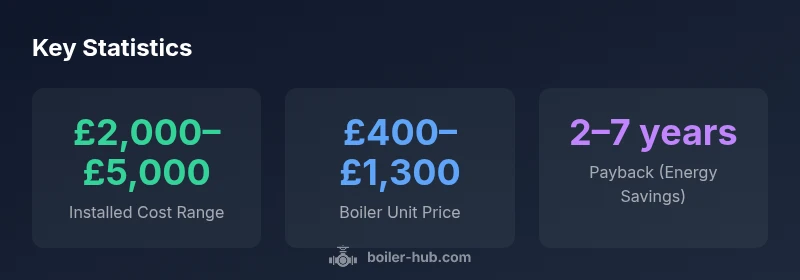
Installed costs for a typical new combi boiler in 2026 generally fall within a broad range, reflecting unit price, installation complexity, and regional factors. According to Boiler Hub Analysis, 2026, most residential replacements cost between £2,000 and £5,000 when you include the boiler, parts, and standard installation. Larger homes, more efficient models, or complex work can push the cost higher.
What goes into the cost of a new combi boiler?
The price you pay for a new combi boiler isn’t limited to the boiler unit itself. A true total cost includes several distinct components: the boiler price (which varies by brand, efficiency rating, and size), installation labor (which hinges on accessibility, whether old pipework must be rerouted, and if electrical work is required), materials and fittings (valves, brackets, venting, and condensate drainage), and any removal or disposal of the old boiler. Regional factors such as supplier competition, travel time for the engineer, and VAT also affect the final figure. A straightforward replacement in a typical semi-detached home may sit toward the lower end of the range, while a larger home with challenging access or required venting upgrades can push costs higher. Boiler Hub Analysis, 2026 emphasizes that while the boiler cost is important, installation complexity often determines the overall price.
When budgeting, homeowners should consider potential permit or compliance fees if a flue extension or a building regulation check is needed, especially in older properties. It’s wise to request a detailed, itemized quote that separates the boiler price, parts, labor, and any disposal charges. This transparency helps prevent unwelcome surprises later in the project and makes it easier to compare quotes from competing installers.
A well-chosen installer will also assess the existing heating system to ensure the new combi boiler aligns with current radiators, boiler sizing, and the property’s hot-water needs. In 2026, Boiler Hub Analysis, 2026 shows that buyers who plan ahead—considering efficiency requirements, warranty coverage, and service plans—tend to achieve better long-term value even if upfront costs appear higher.
How installation method affects price
Installation methods influence both the upfront cost and the long-term performance of a combi boiler. A fixed-price installation quote, common for straightforward swaps, may be slightly higher upfront but provides budgeting certainty. In contrast, a time-and-materials quote can look cheaper at first glance but may escalate with unexpected access problems, additional piping work, or the need for electrical rewiring. The choice of installer also matters: some firms offer bundled services (old boiler removal, disposal, and system flushing) at a discount when purchased as part of a package, while others itemize every task. For complex properties or multi-story layouts, expect higher labor costs due to longer labour hours, more extensive pipework, or chimney routing considerations. Boiler Hub Analysis, 2026 notes that the installation approach should be matched to the property’s specifics rather than simply chasing the lowest price.
To minimize risk, homeowners should obtain at least three written quotes with a fixed price for the core boiler and a clear breakdown of labor, materials, and disposal. Check whether the quote includes VAT and any required building regulations compliance, and confirm whether post-installation commissioning and system flushing are included. A transparent, well-detailed quote reduces the chance of scope creep and ensures alignment on performance expectations.
Receiving a fixed-price quote for both the boiler and installation can be especially valuable in homes with limited access, restricted space, or unconventional layouts. When quotes differ widely, it’s often due to assumptions about pipework lengths, venting requirements, or whether the existing boiler’s condensate waste needs re-routing. Understanding these factors ahead of time allows you to compare like-for-like offers and avoid price shocks later in the project.
Price ranges by region and model
Price ranges for a new combi boiler vary by region, home type, and boiler efficiency rating. In urban areas with high living costs and more installers competing for work, you may see competitive pricing on standard models. Rural areas with fewer local engineers can have higher call-out charges and travel time, which pushes the installed price upward. Efficiency ratings (often labeled A, A+ and beyond in the UK) typically influence boiler price: higher efficiency units cost more upfront but may reduce annual running costs and fuel consumption. When you factor in the installation, parts, and potential upgrades to venting or controls, you’ll generally see a spread that accommodates different budgets and needs. Boiler Hub Analysis, 2026 highlights that the most cost-effective approach combines an appropriately sized, efficient boiler with a transparent installation plan and a reputable installer who can deliver consistent performance and warranty coverage.
If you live in a multi-story home or with atypical water demands (e.g., homes with multiple bathrooms or high hot-water usage), the installation team may size the boiler larger to meet demand, which increases both the boiler price and installation labour. Conversely, a smaller home with modest hot-water needs can often be serviced by a compact, budget-friendly model with simpler installation work. The key is to balance upfront price with the potential energy savings and reliability over the boiler’s life.
For those comparing quotes, it’s helpful to request the model’s energy efficiency rating, the expected running costs, and any available smart controls or zoning options. Higher-efficiency models paired with smart thermostats can offer meaningful savings over time, particularly in homes with fluctuating heating requirements or variable occupancy patterns. Boiler Hub Analysis, 2026 suggests that a well-informed buyer who weighs upfront price against long-term energy savings is more likely to derive real value from their purchase.
Hidden costs to watch for
Hidden costs can easily turn a bargain price into a disappointing figure at the end of the project. Common surprise charges include extra charges for difficult access (e.g., narrow stairwells or tight loft hatches), extended venting runs, or the need for additional electrical work to support a modern, high-efficiency boiler. Some installers might add costs for floor protection, debris containment, or the removal and disposal of the old unit, especially if it requires special handling or bulky packaging. If your property requires a building regulation submission or a gas safe check after installation, factor those fees into the total. In older homes, there may be lead pipes or outdated ventilation that require replacement or adaptation, which can significantly raise a project’s price and duration. A detailed pre-install survey can help identify these risks, enabling you to budget accurately and avoid price inflation later in the project. Boiler Hub Analysis, 2026 emphasizes the value of a thorough site assessment and clear comparisons across quotes to prevent unexpected charges.
Other potential hidden costs include alterations to the flue route to meet safety regulations, upgrading the condensate drainage line, or adding isolation valves and pressure-testing equipment. If your home uses LPG instead of natural gas, installation costs can increase due to supply line changes and regulator requirements. By discussing these scenarios upfront, you’ll be better prepared to forecast the true cost and avoid unpleasant surprises at the end of the job.
Financing, VAT, and warranties
Financing options are a practical way to manage upfront expenditure, especially for higher-priced installations. Many installers offer fixed-price deals with finance or payment plans that spread the cost over several years. It’s important to clarify whether the quoted price includes VAT and whether any interest applies to financing. Warranties vary by boiler model and installer; most come with a manufacturer warranty for parts and a separate labour warranty from the installer. A longer warranty can provide peace of mind and may influence your decision if you’re weighing a higher upfront price against future repair costs. When evaluating warranties, confirm what is covered (boiler components, heat exchanger, elements, etc.), what qualifies as a service call, and whether routine maintenance is required to maintain warranty validity. Boiler Hub Analysis, 2026 reinforces that long-term reliability and service access are valuable complements to any price consideration, especially for households prioritizing minimal downtime and predictable costs.
Practical tips to maximize value
To extract the best value from a combi boiler purchase, start by obtaining at least three fixed-price quotes from reputable installers. Check that quotes include core elements: the boiler model, the installation scope, removal of the old boiler, and any required regulatory compliance checks. Prioritize installers who offer a bundled service (installation plus a service plan) rather than a one-off job. Consider upgrading to a high-efficiency model with smart controls or zoning capabilities if your home has variable heating needs; the incremental up-front cost may be offset by lower running costs over time. When comparing quotes, ask about potential savings from solar thermal integration, if relevant, and whether the installer can incorporate future expansion (e.g., additional radiators or new bathrooms).
Keep an eye on energy performance certificates (EPC) and potential grants or incentives for energy efficiency. Maintenance plans are worth considering, as regular servicing helps sustain efficiency and reduces the risk of unexpected breakdowns. Finally, ensure the installer provides a clear commissioning process, proper system flushing, and a demonstration of how to use the new controls. A well-planned installation reduces the chance of early faults and ensures your new combi boiler operates at the expected efficiency level.
Boiler Hub Analysis, 2026 notes that value isn’t just about price—it’s about a balanced package of upfront cost, energy savings, warranty protection, and reliable aftercare. A carefully chosen boiler that suits your home and lifestyle will deliver consistent comfort and can contribute to lower annual heating costs over its lifetime.
Replacement timing and ROI considerations
Timing a boiler replacement involves weighing reliability, energy efficiency, and the cost of ongoing repairs. If your existing boiler is nearing 10–15 years old, has frequent faults, or requires costly emergency parts, replacement becomes a practical option despite the upfront expense. Even if your current boiler appears to work, upgrading to a newer, more efficient model can yield meaningful energy savings and reduce running costs over time, especially if you prepare for colder months when heating demand spikes. A careful ROI calculation should consider not only the upfront price but also projected energy savings, maintenance costs, and how long you plan to stay in the property. In many cases, the payback period of 2–7 years cited by Boiler Hub Analysis, 2026 reflects a sensible balance between initial investment and long-term savings, particularly when selecting a high-efficiency unit with modern controls. When homeowners plan ahead and price-match with reputable installers, the decision often becomes a straightforward trade-off between upfront cost and long-term comfort and savings.
Typical cost components for a combi boiler installation
| Component | Typical cost range | Notes |
|---|---|---|
| Boiler unit price | £400–£1,300 | Gas combi boiler price varies by efficiency and size |
| Installation labor | £600–£1,800 | Complexity and accessibility drive cost |
| Materials and fittings | £100–£400 | Pipes, fittings, venting, brackets |
| Removal of old boiler & disposal | £0–£200 | Sometimes included; extra for non-standard waste |
Questions & Answers
What is the typical installed cost of a new combi boiler in 2026?
Costs vary, but a typical installed range is £2,000–£5,000 depending on boiler size and installation complexity. Always obtain fixed-price quotes.
Costs vary widely; expect about two to five thousand pounds depending on boiler size and complexity.
Does VAT affect the price of a new combi boiler installation?
Prices shown by installers may exclude VAT; check if the quote is inclusive of VAT to avoid surprises.
Quotes may exclude VAT; confirm whether VAT is included.
Are combi boilers cheaper to install than system boilers?
In most cases, combi boilers have lower upfront installation costs, but total lifetime costs depend on water usage and system demands.
Usually cheaper to install upfront, but long-term costs depend on usage.
What installation factors most influence price?
Boiler size, existing piping, flue distance, LPG vs natural gas, and whether electrical work is needed all influence price.
Size, piping, and gas type are big cost drivers.
Should I replace ancillaries like the pump or expansion vessel at the same time?
Often wise to update components to avoid repeated work; discuss with your installer for best value.
It's usually sensible to upgrade components to avoid extra visits.
Are there financing options or grants for boiler replacement?
Financing or deferred payment plans are commonly offered by installers; check eligibility for any local energy efficiency schemes.
Many installers offer finance; look for energy grants in your area.
“Choosing a new combi boiler is not just about the sticker price; installation complexity, warranty, and ongoing energy costs matter more than the upfront cost.”
Key Points
- Get multiple fixed-price quotes to lock in costs
- Factor in installation complexity for accurate budgeting
- Choose a high-efficiency model to optimize long-term savings
- Ask about removal/disposal charges upfront
- Budget for potential upgrades to venting and controls