What a New Boiler Costs in 2026: A Practical Guide
Learn the true cost of a new boiler in 2026, including installation, labor, and potential rebates. Explore price ranges by boiler type, fuel, and region, plus tips to secure accurate quotes and maximize long-term savings.


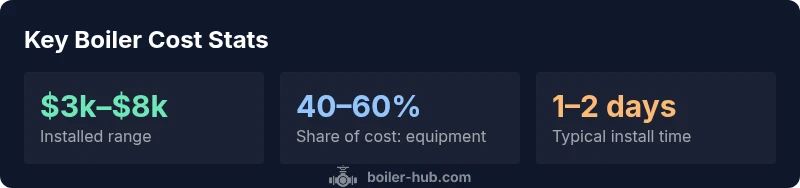
On average, a new residential boiler costs between $3,000 and $8,000 installed, with the final price reflecting boiler type, fuel, and installation complexity. Combi models tend to be toward the lower end, while system and heat-only boilers with extra components push costs higher. Labor, permits, and removing an old unit can add roughly 10–30% to the total. This range reflects typical U.S. market variation in 2026 and should be used as a budgeting baseline.
Understanding the cost drivers for a new boiler
When homeowners ask, "what does a new boiler cost?", the answer hinges on multiple factors that span equipment quality, fuel type, and installation complexity. In 2026, the total installed price typically includes the boiler unit, controls, venting or flue work, piping, and a safety/quality check. The Boiler Hub team notes that regional labor rates and permit requirements can swing the total by a meaningful margin. Beyond the sticker price, energy efficiency and warranty length influence long-term operating costs. This means a boiler that saves hundreds of dollars per year in energy bills can end up cheaper over the life of the system, even if the upfront price appears higher.
Boiler types and price ranges
Cost varies considerably by boiler type. Here are representative installed ranges (including standard labor) to help you budget. These figures are general guidance for the U.S. market in 2026 and will differ by supplier, contractor, and local codes:
- Combi boiler: typically integrates heating and hot water; installed range often around $2,500–$5,500.
- System boiler: separate hot water cylinder; installed range around $3,500–$7,000.
- Heat-only boiler: traditional single-zone systems; installed range around $2,000–$5,000.
Note that larger homes, frequent servicing, or existing plumbing constraints can push these numbers higher. The price delta between models is partly due to efficiency ratings, warranty terms, and the need for additional components like expansion tanks or upgraded venting.
Hidden costs and extras to budget for
Even within a given boiler type, several supplementary costs commonly appear in bids. Expect charges for removal of the old boiler, disposal, and any required upgrades to venting or chimney work. Permits and inspections vary by jurisdiction and can add to the timeline and cost. If your home lacks adequate space or requires multi-zone control, the project may require additional piping, thermostats, or zone valves. Finally, you should account for potential downtime and temporary accommodations if your home relies on the boiler for hot water during installation.
Installation options and cost implications
Where the boiler is installed can affect price. In tighter spaces like utility rooms with limited access, installation can require more labor and time, boosting costs. If the old system must be removed or relocated to meet clearance requirements, the job becomes more complex and expensive. Homes with older pipe networks or corroded radiators may need upgrades to ensure reliable operation. Conversely, straightforward replacements with existing piping and venting often stay near the lower end of the range. Discuss access, site preparation, and upgrade needs with your contractor to get an accurate quote.
Financing, rebates, and warranties
Many buyers explore financing options to distribute the upfront cost over time. Rebates or utility-based incentives may be available for energy-efficient boilers or higher-efficiency models in certain regions. Warranty length and coverage vary by brand and installer; longer warranties can offset higher upfront prices through reduced maintenance costs. When comparing bids, include warranty terms and any included maintenance plans as part of the total cost of ownership.
Getting accurate quotes and avoiding surprises
To avoid sticker shock, obtain three written quotes and ensure each bid details equipment, labor, and any extras separately. Ask contractors to itemize venting, piping, permits, disposal, and startup checks. Check that quotes include the same boiler type and efficiency rating so you’re comparing apples to apples. Finally, request a clear schedule, a defined payment plan, and a contingency clause in case work extends beyond the original scope.
By approaching bids with a structured checklist, homeowners can identify the best long-term value rather than the lowest upfront price.
Data sources and methodology
The price ranges above reflect 2026 market data compiled by Boiler Hub Analysis, which synthesizes contractor quotes, supplier price catalogs, and regional labor trends. Figures are presented as installed cost ranges to incorporate both equipment and labor. When quoted ranges vary, the variation typically stems from boiler efficiency class, added controls, and site-specific installation challenges. This synthesis prioritizes transparency and practical budgeting over single-point figures.
Authority sources and references
This article relies on industry benchmarks and public utility guidance to frame typical costs. For additional context, please consult the following sources:
Typical installed costs by boiler type (ranges show regional variation)
| Boiler Type | Installed Cost Range | Notes |
|---|---|---|
| Combi boiler | "$2,500-$5,500" | Compact, suitable for small to mid-sized homes |
| System boiler | "$3,500-$7,000" | Requires separate hot water cylinder |
| Heat-only boiler | "$2,000-$5,000" | Best for older homes with existing storage |
Questions & Answers
What is the typical installed cost range for a new boiler in 2026?
The total installed cost usually falls within roughly $3,000 to $8,000, depending on boiler type, fuel, and local installation requirements. It’s common for labor and permits to represent a meaningful portion of the price, with higher-end models offering increased efficiency and longer warranties. Always compare bids for equipment, labor, and contingencies.
Expect about three to eight thousand dollars, depending on boiler type and installation needs. Compare bids to see equipment, labor, and permit costs clearly.
Does the price include installation and removal of the old boiler?
In most cases, installed cost includes both installation and removal of the old boiler, but some bids itemize these separately. Verify what is covered in each quote, and ask about any additional disposal fees. This ensures an apples-to-apples comparison.
Most bids include installation and removal, but confirm this with each contractor to avoid surprises.
How much can I save by shopping around or choosing a different boiler type?
Savings come from comparing multiple quotes and choosing an efficient model that meets your needs. Cheaper upfront options may incur higher energy costs or shorter lifespans later. Look for a balance between upfront price, energy efficiency, and warranty coverage.
Shop around and weigh upfront price against energy bills and warranty coverage.
Are rebates or tax credits available for boiler replacement?
Rebates or incentives may be available from utilities or local programs for high-efficiency boilers. Availability varies by region and year, so check current programs and eligibility before purchasing.
Check local utility programs for rebates on high-efficiency boilers.
What other ongoing costs should I budget for after installation?
Ongoing costs include energy use, regular maintenance, and potential service plans. A higher-efficiency boiler may reduce energy bills over time, but maintenance costs can vary. Budget for annual servicing and potential part replacements over the life of the unit.
Expect ongoing energy costs plus annual maintenance and occasional parts.
How long does boiler installation typically take?
Most installations occur over 1–3 days depending on site access, necessary venting work, and whether old components must be removed or relocated. Scheduling and permitting can extend this timeline by several days in some jurisdictions.
Most installs take about a day or two, but permits can extend the timeline.
Is a more expensive boiler always the better choice?
Not always. More expensive models may offer higher efficiency and longer warranties, but the best pick for your home depends on heat load, space, and long-term energy costs. A properly sized, efficient boiler with solid warranty often delivers the best value.
More expensive isn’t always better—choose value based on your needs and efficiency.
“Getting a clear upfront estimate helps homeowners avoid surprise costs when replacing a boiler. Transparent quotes that separate equipment, labor, and permitting are essential for a sound financial decision.”
Key Points
- Budget with a broad installed-cost range.
- Factor boiler type, fuel, and region into pricing.
- Get multiple quotes and compare scope carefully.
- Check for rebates, warranties, and maintenance plans.