Can You Replace a Normal Boiler with a Combi: A Practical Guide
Learn whether you can swap a standard boiler for a combi, what to check, installation steps, costs, and safety considerations. Boiler Hub guide for homeowners and managers in 2026.


Yes—it's often feasible to replace a standard boiler with a combi, but success depends on your home’s hot-water needs, existing pipework, and flue layout. Ensure adequate space for the unit, a compliant gas supply, and proper commissioning by a qualified installer. A pre-installation assessment is required to confirm compatibility and safety.
Can you replace a normal boiler with a combi? Feasibility, planning, and the key checks
The question can you replace a normal boiler with a combi is not a simple yes or no. A combi boiler can replace a traditional heat-and-hot-water system in many homes, but it hinges on several critical factors: water demand, space for the unit, existing piping and radiators, and the building’s flue and ventilation arrangements. According to Boiler Hub, a professional assessment is essential to determine whether your property and usage profile will benefit from a combi without compromising comfort or safety. The Boiler Hub team found that while many households experience improved efficiency and space savings, the decision must be tailored to the home’s water usage patterns and heating needs. This initial check also helps identify any required retrofits, such as pipework alterations or venting adaptations, before committing to a replacement. In short, the answer depends on your specific situation and a qualified installer’s evaluation.
Understanding how combi boilers differ from traditional systems
Combi boilers combine heating and hot water in a single unit, producing hot water on demand without a separate cylinder or cold-water tank. This design typically improves efficiency and saves space, making it appealing for smaller homes or extensions where a traditional boiler and storage tank would occupy valuable space. However, because combis heat water only when you turn on a tap, they rely on sufficient water flow and pressure. If your household has high simultaneous demand (for example, multiple taps or showers in use at once), a combi may struggle to keep up. In such cases, a hybrid approach or an upgraded system with a larger flow rate may be more suitable. Understanding these fundamentals helps homeowners weigh the benefits against potential drawbacks, such as reduced hot-water buffer and the need for precise pipe sizing.
Assessing hot-water demand and flow rate for your home
To decide if a combi is right, evaluate your peak hot-water demand. Consider household size, typical shower and tap usage, family routines, and whether you often experience low-pressure or cold-water episodes. A professional will typically perform a flow-rate test to verify whether your incoming water supply and existing pipework can deliver adequate hot water at the required temperature and pressure. If your current system delivers marginal flow, a combi could still work with a higher-output model, but this may also increase installation complexity and cost. Your assessment should include future plans, such as additional bathrooms, to ensure the chosen unit meets long-term needs. This planning helps prevent premature replacement or unsatisfactory performance post-installation.
Technical compatibility, compliance, and safe installation practices
Installing a combi boiler requires careful attention to gas supply, venting, electrical supply, and system piping. Compatibility begins with the gas-fired appliance’s input rating and the existing gas pipe size; improper sizing can cause inadequate heat delivery or safety risks. Flue type and routing must align with building regulations, and many jurisdictions require a Gas Safe (or equivalent) engineer to carry out the conversion and commissioning. Electrical wiring for controls and secure thermostat integration also matters for efficiency and safety. A comprehensive check of ventilation, condensate drainage, and safety devices (pressure relief valve, expansion vessel if needed, and anti-scald features) is essential. Skipping this review can lead to nuisance shutdowns, poor performance, and safety hazards.
Costs, savings, and budgeting for a combi replacement
Budgeting for a combi replacement extends beyond the price of the boiler itself. Installation costs vary based on the model, required pipework changes, flue adaptations, and whether you need to upgrade your current gas supply or electrical provision. It’s common to consider labor, any needed permits or inspections, and potential future maintenance. While you should expect energy savings from higher efficiency, the actual savings depend on usage, insulation, and climate. Avoid relying on rough estimates; instead, obtain multiple, itemized quotes that include a breakdown of parts, labor, and any retrofit requirements. A well-planned replacement prioritizes long-term reliability and reduced ongoing energy costs.
Planning the installation: choosing a qualified installer and obtaining permissions
Choosing the right installer is critical to a successful replacement. Look for accreditation, licensing, and a track record with combi conversions. Request written quotes, confirm the installer’s ability to handle venting, gas connection, and system commissioning, and ensure they provide a clear handover of warranties and aftercare. Depending on your region, you may need building regulations approvals or a gas-safety inspection when replacing a boiler. Your installer should coordinate any needed permits and ensure the work complies with current standards. Planning ahead minimizes delays and ensures you have hot water and heating operational as soon as possible after installation.
Maintenance, warranties, and long-term considerations after replacement
A combi system, like any modern boiler, needs regular maintenance to sustain efficiency and safety. Establish a schedule for annual servicing, check for leaks, and replace worn seals or valves as recommended by the manufacturer. Ensure you understand the warranty terms for both the unit and the installation work; warranty coverage can hinge on annual maintenance and professional commissioning. Consider upgrading related components, such as thermostats or controls, to maximize efficiency and comfort. Staying proactive with maintenance can extend the life of your combi and reduce unexpected breakdowns. It also reinforces safe operation, especially in homes with older gas lines or limited ventilation.
Tools & Materials
- Combi boiler unit(Select a unit with sufficient hot-water flow rate (liters/min) for your peak usage.)
- Flue kit and connectors(Ensure compatibility with the chosen boiler and your wall/venting layout.)
- Gas supply connection tools(Professional-grade fittings and seals; never DIY gas connections.)
- Pipework and fittings (copper/PEX)(Prepare for alterations to radiators and feed pipes as needed.)
- Isolation valves and pressure relief valve(Necessary for safe isolation and pressure management.)
- Electrical supply and thermostat controls(Dedicated circuit or proper wiring with a suitable thermostat/receiver.)
- Gas Safe engineer(Only a certified professional should perform installation and commissioning.)
- Condensate drainage and venting assessment(Required in some installations depending on layout; optional if already compliant.)
Steps
Estimated time: 1-2 days
- 1
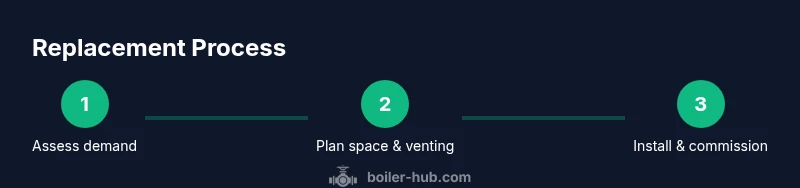
Assess demand and site constraints
Review your hot-water usage, number of bathrooms, and typical showering patterns. Measure available space for the new unit and the flue route. This step determines if a high-flow combi will meet demand or if an alternative is better.
Tip: Document peak usage times to guide the unit’s flow rating; avoid over- or under-sizing. - 2
Check space, flue routing, and venting
Inspect the boiler location, wall strength, and clearance for maintenance. Plan the flue path to the outside with minimal bends, ensuring compliance with regulations.
Tip: Flag any obstacles early; retrofit costs often come from venting constraints. - 3
Select an appropriate combi model
Choose a model that matches your flow rate needs and space. Higher kW ratings provide more hot water, but may require larger clearances and additional venting considerations.
Tip: Ask for a model with a long warranty and efficient modulating burner for best energy savings. - 4
Engage a Gas Safe-installed contractor
Hire a certified installer to confirm regulatory compliance, coordinate gas and electrical work, and perform commissioning tests.
Tip: Verify licenses, request recent job references, and check for valid warranties. - 5
Prepare the site and obtain permits if required
Ensure access for removal of the old boiler, storage of parts, and support for the new unit. If your area requires permits or inspections, obtain them in advance.
Tip: Keep a running file of permits, quotes, and manufacturer literature for the handover. - 6
Install and commission the system
The installer connects gas, water, and electrical services, programs controls, and tests performance and safety devices.
Tip: Request a hands-on walkthrough of operating controls and thermostat calibration. - 7
Test, document, and hand over
Run functional tests, confirm temperatures, check for leaks, and collect warranty documents. Ensure the new system is logged in your maintenance schedule.
Tip: Keep a log of service dates and any anomalies observed during operation. - 8
Post-install follow-up and early maintenance
Schedule an initial service within the first 12 months and confirm warranty requirements. Review control settings and optimize energy use.
Tip: Set cooling and heating schedules to maximize efficiency during different seasons.
Questions & Answers
Is replacing a traditional boiler with a combi always possible?
Not always. Compatibility depends on your water demand, space, and venting. A qualified installer must assess the site before confirming feasibility.
Not always possible—an installer must assess water use, space, and venting to confirm feasibility.
What factors influence installation cost and timing?
Costs vary by boiler type, required pipework, venting, and whether upgrades are needed. Timelines depend on site access and permit requirements.
Costs vary by boiler type and required pipework; installation times depend on site access and permits.
Do I need building or gas-safety permissions?
Gas installations require professional certification; local regulations may mandate permits or inspections. Your installer should handle compliance and approvals.
Gas work requires certification and possibly local permits; your installer should handle compliance.
How long does replacement typically take?
Most replacements take a day or two, depending on space, pipework changes, and vent routing. Larger retrofits may take longer.
Usually one to two days, depending on complexity.
Will a combi give me better hot water performance?
Combis provide hot water on demand but rely on flow rate. If multiple taps run simultaneously, performance may drop unless sized correctly.
Hot water is on demand and depends on flow rate; big households may need a larger unit.
Watch Video
Key Points
- Assess demand before choosing a model
- Ensure space and venting compatibility
- Use a Gas Safe installer for safety and compliance
- Plan for permits and aftercare
- Factor in maintenance for long-term savings