Do You Need to Change Pipes for a Combi Boiler? A Practical Guide
Learn when pipe replacement is necessary for a combi boiler, how to assess pipe condition, and how to work with professionals to keep your system safe and efficient in 2026.


Do you need to change pipes for a combi boiler? In most homes, you don’t replace the entire pipe network when installing or maintaining a combi boiler. You replace sections only if you detect corrosion, leaks, or improper materials that affect safety or performance. According to Boiler Hub, a professional inspection determines scope before any piping work.
What are pipes in a combi boiler and when do they need changing?
A combi boiler is connected to a network of hot and cold water pipes that supply taps, radiators, and the boiler itself. The pipes—often copper, steel, or PEX/plastic—can deteriorate due to corrosion, mineral buildup, or poor installation. In most residential setups, the piping itself does not need wholesale replacement when you install or service a combi boiler. Replacement is usually limited to sections that show visible damage or risk, such as pinhole leaks, severe corrosion at joints, or mismatched materials that aren’t compatible with boiler connections. If you notice frequent leaks, sudden pressure drops, or unusually rusty water, these are signals to inspect the pipework. According to Boiler Hub, a professional assessment is essential to decide whether pipe changes are needed and to protect safety and efficiency.
Boiler Hub analysis of typical combi boiler installations in 2026 emphasizes avoiding unnecessary piping work and prioritizing leak control and material compatibility. This means understanding which pipes truly affect the boiler’s performance and which are peripheral. A clear plan, drawn from a qualified technician’s assessment, helps you prevent unnecessary repairs while preserving reliability.
How to assess pipe condition safely
Safety first: before touching any part of a heating system, shut off the boiler and the main power or gas supply as appropriate. Visually inspect for rust, scale buildup, or damp spots along visible runs. Look at joints and fittings for discoloration, corrosion, or loose connections. Use a flashlight and magnifier to detect hairline cracks at elbows or tees. If you have a long pipe run, check for temperature inconsistencies when the system is running. Record areas that look suspect and compare with the original installation drawings if available. A professional inspection is recommended if you notice signs of deterioration; they may perform a pressure test or a boiler flush to confirm integrity. Boiler Hub’s guidance for 2026 stresses that safe assessment and correct material matching are more important than preemptive pipe replacement, which can waste time and money.
Key indicators to watch for include persistent leaks despite tightening, green or blue-green corrosion on copper, white or chalky mineral deposits, and unusually high or fluctuating pressure without a clear cause.
Common scenarios that trigger pipe changes in combi boilers
- Visible corrosion at joints or along run lengths.
- Chronic leaks that recur after repair attempts or that require frequent topping up of pressure.
- Evidence of improper materials (e.g., dissimilar metals or wrong pipe size) that can create weak points or poor flow.
- Discoloration or deposits indicating mineral buildup that obstructs flow and increases strain on the boiler.
- Significant temperature or pressure fluctuations accompanied by audible banging or knocking.
- Post-installation issues where the pipe routing or anchoring looks suboptimal, risking vibration or movement which can wear joints.
In these situations, replacing segments or upgrading to compatible pipe materials improves longevity and safety. The goal is to eliminate weak points that could lead to leaks, reduce pressure losses, and ensure the boiler can operate within its design parameters. The Boiler Hub team recommends a professional assessment when any of these signs appear, to avoid misdiagnosis and unsafe work.
Repair options: patching, replacement, and why sometimes replacement is better
Patching small leaks with sealants or clamps can be a short-term solution, but it often fails under long-term heat and pressure. Replacement of a damaged section is more durable, especially if corrosion is present or if the pipe material is not corrosion-resistant in your climate. When deciding between patching and replacement, consider:
- Location: hard-to-reach sections may favor replacement during a scheduled service window.
- Material compatibility: mismatched metals or aging copper may require upgrading to a compatible material like PEX or modern copper alloys.
- Long-term reliability: replacing an entire run or the most affected portions can prevent repeated leaks and future service calls.
- Cost and disruption: patching is cheaper upfront but may lead to repeated work; replacement has a higher upfront cost but often offers better value over time.
Even with a small repair, ensure fittings are properly sealed and tested. A professional will verify leak-free operation and confirm that the system maintains correct pressure. Boiler Hub’s 2026 guidance supports choosing the longer-term solution when it reduces risk and maintenance needs, rather than opting for quick fixes that may fail again later.
Safety, costs, and choosing a professional
Gas safety is a primary concern with any pipe work near a combi boiler. Do not attempt gas-line changes or bypass safety devices. If you notice gas smells, hissing sounds, or a drop in flame quality, contact your gas supplier or a licensed engineer immediately. For water pipes, expect that replacement work may require shutting off the main supply and possibly temporary boiler downtime. Costs vary by material, accessibility, and labor; obtain multiple quotes and ask about warranties on both parts and workmanship. When selecting a pro, confirm proper boiler coupling compatibility, warranty terms, and whether the technician will perform a pressure test after completion. The Boiler Hub team recommends hiring a qualified technician who can provide a written assessment, parts list, and a post-work test to ensure your combi boiler operates safely and efficiently in 2026.
Tools & Materials
- Pipe cutter(For cutting copper or plastic/PEX with clean, square cuts)
- PEX/copper pipes(Choose material compatible with existing fittings and boiler connections)
- Compression fittings or solder fittings(Use appropriate fittings for the chosen pipe material)
- Flux and soldering kit (for copper)(Only if using solder joints; otherwise, use mechanical fittings)
- Wrench set and pliers(Adjustable wrench and groove-jroint pliers for tight spaces)
- Safety gear(Gloves, goggles, and, if necessary, hearing protection)
Steps
Estimated time: 2-4 hours
- 1
Prepare and safety check
Shut off the boiler and power supply, then close the main water valve. If you have a gas supply, ensure the gas is shut off or consult a licensed gas engineer. This reduces the risk of scalding or gas leaks during work.
Tip: Double-check the isolation zones with a gas detector or by asking the technician to verify gas shut-off before starting. - 2
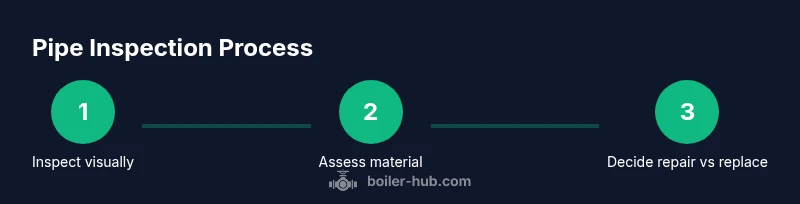
Inspect the pipe network visually
Look for corrosion, rust, pinhole leaks, discolored joints, or mineral buildup along accessible runs. Take photos or notes of areas that look damaged to guide the next steps.
Tip: Document any history of leaks to identify patterns and probable failure points. - 3
Decide on repair vs replacement
If corrosion is present or material incompatibility is evident, pursue replacement of affected sections rather than patch fixes. For tiny, non-structural leaks, a temporary patch may be acceptable until a scheduled service.
Tip: Prioritize long-term reliability over immediate cost. - 4
Cut and prepare replacement sections
Mark the replacement lengths, cut the pipe cleanly, and bevel edges for copper. Deburr pipe ends to ensure smooth insertion and a tight seal.
Tip: Use sharp, properly fitted tools to avoid deforming pipe ends. - 5
Fit and secure new piping
Install new sections with appropriate fittings (compression or soldered, as applicable). Ensure joints are fully tightened and supported to prevent movement.
Tip: Use pipe supports to avoid stress on joints and to reduce vibration. - 6
Pressure test and verify
Restore water and power, then slowly pressurize and check for leaks around all joints. If safe, run the boiler through several heating cycles to confirm stable operation.
Tip: Keep an eye on any sudden pressure changes or unusual noises during the test.
Questions & Answers
Do I need to replace all pipes when upgrading a combi boiler?
Usually not. Replacement is focused on sections showing damage or incompatibility. A professional assessment helps determine which parts require work.
Usually only damaged sections are replaced; a pro can confirm which pipes need attention.
What signs indicate pipe corrosion in a combi boiler system?
Visible rust, greenish discoloration on copper, white powdery deposits, damp spots, or frequent leaks are common indicators of corrosion.
Look for rust, discoloration, or damp spots near joints; these point to corrosion.
Can I replace pipes myself, or should I hire a pro?
Piping work near a gas boiler should be done by a licensed professional due to safety and warranty considerations. For water pipes, ensure you have the right training and permits.
Gas side work should be done by pros; water-pipe work can be done by trained homeowners, but pros are advised.
What factors influence the cost of pipe changes on a combi boiler?
Costs depend on material choice, access, length of pipe, fittings, and labor. Get multiple quotes and verify warranties on parts and workmanship.
Cost varies with materials, access, and labor; compare quotes and warranties.
What maintenance helps prevent pipe issues in a combi boiler?
Regular system flushes, proactive leak checks, proper pressure management, and using compatible materials reduce the risk of pipe problems.
Keep up with regular flushes and leaks checks to prevent issues.
Watch Video
Key Points
- Pipes usually don’t all need replacing; replacements target damaged sections.
- Look for corrosion, leaks, and material incompatibility as primary indicators.
- Always involve a licensed professional for safety and to ensure compliance.