Will boiler work with water off? A Troubleshooting Guide
Learn how to troubleshoot a boiler when the water supply is off. Quick checks, a diagnostic flow, step-by-step fixes, safety notes, and when to call a professional from Boiler Hub.


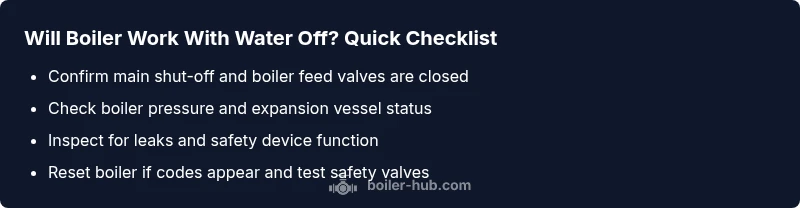
Quick check: If the boiler keeps running when your home water is off, the issue is usually within the boiler feed or a sealed loop that remains pressurized. Start with these quick tests: 1) verify the external mains water shut-off is fully closed and the feed valve at the boiler is shut; 2) read the boiler pressure gauge and top up only if advised; 3) ensure the expansion vessel isn’t waterlogged.
Will a boiler work with water off? Key concepts
For homeowners and facility managers, understanding whether a boiler will work with water off is essential for safety and planning. According to Boiler Hub, most boilers require a water supply to heat water for domestic use and to refill the heating loop. In a sealed (pressurized) system, there may be stored water, but if the main water mains are off, the boiler’s ability to heat can be limited or interrupted. The outcome depends on system type (open vent vs sealed), the position of feed valves, and the health of the expansion vessel. The Boiler Hub team emphasizes that anticipating these factors helps you triage quickly, avoid unsafe conditions, and decide when to seek professional help. If you’re facing a water-off scenario, start with safe checks on valves and pressure, then move to more involved diagnostics. This knowledge reduces downtime and protects both occupants and equipment.
Immediate checks you can perform (no tools required)
When water is off, begin with the simplest checks first. Confirm the main water shut-off is fully closed at the feed point and that the boiler’s own feed valve isn’t allowing a slow refill. Next, inspect the boiler itself: ensure it is powered on, the display shows normal indicators, and there are no fault codes. Listen for any unusual noises such as banging or air in the pipes, which can indicate air pockets after pressure changes. Finally, glance at the pressure gauge; if the pressure is outside the manufacturer’s recommended range, avoid forcing a refill and consult your manual or a professional. These actions establish a safe baseline and reduce the risk of accidental damage.
Diagnosing common causes when water is off
The symptom of water-off while the boiler still runs can point to several root causes. A common issue is an external feed valve that is not fully closed, allowing a backflow or a partial refill. Another frequent culprit is a sealed system that remains pressurized due to a faulty expansion vessel or a stuck pressure-relief valve. Less common but possible are sensor or control faults inside the boiler that misread flow or demand. Start with the simplest cause—valves—and proceed to pressure-related checks. If any step yields unclear results or the boiler behaves unpredictably, escalate to professional service. Remember, safety first; never bypass safety devices or attempt risky repairs without proper training or certification.
Understanding pressure and expansion in a sealed loop
In sealed boiler circuits, pressure management is essential. When water is off, pressure changes can mimic a “no water” condition, causing the boiler to shut down or to run without delivering hot water. The expansion vessel absorbs thermal expansion; if its bladder is failed or the vessel is waterlogged, pressure may rise unpredictably. Check the system’s pressure gauge and compare it to the manufacturer’s guidance. If pressure is consistently too high or too low after water is shut off, do not attempt to adjust it without explicit instructions. A trained technician can test the vessel, replace it if needed, and recalibrate the loop to prevent future issues.
Safety, precautions, and when not to DIY
Safety is paramount when a boiler is involved. If you suspect a leak, you hear hissing, see damp spots, or if the pressure gauge reads abnormally high, turn off the boiler and seek professional assistance. Never work on a boiler that’s hot or pressurized; cutting power and water supply should be followed by a cooling period before inspection. If the water supply is intermittently off due to infrastructure issues, contact your water utility and a licensed boiler technician to assess both the plumbing and heating system together. In all cases, avoid modifying valves or pressure settings without the correct tools and guidance.
Prevention: keep your boiler ready for water-off situations
Proactive maintenance is the best defense. Schedule annual service to inspect the feed valve, expansion vessel, and pressure relief components. Keep a simple log of readings, fault codes, and dates of service to share with technicians. If you anticipate a long-term water outage (e.g., for renovations), discuss temporary shut-off procedures with a pro to avoid accidental pressure changes or air locks. Boiler Hub’s guidance emphasizes that routine checks and prompt professional attention can prevent extended downtime and expensive repairs.
Steps
Estimated time: 60-90 minutes
- 1
Verify shut-off valves
Locate the main cold-water shut-off and the boiler feed valve. Ensure they are fully closed and not partially turned. Leave the area safe and dry before proceeding.
Tip: If you hear any hissing or see leaks, stop and call a pro immediately. - 2
Check boiler power and indicators
Make sure the boiler is powered, the circuit breaker is on, and the display shows normal status indicators. If there’s an error code, note it for the service visit.
Tip: A tripped breaker often mimics an electrical problem, which is a separate risk from water supply. - 3
Read the pressure gauge
Observe the boiler pressure. If it’s out of the manufacturer-specified range, do not attempt risky adjustments. Consult the manual or a technician for the correct refill procedure.
Tip: Do not top up unless you have explicit guidance; over-pressurizing is hazardous. - 4
Inspect the expansion vessel
Check for signs of a failed expansion vessel or waterlogged condition. Replacement may be needed if the vessel is unable to accommodate thermal expansion.
Tip: Expanding a failed vessel without proper tools can be dangerous. - 5
Look for leaks or drips
Search around the boiler, valves, and fittings for puddles or damp spots. A small leak can alter pressure and mimic a water-off condition.
Tip: Tighten fittings gently; overtightening can crack seals. - 6
Reset and test safety devices
If the boiler offers a reset, perform it according to the manual. Verify that the safety thermostat and pressure relief valve operate during a safe test.
Tip: Never bypass safety devices; they prevent dangerous conditions. - 7
Document fault codes
Record any diagnostic codes from the display and check the user manual or Boiler Hub resources for meanings. Codes help the service visit be faster and safer.
Tip: Keep a dedicated notebook for codes and dates of issues. - 8
Call a professional if in doubt
If the issue persists after these checks, shut down power and water supply, then contact a licensed boiler technician. Do not perform complex repairs yourself.
Tip: Safety first: power down and leave high-risk tasks to the pros.
Diagnosis: Boiler shows heat or runs even when the home water supply is off, or refuses to operate due to lack of feed.
Possible Causes
- highMain water shut-off valve or boiler feed valve not fully closed, leaving a feed path
- mediumSealed loop remains pressurized due to an overfilled expansion vessel or faulty pressure relief valve
- lowBoiler control or sensors misread flow due to internal fault
Fixes
- easyDouble-check that the main water shut-off valve and boiler feed valve are fully closed; if the valve sticks, do not force it and seek professional help
- mediumInspect the expansion vessel and pressure gauge; release pressure if instructed by the manual and verify the system is within the recommended range
- hardReset the boiler, clear fault codes, and check sensor connections; if issues persist, arrange a professional service
Questions & Answers
Can a boiler operate without incoming water?
Boilers generally need a water supply to heat water for domestic use and to refill the heating loop. In a sealed system, some stored water may allow limited operation, but interruptions can affect performance. Always identify your system type and follow safety steps before attempting any repair.
Most boilers need water to heat, so if water is off, hot water and potentially heating may be affected.
What should I check first when water is off?
Start by confirming the main shut-off is fully closed and the boiler feed valve isn’t allowing a slow refill. Then verify the boiler pressure gauge and look for obvious leaks or warnings on the display.
Check shut-offs and the pressure gauge first to understand what’s limiting operation.
Is it dangerous to run a boiler with water off?
Running a boiler without proper water feed can cause overheating and damage. Always shut down safely and seek professional help if the water supply is interrupted or you notice leaks or high pressure.
Yes, running without water can be dangerous; stop and call a pro.
Why is the boiler pressure high when water is off?
If pressure remains high while water is off, it may indicate a stuck expansion vessel or trapped air. Do not force refilling and consult a technician to assess the loop.
High pressure with no water usually needs a professional check.
When should I call a professional?
If simple valve checks and resets don’t restore normal operation, turn off power and contact a licensed boiler technician. Ongoing issues risk safety and further damage.
If it doesn’t fix after basic checks, call a professional.
Watch Video
Key Points
- Start with simple shut-off and pressure checks.
- A sealed loop can mask water-off symptoms but safety devices exist to protect you.
- If in doubt, call a professional promptly.
- Regular maintenance reduces water-off related failures.