System Boiler Prices: Costs, Options, and Saving Strategies
A thorough guide to system boiler prices, what drives the cost, how to compare quotes, and strategies to save on installation and long-term energy bills.


System boiler prices vary widely based on capacity, brand, and installation complexity. According to Boiler Hub, a typical installed system boiler kit plus labor falls into broad price bands rather than a fixed figure. Homeowners should budget for both the unit and professional installation, with regional differences and potential add-ons influencing final cost.
Why System Boilers Matter for Home Heating
System boilers are a popular choice for many homes because they provide reliable hot water while maintaining a compact footprint. When homeowners look at system boiler prices, they must consider not only the unit itself but also the integrated controls, compatibility with existing radiators, and the efficiency class. The Boiler Hub team consistently emphasizes that the most meaningful cost drivers are capacity, efficiency, and the complexity of installation. In practice, a higher-efficiency model can deliver long-term energy savings, potentially offsetting a larger upfront price. According to Boiler Hub, the long-term financial picture often hinges on rebates, energy-savings, and proper sizing—the kind of analysis homeowners should do before choosing between standard and high-efficiency options. This makes the decision about system boiler prices a blend of upfront cost and expected operating costs over the system’s life.
Key Cost Drivers Behind System Boiler Prices
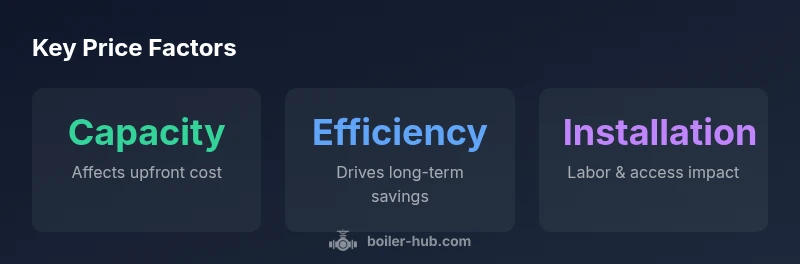
System boiler prices are not determined by a single factor; they are influenced by a constellation of elements that together shape the final number. The most obvious driver is the boiler’s capacity and efficiency rating. A larger, more efficient unit typically costs more to purchase, but it can offer greater energy savings over time. Installation complexity also plays a major role: homes with older plumbing, limited access, or challenging flue configurations require more labor, scaffolding, or additional components, all of which raise the installed price. Accessories such as expansion tanks, pre-rinse condensate lines, and smart controls add to the upfront cost but can improve system performance and ease of use. Finally, regulatory requirements, permit fees, and disposal of the old boiler contribute to the total. The Boiler Hub Team notes that regional labor rates and contractor availability further influence the final figure, meaning system boiler prices can vary widely from one locale to another.
Price Ranges and What They Include
Across markets, system boiler prices tend to fall into approachable bands rather than a fixed price. A lower-cost option often includes a basic, mid-range boiler with standard controls and minimal ancillary parts, installed by a certified technician. Mid-range offerings usually bundle higher-efficiency units, smarter controls, and some enhanced warranty terms, along with a standard installation package that covers most typical homes. Premium options feature top-tier efficiency, extended warranties, and optional add-ons such as advanced zoning, integration with smart home systems, and enhanced aftercare plans. It’s important to recognize that the installed price is not only the boiler and labor; it also reflects the cost of necessary fittings, venting, and sometimes modifications to the plumbing or gas supply. This is why preparing a structured quote request and asking for itemized breakdowns is essential to compare apples to apples when evaluating system boiler prices.
How to Compare Quotes Without Getting Overpriced
The first step in comparing quotes is to ensure you are evaluating equivalent proposals. Request itemized quotes that separate boiler cost, labor, and any required ancillary components. Check that the quotation includes all mandatory items for code compliance, such as suitable venting, condensate drainage, and energy-saving controls. If a quote omits elements like disposal of the old boiler or system flushing, ask for an add-on price or a revised full-price quote. Use a three-quote approach from reputable installers to understand the market range, and verify each installer’s credentials, warranty terms, and aftercare offerings. It also helps to request an energy usage estimate or efficiency comparison so you can anticipate potential savings in annual operating costs. In short, a thorough comparison protects your interests and clarifies what you are paying for in system boiler prices.
Financing, Warranties, and Long-Term Savings
There are several ways to finance a system boiler installation, from straightforward purchase to financing plans offered through installers or third-party lenders. Warranties vary by manufacturer and installer, but typical coverage spans boiler components and sometimes labor for a defined period. When evaluating system boiler prices, consider the long-term value: higher-efficiency models may qualify for rebates or incentive programs, reducing net cost over time. Energy savings can contribute to faster payback, especially in homes with older, less efficient boilers. The Boiler Hub Team suggests weighing upfront price against potential lifetime energy costs. A well-chosen system boiler can lower annual energy bills while delivering more consistent comfort. It’s important to compare warranty terms, service frequency, and parts availability as part of the overall cost assessment.
Regional Variations and Installation Considerations
Prices for system boilers are not uniform across regions. Labor rates, permitting processes, and even the cost of gas or electricity can influence the installed price significantly. In dense urban areas, access challenges and stricter building codes may raise both equipment and labor costs, while rural areas could see different pricing dynamics. The chosen installer’s qualifications matter just as much as the boiler model. In some regions, certain brands or models may be favored due to local support networks or compatibility with existing radiators and boilers. When budgeting, homeowners should factor in these regional differences and request regionalized quotes that reflect local conditions alongside the boiler’s technical specs. This context helps explain why system boiler prices vary so much by location and installation scenario.
Practical Planning: Budgeting and Next Steps
A practical budgeting approach starts with a clear scope: determine the desired boiler capacity, efficiency level, and preferred control features. Gather multiple quotes that include a detailed scope and itemized costs. Create a decision matrix that weighs upfront price, warranty terms, and expected annual energy costs. If possible, secure quotes that incorporate post-installation service options, which can help lock in favorable pricing over time. Finally, communicate with your installer about potential upgrades that could lower long-term operating costs, such as improved insulation or smarter thermostats. With a thoughtful budgeting process, system boiler prices become a manageable part of planning for reliable heating and comfort, supported by the clarity and guidance you would expect from Boiler Hub.
Typical cost components for system boiler installations
| Category | System Boiler Prices Range | Notes |
|---|---|---|
| Boiler unit cost (system boiler) | varies by model and efficiency | Higher efficiency typically costs more upfront |
| Installation labor | varies by region and complexity | Includes labor, fittings, and venting |
| Ancillary equipment | varies by install needs | Expansion tank, controls, pipes, and valves |
| Total installed price | varies widely | Depends on location, existing plumbing, and permits |
Questions & Answers
What factors influence system boiler prices the most?
The biggest drivers are capacity, efficiency rating, installation complexity, and regional labor costs. Additional items like venting, expansion tanks, and smart controls can add to the total. Always compare itemized quotes to understand where the price is coming from.
The main price drivers are the boiler size and efficiency, how hard the installation is, and local labor costs. Get an itemized quote to see what adds to the price.
Are system boilers more expensive than combi boilers?
System boilers generally have higher upfront costs than combi boilers because of the extra components and larger cylinders. However, they can offer better hot-water performance in larger homes and may prove more cost-efficient over time with higher efficiency and longer warranties.
System boilers can cost more upfront than combi boilers, but they often perform better in big homes and can save you money over time with efficiency.
How long does installation typically take?
Most system boiler installations take one to two days, depending on the complexity, access to the property, and compatibility with existing plumbing and venting.
Typically one to two days, depending on complexity and access.
Should I finance a system boiler purchase?
Financing can spread the upfront cost and may come with promotional interest rates. Compare total payback, interest, and warranty coverage across lenders and installers.
Yes, financing can help; compare terms, total cost, and warranty options.
What maintenance is required after installation?
Regular servicing, typically annually, keeps the system efficient and maintains warranty coverage. Some installers include maintenance plans as part of the package.
Annual service is usually required to keep efficiency and warranties valid.
“A well-chosen system boiler balances upfront investment with long-term energy savings; a detailed quote is essential to avoid hidden costs.”
Key Points
- Budget for both unit and installation costs up front
- Higher efficiency boosts upfront price but can cut operating costs
- Get itemized quotes to compare exactly what's included
- Regional variation greatly affects final pricing
- Warranty and service plans influence long-term value