Outdoor Boiler Cost in 2026: A Practical Budget Guide
A practical, data-driven guide to outdoor boiler cost, including installation ranges, price drivers, and budgeting tips. Learn how boiler type, fuel, and labor influence total price with guidance from Boiler Hub.


Outdoor boiler cost varies widely by type, efficiency, and installation. For most homes, total installed price typically ranges from several thousand to tens of thousands of dollars, with variation based on boiler size, fuel source, permits, and labor. Higher-efficiency and outdoor wood boiler options tend to be pricier upfront but save on operating costs over time.
What outdoor boiler cost includes
Understanding outdoor boiler cost means looking at the complete price tag: the boiler unit itself, delivery, site preparation, installation, venting, and any required accessories such as heat exchangers, controls, and insulation. In many regions, permits and inspection fees add to the upfront expense. According to Boiler Hub, the total price often reflects not only the equipment but also the complexity of the install, local code requirements, and labor rates. Homeowners should budget for both the equipment and the contingencies that appear during site prep, such as trenching for fuel lines, or upgrading electrical service. A well-planned project can reduce surprises and help you compare apples to apples when you request quotes.
Why this matters: knowing what’s included helps you build an apples-to-apples comparison across contractors and avoid concealed costs. Boil down the components you’ll pay for, so you can estimate your total investment more accurately and avoid sticker shock when the work begins.
Major cost drivers that affect price
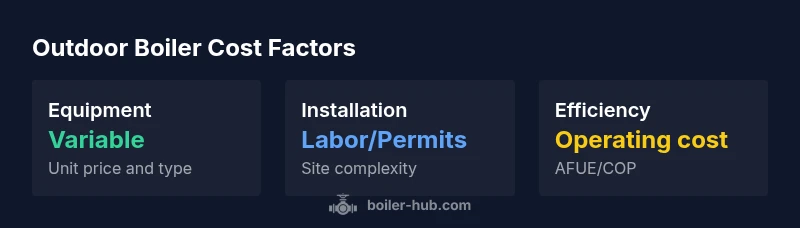
Price volatility for outdoor boiler projects is driven by several key factors. First, the boiler type dramatically shifts cost: wood-fired units are typically cheaper upfront but may require more labor-intensive maintenance and storage space, while gas-fired models often cost more initially but offer convenience and lower ongoing maintenance. Efficiency ratings (often expressed as AFUE or COP) influence both upfront price and ongoing operating costs; higher efficiency can reduce annual fuel use but may come with a steeper initial investment. System size matters, as correctly sizing a boiler to meet your peak heating load avoids overpaying for unused capacity.
Other drivers include fuel source availability, venting and combustion outlet requirements, permit and inspection costs, site constraints (sloped terrain, proximity to structures, frost depth), and labor charges in your area. Finally, controls and smart thermostats add to the upfront price but can optimize fuel use and comfort, delivering longer-term savings. Boiled down, the most influential levers are equipment type, efficiency, and installation complexity.
Practical tip: get multiple quotes that itemize equipment, labor, permits, and contingencies separately. This makes it easier to spot where cost savings are possible and whether a higher upfront investment pays off through reduced operating costs.
Outdoor boiler types and relative price ranges
Different outdoor boiler types carry distinct price profiles. Wood-fired units often have lower upfront costs but require space for fuel storage and regular maintenance, which can tilt lifetime costs higher if fuel is not inexpensive where you live. Gas-fired boilers typically command a higher upfront price due to system components and venting needs, but they offer consistent heat delivery and simpler operation. Electric models generally have the lowest upfront price but can incur higher operating costs depending on local electricity prices and climate, potentially narrowing the long-term savings.
When choosing between gas, wood, or electric, consider availability of fuel, your climate, and your preferred maintenance level. If your priority is long-term operating cost and automation, a higher-efficiency gas or electric option may win out despite a higher initial price. For rural homes with abundant wood and seasonal demand, a wood-fired outdoor boiler can be attractive if you value independence from fossil fuels.
Installation essentials that impact total cost
Installation costs can dwarf the price of the boiler itself if site preparation is involved. Factors include the distance to existing fuel lines or electrical power, the need for a new chimney or venting system, drainage considerations, and the complexity of the boiler pad or foundation. Permits and inspections add to the timeline and cost, and some jurisdictions require professional HVAC or plumbing certifications for outdoor boiler work. If the site requires extensive trenching, backfilling, or utility upgrades, your installer may need to coordinate with multiple trades, adding to both time and expense.
A thorough site assessment before purchase helps control costs. Ensure the installer provides wind- and weather-rated venting solutions, proper clearances from combustible materials, and a solid foundation that minimizes movement. Finally, factor in potential future upgrades, such as zoned heating or integration with existing hydronic systems; planning ahead can prevent costly retrofits later.
Operating costs and efficiency considerations
Beyond upfront costs, operating costs hinge on efficiency, fuel price stability, and maintenance. Higher-efficiency outdoor boilers use less fuel per BTU of heat, reducing ongoing costs but may require pricier components and precise installation. Fuel price volatility affects long-term economics; wood prices can vary with harvest seasons, while gas and electricity respond to wholesale market conditions. Regular maintenance—cleaning, inspection of seals and gaskets, ash disposal, and occasional professional servicing—helps preserve efficiency and extend the boiler’s lifespan.
Maintenance schedules and parts availability influence total cost. A unit with a robust parts network and longer warranties may reduce unexpected expenses. Boiled-down guidance: pair a cost-conscious choice with a maintenance plan and monitor energy prices to optimize total lifetime cost.
Boiler Hub tip: prioritize a proven, locally supported model that aligns with your fuel availability and climate, then pair it with a maintenance contract to stabilize annual costs.
Financing, incentives, and budgeting tips
Financing outdoor boiler projects can spread the upfront burden, making it easier to align with cash flow. Look for options such as customer financing from HVAC contractors or energy-efficiency loan programs offered by local banks or government programs. Incentives and rebates may exist for high-efficiency models, advanced controls, or regional climate initiatives—availability varies by location. If you’re considering an outdoor boiler for a retrofit, compare the cost of a new installation against upgrading an existing system to determine the most cost-effective route.
A practical budgeting approach combines a conservative cost estimate with a contingency (typically 10-15%). Factor in long-term operating costs and potential fuel price shifts. By planning ahead, you can avoid funding gaps and ensure you’re selecting a solution that meets both your budget and your heating needs.
How to compare quotes and plan for maintenance
When requesting quotes, ask for a breakdown of equipment, labor, permits, site prep, venting, and any warranties. Request references and verify the installer’s licensing and insurance. Use a standardized checklist to compare quotes side by side; don’t rely on total price alone. Consider the installation timeline, the quality of venting solutions, and the trainer’s ability to handle future maintenance or system expansion. Once installed, schedule regular maintenance visits, set reminders for annual service, and track fuel consumption to validate that your chosen model delivers the expected operating costs over time.
Outdoor boiler cost by type
| Boiler Type | Typical Installed Cost Range | Notes |
|---|---|---|
| Wood-fired outdoor boiler | thousands to tens of thousands | Best for regions with abundant wood, lowest operating costs per BTU |
| Gas-fired outdoor boiler | mid to high five figures | Faster heat, higher fuel efficiency and convenience |
| Electric outdoor boiler | lower upfront cost | Simple installation but higher operating costs in some regions |
Questions & Answers
What components are included in the 'outdoor boiler cost'?
Total cost includes the boiler unit, delivery, fuel storage or supply lines, installation labor, venting, foundation, and any required permits. Depending on your site, future maintenance and controls may also factor in. It’s essential to obtain a line-item quote to compare accurately.
Total cost includes the boiler, delivery, installation, venting, and permits. Ask for a line-item quote to compare apples to apples.
Do I need permits for installing an outdoor boiler?
Yes, most regions require permits and inspections for outdoor boiler installations to ensure venting and clearances meet safety codes. Your installer should handle permit coordination, but you’ll want to confirm this upfront to avoid delays.
Permits are usually required; your installer should handle the process, but verify before work starts.
How can I reduce outdoor boiler costs?
Shop for high-efficiency models, compare multiple quotes, and consider financing options. Plan for site prep and permits early, and discuss with installers which components are essential versus optional upgrades.
Compare quotes, ask about efficiency features, and plan for site prep to cut costs.
What is a realistic payback period for an outdoor boiler?
Payback depends on fuel costs, usage, and efficiency. With stable fuel prices and substantial usage, some systems recoup costs over time, while others require longer horizons.
Payback varies with fuel prices and how much you use the boiler.
Are outdoor boilers suitable for all climates?
Outdoor boilers are versatile but best suited to climates where heating demand is significant and fuel availability is reliable. In milder regions, cost savings may be limited unless fuel and maintenance costs are favorable.
They work well in heating-heavy climates with good fuel access; in milder areas, benefits may be smaller.
How long does installation typically take?
Installation time depends on site prep, permits, and system complexity. Expect several days to a couple of weeks from permit approval to commissioning, depending on the contractor and local conditions.
Most installs take days to a couple of weeks, depending on site prep and permits.
“Budgeting outdoor boiler projects requires balancing upfront cost with long-term efficiency; consider maintenance needs and local fuel costs.”
Key Points
- Budget for both upfront and long-term costs
- Choose boiler type based on fuel availability and climate
- Get multiple quotes and verify installation requirements
- Factor maintenance and warranties into total cost
- Plan for permits and local code requirements