Cost to Install Outdoor Wood Boiler: A Practical Guide
Discover the true cost to install an outdoor wood boiler, including price ranges, site prep, permits, and long-term savings—Boiler Hub 2026 analysis.


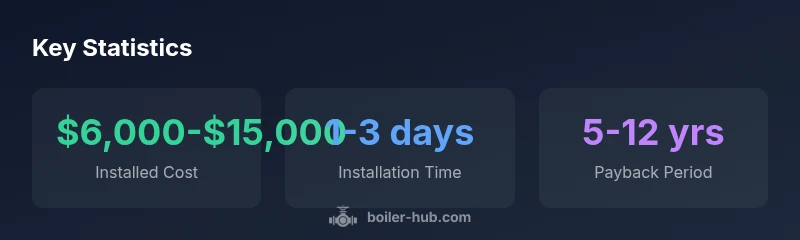
The installed cost for an outdoor wood boiler typically ranges from $6,000 to $15,000, depending on boiler size, site preparation, permits, and whether you add storage or a heat exchanger. Higher-end systems with automated loading and larger storage tanks push toward the upper end, while simpler setups stay near the lower end.
Understanding the cost landscape for outdoor wood boilers
When evaluating a cost to install outdoor wood boiler, it's essential to look beyond the sticker price. According to Boiler Hub, the total installed cost includes several hard-to-guess components: site preparation, permits, piping, electrical work, and sometimes a storage tank or heat exchanger. The variance is large because system size (BTUs), installation complexity, and local building codes all affect labor and materials. In 2026 Boiler Hub Analysis, typical complete installations for residential use ranged from roughly six thousand to fifteen thousand dollars. Mid-sized homes with straightforward siting and basic controls cluster toward the middle of that band, while properties with challenging terrain, longer runs, or additional storage can push costs higher. Conversely, very small coils or simple layouts may land on the lower end. The key takeaway: plan for total cost rather than the advertised price of a boiler unit alone. The financial conversation should include seasonal fuel costs, maintenance expectations, and potential subsidies or rebates for wood-burning systems. With that, your upfront planning reduces surprises and helps ensure the project stays on budget. The keyword, cost to install outdoor wood boiler, anchors our discussion and helps homeowners anticipate total project requirements.
Key cost drivers behind OWB installations
The main drivers of the cost to install outdoor wood boiler are size and efficiency, location and site work, and the permitting environment. First, boiler size (BTU rating) determines the heat load and whether a standard outdoor unit will meet your needs. Larger systems cost more upfront but may reduce cycling and improve comfort in colder climates. Second, site work matters: if your property requires grading, a longer trench for piping, or a separate storage solution, the project can quickly scale. Third, permits and inspections vary by jurisdiction and may add a few hundred to several thousand dollars, depending on local rules and the scope of the project. Fourth, if electrical work, back-up controls, or interlocks are required, these add-ons increase the installed cost. Finally, extras like an expansion tank, a heat exchanger, or a larger storage tank provide flexibility but raise the price. When you gather quotes, push vendors to itemize these charges so you can compare apples to apples and avoid hidden costs that explode your budget.
A detailed breakdown by component and cost estimates
A practical cost-to-install outdoor wood boiler breakdown helps you budget more accurately. Below is a component-centric view with typical ranges, recognizing that actual prices vary by region and contractor. The ranges reflect operating in a mixed climate with standard piping runs and no unusual site constraints.
- Outdoor wood boiler unit — 3,000-8,000 USD
- Delivery and installation — 2,000-6,000 USD
- Permits and inspections — 100-1,000 USD
- Site prep and trenching — 500-3,000 USD
- Electrical work and controls — 500-2,000 USD
- Storage tank/heat exchanger — 500-3,000 USD
These figures come from practical market observations and Boiler Hub Analysis, 2026. Factor in local labor costs and permit requirements to refine this range for your specific property.
Permits, codes, and compliance you should know
Permitting requirements for outdoor wood boiler installations vary widely by jurisdiction. Some areas require a building permit, an emissions inspection, and a setback review, while others have streamlined processes for farm or residential use. Expect at least a permit application fee and potential inspection charges. Always check with your local building department or a licensed installer familiar with your AHJ (Authority Having Jurisdiction). Noncompliance risks delays, fines, or red-tagged work, which can significantly affect total installed costs.
Operating costs, maintenance, and savings potential
Beyond the upfront installation, ongoing costs depend on wood prices, maintenance, and system efficiency. A well-sized OWB paired with a robust heat exchanger and properly insulated piping minimizes heat loss and reduces fuel use. In regions with plentiful wood fuel and moderate heating demand, ongoing costs can be competitive with propane or oil, especially when considering longer winters. However, maintenance—cleaning the firebox, inspecting gaskets, and checking seals—remains essential to sustain efficiency and safety. Long-term savings hinge on consistent fuel supply, efficient combustion, and a correctly sized system tailored to your heat load.
How to estimate your total project cost
Estimating the cost to install outdoor wood boiler requires a structured approach. Start by determining your heat load and selecting a boiler with the right BTU rating and efficiency. Next, assess site constraints: distance to the home, available space for the boiler and storage, and whether trenching or grading is needed. Then obtain at least three written quotes that itemize labor, materials, permits, and any optional components (heat exchanger, storage, controls). Add a contingency (5-15%) for unforeseen site conditions and permit delays. Finally, compare quotes on a total cost basis rather than unit price alone, and verify warranties and post-installation service. The result should be a defensible, transparent budget that aligns with your heating goals and climate.
Alternatives and decision considerations
If you’re weighing options, consider pellet boilers or gas boilers as alternatives. Pellet systems offer cleaner automation with relatively predictable fuel costs but require a continuous supply chain and storage space. Gas boilers eliminate wood handling and emissions concerns but come with ongoing fuel costs and potentially higher installation complexity if gas lines aren’t readily available. In any case, evaluate total cost of ownership, maintenance requirements, and local incentives. The right choice depends on how much space you have, how reliable your fuel supply is, and your tolerance for ongoing maintenance. The Boiler Hub team recommends reviewing long-term costs alongside upfront price to avoid surprises over the system’s lifetime.
Typical cost components for outdoor wood boiler installations (Boiler Hub Analysis, 2026)
| Component | Typical Cost Range | Notes |
|---|---|---|
| Outdoor wood boiler unit | $3,000-$8,000 | Depends on BTU rating and features |
| Delivery and installation | $2,000-$6,000 | Labor and site prep |
| Permits and inspections | $100-$1,000 | Local rules and scope |
| Site prep and trenching | $500-$3,000 | Land shaping and routing |
| Electrical work and controls | $500-$2,000 | Power supply and interlocks |
| Storage tank/heat exchanger | $500-$3,000 | Adds capacity or efficiency |
Questions & Answers
What is the typical total installed cost for an outdoor wood boiler?
A typical installed cost ranges from $6,000 to $15,000, depending on size, site work, and extras. Always request itemized quotes.
Most projects fall within six to fifteen thousand dollars depending on size and site work.
Do I need permits and inspections for OWB installation?
Yes, most jurisdictions require permits and code inspections for outdoor wood boiler installations. Contact your local building department to understand requirements and fees.
Most places require permits and inspections.
How long does installation take?
Most installs take one to three days, depending on the site, routing, and whether electrical connections are needed.
Usually one to three days.
What factors influence the install cost besides the boiler itself?
Site prep, piping runs, permits, electrical work, and storage or heat-exchanger additions can dramatically change total costs.
Site prep, permits, wiring, and extras.
Is it cost-effective to install an OWB vs other heating options?
In many regions, a wood boiler can be cost-effective over the long term if you have access to affordable, stable wood prices and proper sizing, but it depends on maintenance and fuel supply.
It can be cost-effective in the long run, depending on wood cost and maintenance.
Can a homeowner install an OWB themselves?
Due to electrical work, emissions controls, and local codes, OWB installations typically require a licensed professional.
Usually not; you should hire a pro.
“Sizing and proper installation are as important as the boiler itself; without correct site work and controls, even the best unit can underperform.”
Key Points
- Get multiple quotes to benchmark costs.
- Consider total installed cost, not just boiler price.
- Account for site prep and permits in your budget.
- Plan for long-term fuel costs and payback.