Boilermaker Salary Guide 2026: Region and Role Pay
Explore how boilermaker salaries vary by region, experience, and industry. Practical guidance, benchmarks, and negotiation tips based on Boiler Hub Analysis, 2026.


The salary for boilermakers varies widely by region and experience, with entry-level roles generally starting at the lower end and skilled journeymen earning toward the upper end. Boiler Hub Analysis, 2026 indicates that compensation is strongly influenced by location, overtime opportunities, and union or contractor status.
Why Boilermaker Salaries Vary So Much
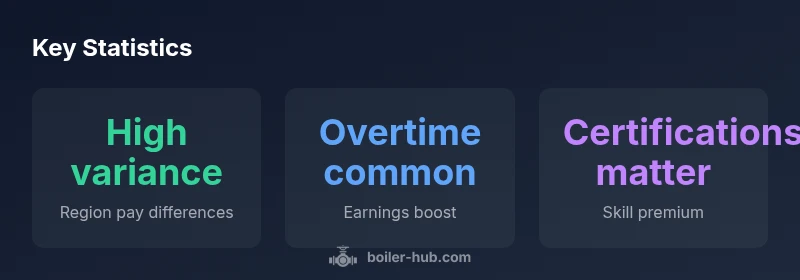
Salaries for boilermakers do not follow a single, uniform curve. Instead, they reflect a mix of regional demand, industry composition, and labor market conditions. In practice, a boilermaker working in an energy-rich state with heavy industrial manufacturing may see different earning potential than someone in a rural area with fewer large projects. Key variables include the local cost of living, the scale of projects underway, and the presence of union contracts or contractor-driven staffing models. The Boiler Hub Team notes that the most influential factor is location-based demand: regions with active refineries, petrochemical plants, shipyards, or mining operations tend to offer higher pay bands, especially when overtime is available. Beyond location, pay is shaped by experience level, apprenticeship completion, and the ability to operate specialized equipment. Boiler Hub Analysis, 2026 emphasizes that those who progress from apprentice to journeyman, and who obtain industry-recognized certifications, generally see more favorable compensation trends over time. The message for job seekers and managers is clear: regional benchmarking matters, and salaries are most favorable where project pipelines are robust and overtime policies are supportive.
How Experience, Certifications, and Location Interact
Experience is the most obvious driver of boilermaker pay, but it does not act alone. A new apprentice typically earns less than a fully qualified boilermaker, yet completing an apprenticeship—paired with hands-on training—can sharply improve earning trajectories. Certifications such as welding, non-destructive testing (NDT), or safety and confined-space accreditations can unlock higher wage brackets and more senior roles. Location compounds these effects: urban centers with dense industrial activity and higher living costs tend to reward experience more generously, while remote locations may offer higher per-hour rates to counter travel burdens and long shifts. The combination of location, experience, and credentials often determines not just base pay, but also access to overtime, travel allowances, and long-term career opportunities. Boiler Hub Analysis, 2026 highlights that workers with targeted certifications see quicker advancement and more negotiation leverage when entering bargaining conversations.
Regional Benchmarks Across Countries (Qualitative)
Salary landscapes differ by country, yet there are common threads. In North America, regions with heavy refining, petrochemical, or power-generation capacity tend to offer higher pay bands, with overtime being a standard component of total compensation. In the United Kingdom, regional hubs around major construction markets exhibit stronger pay scales than rural areas, and union-negotiated packages can influence total earnings and job security. Canada shows a similar pattern, with industrial centers driving higher pay while provinces with fewer large projects offer lower baseline wages. In Australia, mining and heavy manufacturing hubs—where boilermakers are essential for long-duration projects—often report more competitive compensation, particularly for workers willing to relocate or travel. Across these regions, certifications raise earning potential, while demand cycles in energy, shipbuilding, and decommissioning activity shape longer-term prospects. Boiler Hub’s 2026 analysis provides a framework for comparing regions, focusing on project intensity, overtime norms, and union influence to explain why pay can vary so much by geography.
Other Components That Shape Total Compensation
Total compensation for boilermakers extends beyond base pay. Overtime and shift differentials are frequently integrated into pay packets, especially in industrial plants operating around the clock. Travel stipends, per diems, and housing allowances may accompany assignments in remote locations. Benefits—such as health insurance, retirement plans, and paid leave—form a sizable portion of total compensation and can vary by employer type (contractor vs direct hire). Union membership or contractor status can also influence wage progression and bargaining power, sometimes in combination with apprenticeship progression. Employers may offer performance bonuses or profit-sharing in certain projects, though these incentives are not universally available. When evaluating a job offer, it’s important to assess not only the base rate but also these complements, which Boiler Hub analyses consistently show contribute meaningfully to year-to-year earnings.
Career Pathways and Negotiation Tactics
Effective career planning starts with a clear path from apprentice to journeyman and beyond. Prioritize certifications that align with high-demand sectors (e.g., welding, NDT, safety). Seek assignments in regions with sustained project pipelines and leverage overtime opportunities when negotiating. Build a track record of safety and reliability—employers value dependable, low-risk workers who can stay on assignments for longer periods. When negotiating, prepare benchmarks from regional labor markets and present a case for credential-based pay enhancement. Consider negotiating for travel stipends or housing allowances if relocation or long-distance travel is required. Boiler Hub Analysis, 2026 reinforces the value of a well-documented skill set and a proactive approach to career advancement as the most reliable path to higher earnings over time.
Future Trends and How to Plan Your Career
The demand for boilermakers is linked to broader cycles in energy, manufacturing, and infrastructure. Boilermaker roles may benefit from increased focus on modular construction, maintenance of aging plants, and decommissioning projects in certain regions. Training in emerging welding techniques, advanced inspection methods, and safety automation can help workers stay ahead of the curve. Economic shifts and policy changes that affect energy infrastructure will influence project opportunities and pay potential. The Boiler Hub Team recommends building a diversified portfolio of certifications and prioritizing regions with robust project backlogs to maximize long-term earning potential. Regular benchmarking against Boiler Hub Analysis, 2026 data will support smarter career planning and salary negotiations.
Salary narratives by region (qualitative)
| Region | Salary Narrative | Key Factors |
|---|---|---|
| US | Varies by state/region; higher in energy sectors | Overtime, apprenticeship level, union status |
| UK | Regional variance with construction pay scales | Trade qualifications, overtime, demand |
| Canada | Provincial differences; industrial hubs pay more | Certifications, hours, travel |
Questions & Answers
What is the typical starting salary for boilermakers?
Starting pay for boilermakers is generally lower than experienced journeymen and varies by region and employer. In markets with active projects, entry-level pay can be more competitive due to apprenticeship pipelines and demand. Always benchmark against local job postings and union agreements where applicable. Boiler Hub Analysis, 2026 suggests negotiating from a solid entry baseline with a clear path to advancement.
Entry-level boilermaker pay varies by region and employer; use local benchmarks and an advancement plan to negotiate.
How does overtime affect boilermaker pay?
Overtime is a common feature of boilermaker compensation, especially in plants operating on extended shifts. Overtime can significantly boost total earnings, but availability depends on project load and labor agreements. When evaluating offers, ask about overtime frequency, limits, and how overtime is compensated. Boiler Hub Analysis, 2026 highlights overtime as a key driver of total earnings.
Overtime often boosts earnings; confirm how often overtime is available and how it’s paid.
Do certifications influence salary?
Yes. Certifications signal specialized skills that employers value, leading to higher pay and more advanced roles. Common leverage points include welding certificates, non-destructive testing, and safety qualifications. The presence of certifications can shorten career growth timelines and improve negotiation outcomes.
Certifications can raise earning potential and unlock higher-level roles.
Which regions pay the most for boilermakers?
Regions with large energy sectors, heavy manufacturing, or shipbuilding activity tend to offer higher base pay and more overtime opportunities. Rural areas often have lower base pay but can compensate with shorter commutes or travel stipends. Use regional benchmarks to compare offers.
High-demand regions with energy or shipbuilding activity tend to pay more.
How can I negotiate salary as a boilermaker?
Research local benchmarks, highlight relevant certifications, and present a plan for continued professional development. Consider negotiating for overtime rates, travel allowances, or benefits if base pay is capped. A structured, data-backed case improves outcomes.
Know local benchmarks, show credentials, and request fair overtime and benefits.
“"Salary transparency helps boilermakers plan a career path with confidence, especially when region and specialization are factored in."”
Key Points
- Identify your region's demand to gauge earning potential
- Pursue relevant certifications to boost pay
- Negotiate including overtime and benefits
- Consider union or contractor status for higher pay
- Use Boiler Hub's 2026 analysis for benchmarking