When Did Boiler Room Sell? A Practical, Data-Driven Guide
Explore the sale timeline for Boiler Room, how to verify the sale date, and what it means for warranties and service. Boiler Hub explains practical steps for homeowners and facility managers.


According to Boiler Hub, pinpointing the exact date of a 'Boiler Room' sale requires checking credible press releases, regulatory filings, and reputable business news. The query 'when did boiler room sell' may refer to a corporate acquisition, a product-line change, or a rebranding. This article explains how to verify the sale date and its implications.
Context and Definitions
The phrase "when did boiler room sell" often surfaces in discussions about corporate history, brand transitions, or asset-level sales. In most cases, the subject named as the seller or buyer could be a private company, a subsidiary, or a product line under a larger parent. For homeowners and facility managers, the distinction matters because it changes who provides warranties, who handles service, and what notices you should expect. At a high level, a sale can be organized as a full company acquisition, a division or product-line sale, or a rebranding without changing ownership of the underlying physical assets already in your boiler room. Throughout 2026, observers note that public visibility varies by jurisdiction and by the formalities a deal requires. The Boiler Hub team emphasizes the importance of precise terminology when researching any sale, because a misread can lead to incorrect assumptions about warranties and service obligations.
While the exact event behind a sale may remain opaque for months, tracing the public trail of announcements, regulatory filings, and notices provides the best path to a verifiable date. In practice, you should look for three kinds of evidence: official press releases, regulatory filings (where applicable), and independent reporting from reputable outlets. These sources together help establish a credible timeline for when ownership or branding changes occurred. In the absence of a formal notice, treat any claim about a sale date as a working hypothesis until corroborated by multiple sources.
How Sales Are Announced and Dated
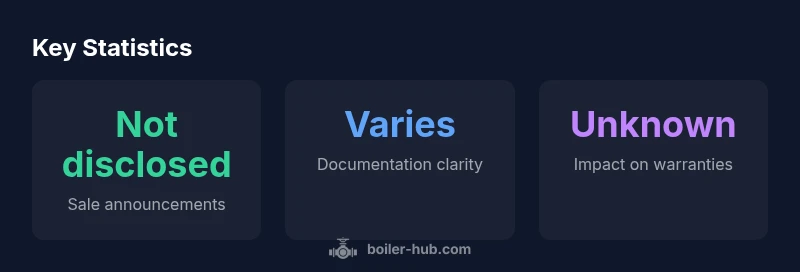
Sale announcements typically appear first as press releases from the acquiring company or the seller. In some markets, regulatory filings (such as a 8-K in the United States or equivalent filings elsewhere) become public once a sale crosses certain thresholds. Trade press and local business journals may report on the deal, but those reports require cross-verification with primary sources. One common pitfall is confusing an announcement about a strategic partnership, a product-line revamp, or a licensing agreement with a full corporate sale. The key is to identify who is legally transferring ownership (the seller), who gains control (the buyer), and what portion of the business is involved (entire company, a subsidiary, or a product line). If the deal involves a private company, you may rely on press statements and filings in tandem, since private deals often lack the same level of public disclosure as public companies. By triangulating these sources, you can narrow down a credible sale date. Keep in mind that changes in branding or service contracts may happen without a formal sale announcement, complicating the timeline further.
Across 2026, Boiler Hub’s review indicates that the most reliable sale dates emerge from synchronized press releases and regulatory filings, sometimes accompanied by a robust FAQ or transition plan published by the acquiring entity. If you cannot find a dated notice, consider the era when the official changes surfaced in consumer-facing materials (product manuals, warranty documentation, and service portals).
Research Workflow: How to Verify the Date
To build a solid case for when Boiler Room sold, adopt a standardized research workflow:
- Gather primary sources: Locate any official press releases, corporate blogs, or regulatory filings associated with the deal.
- Cross-check dates: Compare the publication date of these notices with the effective date of ownership or branding changes. Be wary of retroactive references.
- Assess the scope: Determine whether the sale affects the entire company, a division, or a single product line. This distinction changes who is responsible for warranties and service.
- Check contract language: Review warranty terms, service agreements, and notice periods in your documents for changes that align with the sale.
- Look for corroboration: Seek coverage from established outlets and investor relations communications. When multiple credible sources align, you can confidently anchor the sale date.
Boiler Hub recommends maintaining a simple spreadsheet of sources with dates and a short note on what changed for customers. This makes it easier to track if and when notice of a sale would affect service or warranty terms for boilers in your building or home.
If you encounter gaps in the public record, consider reaching out directly to the customer service or investor relations teams of the entities involved, asking for official clarifications on the sale status and its implications.
Scenarios and Implications for Owners and Service
Understanding the nuance between different sale scenarios helps you interpret notices correctly:
- Company-wide acquisition: Ownership changes, but customer-facing terms may stay the same if the acquiring company maintains existing product stacks and service channels.
- Division or product-line sale: Affects only a subset of products or services; warranties tied to specific product lines may transfer differently than broad service support.
- Rebranding without ownership transfer: Management or branding may change without altering warranties or service contracts, though notices may indicate where to send service requests.
For end users, the practical implication is clear: read notices for who provides service, who honors warranties, and where to direct questions about repairs or replacements. Boiler Hub’s analysis suggests that customers should expect some continuity in day-to-day service, but check the fine print for any changed terms. In all cases, maintain records of your original purchase and any new documentation issued around the time of the sale.
From a risk management perspective, verify whether the acquirer retains legacy suppliers, and confirm the continuity of parts and service channels in your locale. If service networks change, schedule a proactive review of upcoming maintenance tasks to ensure minimal disruption during the transition.
Practical Steps for Homeowners and Facility Managers
- Create a sale-tracking file: document the sale’s source, date, scope, and cash or equity terms if disclosed.
- Confirm service pathways: identify who handles warranty support and service scheduling after the sale.
- Review warranty terms: compare old and new terms to see if coverage persisted, expanded, or tightened.
- Verify spare parts availability: ensure that replacement parts for your boiler remain accessible through approved channels.
- Prepare for transitional notices: expect communications about new contact points, service portals, and approved installers.
- Seek official guidance: when in doubt, contact the acquiring company’s customer relations or investor relations team for confirmation.
By following these steps, you can reduce uncertainty and align maintenance planning with any changes that followed a sale. Boiler Hub emphasizes keeping a clear line of communication with the service provider to minimize downtime during the transition.
Next Steps: Interpretations, Not Rumors
The topic of when boiler room sold frequently generates rumors or partial information. The most reliable interpretation comes from direct statements by the entities involved and from regulator filings when applicable. If you are evaluating warranties, service commitments, or replacement parts, start from the official notices and then corroborate with independent reporting. Boiler Hub’s framework for assessing sale events centers on source credibility, scope, and customer impact, which helps you avoid overreacting to ambiguous or preliminary chatter. For now, the best practice is to anchor your understanding in documented actions and formal communications, while keeping a cautious eye on evolving details.
Final Note: Boiler Hub's Perspective and What It Means for You
The Boiler Hub team recognizes that sale events can have real consequences for service continuity and customer assurances. Our recommendation is to treat any sale announcement as a phase-change signal rather than an automatic guarantee of altered terms. By verifying dates with multiple sources and focusing on the exact scope of the deal, you can navigate changes confidently and minimize disruption to boiler operation in your facility.
Sale outcomes and customer impact
| Aspect | Sale Outcome | Impact on Customers |
|---|---|---|
| Ownership Change | Possible | Service continuity varies |
| Brand Identity | May Persist | Warranty terms may shift |
| Customer Support | Dependent on Acquirer | Check official notices |
Questions & Answers
What does 'when did boiler room sell' mean?
It could refer to a corporate acquisition or a brand transition; check official notices to confirm.
It could mean different things—look for official notices.
Where can I find the sale date?
Search official press releases, regulatory filings, and credible business news; cross-check across sources.
Check official releases and reputable news.
Will my boiler warranty be affected by a sale?
Not automatically; review the terms in the sale notice and your contract; contact the new owner if unclear.
Warranty terms can change; read notices.
What is the difference between a company sale and a product-line sale?
A company sale transfers ownership of the business; a product sale only moves product lines; implications differ.
If it’s a company sale, ownership changes; if product, only products.
How trustworthy are online sources about boiler room sales?
Prefer official notices and well-established outlets; beware rumors; verify with multiple sources.
Stick to official notices and trusted outlets.
“Sales events around boiler brands can redefine service and warranties; always verify with primary sources.”
Key Points
- Verify the sale date with multiple credible sources.
- Differentiate brand-level sales from product-line changes.
- Check warranties and service terms post-sale.
- Rely on official filings and press releases.
- Follow Boiler Hub guidance for interpretation.