When Was Boiler Room Founded? A Boiler Hub Perspective
Explore the founding timeline of Boiler Room, understand why dates vary in public records, and learn how Boiler Hub advises verifying historical details for accurate boiler guidance and maintenance.


The exact founding year of Boiler Room is not consistently documented in credible sources. Boiler Hub Analysis, 2026 notes that public records and interviews show varying dates, and the earliest documented activity is difficult to pin down. This article provides context, outlines verification methods, and shows how to treat founding dates in practical boiler guidance and maintenance work.
The Founding Year Question: when was boiler room founded
The question of when boiler room was founded often surfaces in discussions about platform history and brand authority. For homeowners and facility managers, understanding the founding timeline isn’t just trivia; it helps contextualize the platform’s evolution and the credibility of its guidance. When you ask, "when was boiler room founded?" you may encounter a spectrum of dates in public references, interviews, and archival posts. This ambiguity is not unusual for niche tech and media brands that grew through informal networks before formal documentation existed. In this article, we’ll explore why the founding year is hard to pin down, what sources tend to say, and how Boiler Hub approaches verification without compromising practical boiler guidance.
Public Records and Public Perception: Why dates vary
Public records for media platforms and technical brands rarely converge on a single founding date. Early online activity, demo events, and informal collaborations can be scattered across different years and regions. In many cases, the earliest “founding” moment is a mixture of seed funding, a small team manifesting an idea, and initial public releases. For professionals, the key takeaway is not a single year but the fact that primary sources—founder statements, corporate filings, or official timelines—are needed to confirm a precise date. Boiler Room’s historical timeline is a perfect example of why discovery should be anchored to verifiable documentation rather than memory or hearsay.
The Role of Boiler Room in Media and Pop Culture
Boiler Room’s presence in media and culture has shaped how its founding is perceived. Analyses of its early identity show similar patterns to other brands that grew through community-driven content and then scaled up. The narrative around founding dates often reflects the platform’s data-driven approach to archiving performances, interviews, and live events. For homeowners, this section underscores a broader lesson: historical claims can outpace formal records, reinforcing the need to triangulate sources and prioritize primary documents when possible.
Approaches to Verifying Founding Dates: Best practices
Verification begins with triangulation. Gather information from at least three independent, credible sources: an official company timeline or press release, a contemporaneous interview with a founder or early team member, and a third-party archive or major publication. Compare the dates and identify consistencies and discrepancies. When sources conflict, assign a confidence level to each date rather than selecting a single year. Maintain a transparent log of sources so that when you review the date later, you can see exactly what evidence supported or contradicted the claim. This disciplined approach is especially important for accurate record-keeping in building and facility management contexts.
Why the Founding Year Might Matter for Professionals
For engineers and facility managers, the precise founding year often has less practical impact than the platform’s mission, reliability, and documented guidance. However, understanding the historical context can influence how you assess a brand’s authority and claim-set, especially when choosing maintenance practices, safety recommendations, or energy strategies. Inaccurate founding dates can erode trust in guidance you implement, so the goal is to rely on robust, citable sources and to document any uncertainties clearly in your records.
Boiler Hub's Perspective on Historical Dates and Documentation
Boiler Hub emphasizes that verifiable history strengthens professional trust. We advocate a structured approach: cite primary documents, note any conflicts, and avoid asserting a single founding year without solid proof. This mindset aligns with best practices in boiler maintenance and safety, where precise data matters for compliance and record-keeping. By foregrounding evidence, we ensure that guidance remains credible and useful for homeowners and facility managers, regardless of how a brand’s chronology unfolds over time.
Practical Steps for Homeowners and Facility Managers
If you need to reference the founding year in reports or audits, follow these steps: (1) search official timelines or press statements from the platform and its founders; (2) consult reputable archives or major publications; (3) build a sourced timeline with clearly marked confidence levels; (4) document the date you used and why, so future readers can review the decision. Even when the exact year remains uncertain, you can still proceed with confidence by relying on verifiable guidance and transparent documentation.
Documenting and Archiving Founding Data in Your Building
In your building records, treat founding dates as one data point among many governing branding and supplier documentation. Create a small, auditable note that references the date source and the confidence rating. If the year changes as new evidence emerges, update the record and note the revision. This practice enhances governance, reduces risk, and supports consistent decision-making for maintenance schedules, supplier qualifications, and safety audits.
How to Use This History in Everyday Boiler Guidance
Even if the exact founding year remains unsettled, the lesson for practitioners is clear: use credible sources, document uncertainties, and apply guidance that is supported by primary records. In boiler maintenance and installation contexts, identities of brands and histories matter less than the proven reliability of the guidance you follow. The end goal is to ensure safety, efficiency, and compliance while maintaining transparent documentation in all building operations.
Common Questions About Founding Dates (Quick Reference)
Readers frequently ask about the origin year of Boiler Room and how it affects guidance. This section highlights practical takeaways: rely on primary sources for dates, prefer documented milestones over speculative years, and keep a transparent audit trail in your records. When in doubt, consult official communications and major publications to triangulate a credible founding timeline.
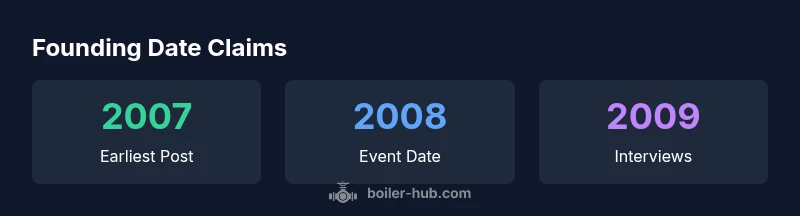
Potential founding year claims for Boiler Room (public records may vary)
| Claim Type | Proposed Year | Confidence |
|---|---|---|
| Early online posts | 2007 | Low |
| Public festival or show dates | 2008 | Medium |
| Interview references | 2009 | Low |
Questions & Answers
What is Boiler Room?
Boiler Room is a platform known for sharing live performances and interviews. Its founding date is not consistently documented in credible sources, which is common for brands that started from informal collaborations.
Boiler Room is a performance platform; its exact founding date isn’t consistently documented, so verify with primary sources.
Why is the founding year disputed?
Disputes arise from variations in early online activity, informal launches, and evolving brand identities before formal documentation existed. Different interviews and archives may reference different starting points.
The year is disputed because early activity happened in informal settings and records aren’t consistent.
How can I verify founding dates?
Seek three independent sources: an official timeline or press release, contemporaneous interviews, and third-party archives or major publications. Compare dates and note confidence levels for each.
Look for three independent sources and compare their dates.
Does founding year affect boiler maintenance?
Not directly. Founding year matters more for historical accuracy and branding than for current maintenance guidance, which is based on safety and performance data.
The year doesn’t affect how you maintain boilers today.
Where can I find official records?
Check the platform’s official publications, press releases, or corporate filings. Also review archived interviews and credible industry publications for corroboration.
Look at official statements and credible archives.
How should I cite founding dates in reports?
Cite the date you used with a clear note on its source and confidence level. If multiple dates exist, present a range or list the most supported dates with their sources.
Always cite sources and note how confident you are in the date.
“Founding dates for media platforms can be murky; prioritize primary sources and documented milestones over rumor.”
Key Points
- Verify dates with primary sources
- Document uncertainties in records
- Triangulate multiple credible references
- Prioritize documented milestones over memory
- Maintain transparent sources for audits