Why Is My Boiler Making a Gurgling Sound? A Practical Troubleshooting Guide
Discover why your boiler is gurgling and learn practical steps to diagnose and fix the issue safely. From air in the system to expansion-tank checks, this Boiler Hub guide helps homeowners and managers act fast.


According to Boiler Hub, a gurgling boiler usually means air trapped in the system, a failing expansion tank, or circulating-pump issues. The immediate fix is to bleed radiators starting from the highest floors, then verify system pressure and inspect the expansion tank. If the noise persists after these basics, stop DIY work and contact a qualified technician.
Why a Gurgling Boiler Happens
A gurgling or bubbling sound from a boiler is not just a nuisance—it often signals that the system is not circulating water smoothly. The most common culprits are air trapped in the radiators or pipes, low boiler pressure, or a failing expansion tank. When air accumulates, it acts like a cork in the water path, causing a characteristic gurgle as water tries to move past pockets of air. Understanding the basic physics helps homeowners and facility managers target the fix without unnecessary risk. As you troubleshoot, keep in mind that water and electricity are hazardous together; never bypass safety features or operate a boiler without proper precautions. This guide, informed by Boiler Hub analysis, emphasizes safe, methodical steps to restore quiet operation while minimizing the chance of damage to the system.
From a maintenance perspective, regular inspection of the expansion tank, pressure gauge, and pump seals is key. A sound understanding of how your boiler should behave under normal conditions helps you notice deviations early. If your boiler is old or frequently noisy, it may be time to plan a professional evaluation to prevent unexpected breakdowns and ensure efficiency.
In the first 1000 hours of operation, a well-maintained boiler tends to be quieter, more reliable, and more efficient, underscoring why proactive maintenance matters for homeowners and property managers alike. Boiler Hub’s guidance emphasizes safety, methodical checks, and timely professional input when needed.
Top Causes in Plain Language
Here we outline the most common causes in order of likelihood, so you can triage quickly. The goal is to separate easy fixes from issues that require a professional assessment. We’ll also point out what you should and should not try yourself to avoid damage or injury.
- Air in the system (high likelihood): Often the most frequent reason for a gurgling sound. Bleeding radiators can usually relieve the issue.
- Low water pressure (medium likelihood): If pressure is too low, water movement becomes erratic and noise can result.
- Expansion-tank problems (medium likelihood): A waterlogged or failed expansion tank can cause pressure fluctuations and bubbling noises.
- Pump or impeller issues (low likelihood): A failing circulating pump can create cavitation and strange noises; this typically requires servicing.
- Heat-exchanger concerns (low likelihood): Sediment buildup can cause restricted flow and gurgling, usually in older systems.
If the system is ancient or shows signs of leaks, increased energy bills, or frequent cycling, a professional inspection is strongly advised.
Practical Checks You Can Do Safely
Before calling a technician, perform a few safe, non-destructive checks to narrow down the cause. Always turn off the boiler and allow it to cool before touching any components. Use a flashlight to inspect around the expansion tank and look for obvious leaks, corrosion, or damp patches. Maintain good ventilation in the boiler room and have a bucket and towels handy in case of minor drips.
- Check system pressure on the gauge. Most boilers operate within a specified range (often 1-2 bar when cold, higher when hot). If the pressure is outside this range, you may need to add water or release excess pressure.
- Bleed radiators starting from the highest floor to release trapped air. Have a cloth ready for any spurts of water as air exits through the valve.
- Inspect the expansion-tank air charge if accessible. A tank that’s waterlogged or has a failed bladder often presents as pressure fluctuations.
- Look for visible leaks around joints, valves, or the pump. Even small leaks can introduce air into the system and cause noise.
If you discover a leak or cannot stabilize pressure after bleeding and venting, power down the boiler and contact a licensed technician immediately.
What to Do If Bleeding Radiators Doesn't Solve It
Bleeding radiators is a foundational step, but sometimes it’s not enough. If air pockets keep returning, the underlying issue could be a faulty expansion tank or a pressure-control problem. In these cases, you’ll need to take a more systematic approach to avoid further damage. Remember: do not attempt to bypass safety features or tamper with the pressure-relief valve.
- Recheck pressure after allowing the system to settle for 10-15 minutes. If pressure remains too low, you may need to add water—but only within the manufacturer’s recommended range and with the boiler off.
- Confirm that the fill valve is functioning and that there are no closed valves restricting water flow to the boiler.
- If your expansion tank is suspected, do not attempt to replace it unless you have the proper tools and experience; these components operate under pressure and can be hazardous.
- If noise persists after bleeding and pressure adjustment, schedule a professional inspection to assess pump seals, gaskets, and heat-exchanger conditions.
Safety First: Warnings and Common Mistakes to Avoid
Safety is non-negotiable when dealing with boilers. Common mistakes include opening pressure-relief valves without proper gear, adjusting pressures beyond the recommended range, or continuing operation after a suspected leak. Always wear protective gloves and eye protection when handling hot components. If you smell gas, hear strong hissing, or notice water spraying, evacuate the area and call emergency services or a licensed technician immediately. Regular, proactive maintenance by a qualified technician reduces the likelihood of a noisy boiler and the need for emergency repairs.
Prevention: Maintenance That Keeps Your Boiler Quiet
Preventive maintenance is the best defense against a noisy boiler. Schedule annual professional servicing and perform simple monthly checks that do not require disassembly. A well-maintained system runs more quietly, uses energy more efficiently, and has fewer unexpected outages. Consider keeping a small maintenance log and noting any recurring noises, pressure changes, or leaks so you can discuss them with your technician at the next visit.
Steps
Estimated time: 45-60 minutes
- 1
Power down and cool the boiler
Turn off the boiler at the switch and allow the unit to cool completely. This reduces the risk of scalding and allows you to safely interact with valves and radiators. Gather tools and a towel before beginning.
Tip: Never attempt major repairs while the boiler is hot; hot metal and steam can cause severe burns. - 2
Bleed the radiators
Starting with the highest radiator, use a bleed-key or screwdriver to open the valve slightly. Listen for air escape, then close when water begins to come out steadily. Have a container ready for water and monitor the pressure gauge after bleeding.
Tip: Keep a cloth handy to catch spurts of water and prevent scalding. - 3
Check boiler pressure
Look at the pressure gauge when the boiler has cooled. If pressure is below the recommended range, top up using the filling loop according to the manufacturer’s instructions. If pressure is too high, bleed a small amount through the automatic air vent if present or consult a pro.
Tip: Refer to your manual for the exact target pressure; typical cold-start ranges are around 1-1.5 bar. - 4
Inspect the expansion tank
Check for signs of a waterlogged expansion tank or a faulty bladder. If there’s no air cushion, or you hear continuous water sounds after bleeding, the tank may need replacement or charging.
Tip: Only perform expansion-tank checks if you are confident and have the right tools; incorrect charging can damage the system. - 5
Test for leaks and sounds
With the system running at a safe pressure, listen for the gurgle’s persistence and inspect all joints and valves for dampness. A persistent noise after these steps suggests pump or heat-exchanger issues.
Tip: Document any persistent noises and leak locations to aid the technician. - 6
Call a professional if unresolved
If the gurgling continues after bleeding, pressure adjustment, and tank checks, schedule a professional service. Issues like faulty pumps, air in the mains, or faulty heat exchangers require licensed expertise.
Tip: Do not hesitate to seek help; timely intervention can prevent bigger failures.
Diagnosis: Boiler makes a gurgling noise during operation
Possible Causes
- highAir trapped in system or radiators
- mediumLow water pressure
- mediumWaterlogged expansion tank
- lowWorn pump seals or cavitation
- lowSediment build-up in heat exchanger
Fixes
- easyBleed radiators to remove air pockets
- easyCheck and restore correct boiler pressure within the recommended range
- mediumInspect/replace expansion tank if air charge is lost or tank is waterlogged
- hardInspect circulator pump seals for leaks or cavitation; replace if needed by a professional
- hardFlush heat exchanger to remove sediment buildup (professional service required)
Questions & Answers
What caused my boiler to gurgle?
Gurgling is commonly caused by trapped air, low pressure, or expansion-tank issues. Other factors include pump cavitation or sediment buildup in older boilers. A systematic check helps identify the culprit.
Gurgling usually means air, pressure, or tank problems. A quick check can pinpoint the cause.
Is a gurgling boiler dangerous to ignore?
Ignoring a gurgling boiler can lead to higher energy bills and potential equipment damage. If you can't resolve it with bleeding and pressure checks, contact a licensed technician promptly.
Yes, it can lead to bigger problems if left unresolved.
Can purging or bleeding help without tools?
Bleeding radiators is a safe first step for many systems and often resolves noise. If you lack the needed tools or if the noise returns, a pro should assess expansion tanks and pumps.
Bleeding radiators is a good first step, but get a pro if it persists.
What should I do if pressure is too high after bleeding?
If pressure remains high, switch off the boiler and carefully release some pressure via the air vent or contact a professional. Do not forcefully vent or bypass safety devices.
Shut down and consult a pro if pressure stays high.
When is it time to replace components?
Replacement is considered when the expansion tank, pump seals, or heat exchanger show wear or repetitive faults after professional evaluation. Early replacement can prevent repeated failures.
If a professional recommends parts replacement, it’s wise to proceed.
Watch Video
Key Points
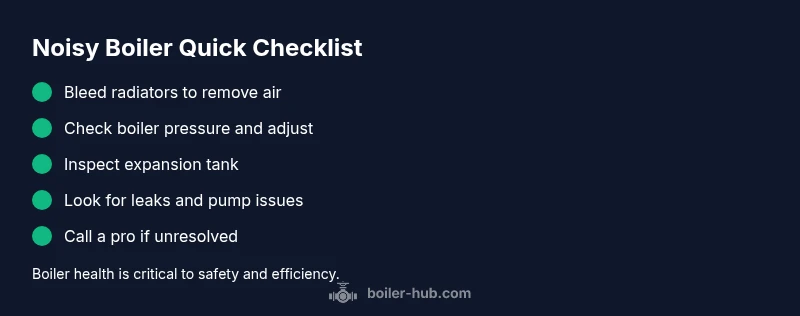
- Bleed radiators to remove trapped air
- Check and correct boiler pressure within spec
- Inspect the expansion tank for proper operation
- Call a professional if noises persist after basic checks