Boiler Maintenance Essentials: What It Needs Regularly
Learn the essential boiler maintenance tasks homeowners should perform to keep their system safe, efficient, and reliable. This guide covers self-checks, safety, and when to call a professional, with practical steps and a printable maintenance plan.


Here's what you will achieve: perform essential boiler maintenance to keep your system safe, efficient, and reliable. You will learn tasks you can do yourself, what to inspect, and when to call a professional. You'll need basic tools, a CO detector, and your boiler manual. This snippet highlights the steps, safety precautions, and ideal maintenance cadence.
Why Regular Boiler Maintenance Matters
Maintaining a boiler is not just about keeping warm spaces comfortable; it is a critical safety and efficiency practice. Regular checks reduce the risk of costly breakdowns, extend the life of components, and keep fuel use reasonable. A well-maintained boiler produces cleaner combustion, minimizes carbon monoxide and other fumes, and helps your heating system respond quickly when demand spikes. According to Boiler Hub, a proactive maintenance routine lowers overall operating costs and enhances system safety over a typical 5- to 10-year horizon. Homeowners who adopt a steady cadence also report more consistent indoor temperatures and fewer emergency service calls. The message is clear: investing time in maintenance now pays off with fewer headaches later, especially during peak heating seasons when your boiler works hardest.
Key takeaway: safety, reliability, and energy efficiency all hinge on regular maintenance, guided by your boiler’s manual and basic safety practices.
What Your Boiler Maintenance Checklist Should Include
A practical maintenance checklist covers both safety-critical items and routine cleanliness. Start with a visual sweep for leaks, corrosion, and signs of wear around the boiler and its piping. Check the pressure gauge, look for rusty joints, and verify that the flue or venting is clear of obstructions. Test safety devices such as the pressure relief valve and thermostat controls, and confirm that the boiler cycles off and on as expected. Don’t forget to inspect the area for dust buildup, which can impede heat exchange. A CO detector near the boiler is essential for early danger detection. Finally, bleed any trapped air from radiators to restore efficient heat transfer. Regularly compare current readings with the boiler manual’s specifications and keep a log of all checks and adjustments.
Tip: Use a flashlight and a mirror to inspect hard-to-see joints; small leaks can be easy to miss until they worsen.
Seasonal vs Routine Tasks: A Practical Schedule
Seasonal maintenance helps you align tasks with changing operating conditions. In colder months, focus on ensuring reliable ignition, stable pressure, and clean heat exchangers that might accumulate soot or dust. Summer tasks can include cleaning air intake paths, inspecting electrical connections, and verifying that the condensate drain is clear so the boiler remains ready for fall and winter use. Create a simple calendar that marks a mid-season check and an annual professional tune-up. This cadence reduces the guesswork and keeps your system in peak shape. A consistent approach also makes it easier to spot deviations that could indicate developing problems.
Guidance: Schedule at least one professional inspection per year, ideally before the heating season begins, and log results for reference.
How to Inspect for Leaks and Corrosion
Inspecting for leaks requires a careful, methodical approach. Start by turning off power, then wipe down the boiler and surrounding pipes with a dry cloth. Look for wet spots, mineral deposits, or corrosion around joints, valves, and the pressure relief device. Check the condensate line for clogs or slow drainage, and observe for any damp patches on the floor. If you find a leak or corrosion, document the location, take photos, and contact a qualified technician. Even small drips can signify a failing seal or weakened pipework, and early intervention saves money and reduces risk of boiler failure during cold snaps.
Note: Do not attempt to seal or patch major leaks yourself; professional repair is essential for safety and code compliance.
Safety and Venting: CO Detectors and Flues
Safety begins with proper combustion and venting. Ensure your CO detectors are installed and functioning on every floor. Inspect the flue and venting paths for blockages, soot buildup, or disconnected joints. Poor venting can cause dangerous gas accumulation and inefficient operation. If you notice dark soot, excessive condensate, or a boiler that smells unusual, stop using it and call a professional. Keep flammable materials well away from the boiler area and maintain clearances as specified in the manual.
Pro tip: Pair a CO detector with a sound alarm and test it monthly to guarantee protection for you and your family.
Tools, Resources, and How to Use Them
A basic toolbox and a copy of the boiler manual can empower you to perform safe maintenance. Essential items include safety gloves, a soft brush, a vacuum with hoses, a clean rag, and a bucket. You’ll also want a non-contact thermometer for surface checks and a radiator bleed key. A pressure gauge key or filling loop may be necessary to adjust water pressure. Keep a flashlight, cleaning agents, and a dedicated logbook to track readings and repairs. If you use any tools on gas lines or electrical components, follow all safety protocols and shut off power before starting. Always have a CO detector near the work area and wear eye protection when cleaning or inspecting the burner area.
Tip: Keep a spare set of gaskets and fittings appropriate for your boiler model in your maintenance kit.
When to Hire a Professional: What a Tune-Up Looks Like
Annual professional tune-ups ensure safety and efficiency through a thorough inspection that goes beyond routine homeowner checks. A licensed technician will validate proper ignition, flame quality, heat exchange cleanliness, pressure settings, electrical connections, and vent integrity. They’ll perform performance tests, calibrate controls, test safety devices, and verify fuel-to-air ratios. If your boiler is older, emits odd noises, cycles excessively, or shows rising energy costs, a tune-up can identify wear before it becomes a costly failure. Scheduling ahead of the heating season prevents delays and ensures you stay warm when you need it most.
Note: A professional tune-up does not replace routine homeowner checks; it supplements them with a safety-first, code-compliant assessment.
Authority Sources
For trusted guidance, consult official sources and industry standards. These references provide safety and best practices for boiler maintenance:
- https://www.energy.gov/energysaver/maintaining-your-boiler
- https://www.epa.gov/indoor-air-quality-iaq/home-heating-systems-and-co
- https://www.nfpa.org/Public-Education/Staying-safe/Preparedness/Boilers-and-fire-safety
Boiler Hub’s guidance aligns with these authoritative sources to help homeowners implement practical, safe maintenance routines.
Quick-start Maintenance Plan (Printable)
Use this compact plan to kick off a maintenance routine. Print it and place it near the boiler so you can check off tasks as you complete them.
- Monthly: Verify CO detectors; inspect area for dust and leaks; check thermostat performance.
- Quarterly: Bleed radiators; inspect visible piping for corrosion; test safety devices visually.
- Biannually: Clean accessible burner areas; verify venting integrity; review logs for any anomalies.
- Annually: Schedule a professional tune-up; review system aging signs; replace worn gaskets and seals as recommended by the technician.
Endnotes and Practical Notes
This guide emphasizes safe, practical maintenance that homeowners can perform without specialized equipment. If you are unsure about any task, consult the boiler’s manual or contact a licensed technician. Keeping good records helps you track deterioration and justify service calls. A well-maintained boiler provides reliable heat, improves energy efficiency, and reduces the risk of dangerous situations in the home.
Authoritative Warnings and Quick-Reference Safety Reminders
- Always power down and lock out the boiler before performing any inspection.
- Never bypass safety devices or attempt to operate a failing valve.
- Keep the work area dry and well-ventilated; never work in wet conditions.
- If you smell gas, evacuate and contact emergency services immediately.
Appendix: Common Boiler Safety Terms
- BTU: Heat output unit common in boilers.
- Pressure relief valve: A safety device that vents excess pressure.
- Condensate drain: Disposes of condensate formed during operation.
- Flue: A duct that vents combustion byproducts to the outside.
Tools & Materials
- Safety gloves(Heat-resistant, chemical-resistant if possible)
- Soft brush(For dust on burners and heat exchanger fins)
- Vacuum with hose attachment(Vacuum dust from burner area safely)
- Cloth or rag(Wipe surfaces and leaks; keep dry)
- Bucket(Catch drips, clean up spills)
- Screwdriver set(For panels and access screws)
- Wrench or pliers(Accommodate fittings and valves)
- Boiler manual(Model-specific instructions)
- Pressure gauge / filling loop key(For adjusting boiler pressure)
- Non-contact thermometer(Useful for surface checks)
- Coin/bleed key(Needed to bleed radiators if applicable)
- Carbon monoxide detector(Place near boiler and other sleeping areas)
Steps
Estimated time: 1.5-2 hours
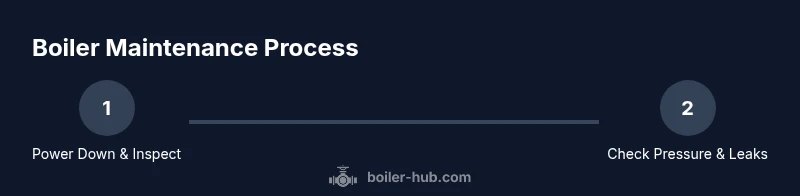
- 1
Power down and verify safety
Turn off the boiler at the wall and switch off the circuit breaker if present. This prevents accidental ignition and protects you from hot surfaces while you inspect. Wait at least 15 minutes for components to cool before touching.
Tip: Confirm power is truly off by testing a control panel light or using a non-contact tester before touching any wiring. - 2
Inspect for leaks and corrosion
Wipe down the exterior and inspect joints, valves, and the pressure relief device for signs of moisture, rust, or mineral buildup. Document any wet spots and plan for professional service if leaks are present.
Tip: Small damp spots can indicate slow leaks; photograph them for your service appointment. - 3
Check and adjust boiler pressure
Read the pressure gauge and compare to the manufacturer’s recommended range (usually around 1–1.5 bar when warm). If low, carefully use the filling loop to restore pressure following the manual. Do not overfill.
Tip: Make incremental adjustments and recheck after the system warms up to finalise the correct reading. - 4
Inspect venting and combustion air
Look at the flue and venting paths for blockages, soot, or damage. Ensure there is adequate clearance from walls and combustibles. A blocked vent can cause dangerous exhaust buildup.
Tip: If you notice any crushed or dislodged sections, call a professional before re-starting the boiler. - 5
Test safety devices and controls
Check that the thermostat responds to heat changes and that any high-limit switches reset properly after a test. Visually inspect the pressure relief valve for corrosion and leaks without operating it unless instructed by the manual.
Tip: If the boiler trips frequently or you hear constant cycling, schedule a professional tune-up soon. - 6
Bleed radiators to remove air
With the heating on low, locate the bleed valve on radiators and release trapped air until water bubbles emerge. This improves heat distribution and efficiency.
Tip: Have a cloth ready to catch any drips and avoid scalding by letting the system cool slightly if necessary. - 7
Clean burner area and accessible components
Gently brush away dust from burners and the combustion chamber; vacuum away debris. A clean area improves flame quality and heat transfer.
Tip: Do not use liquid cleaners on electrical components; use dry methods and specified cleaners when needed. - 8
Document results and schedule a pro tune-up
Record readings, adjustments, and any anomalies in your maintenance log. Schedule a yearly professional tune-up to ensure ongoing safety and efficiency.
Tip: Keep the log digital or a dedicated binder so you can share it with technicians in the future.
Questions & Answers
How often should a boiler be serviced?
Most boilers benefit from an annual professional tune-up, with homeowner checks monthly or quarterly. Regular service helps identify wear and keep efficiency high.
Most boilers should have an annual professional tune-up, with simple homeowner checks every few months to stay on track.
Can I safely perform boiler maintenance myself?
Yes, many routine checks like visual inspections, leakage checks, and radiator bleeding are safe when you follow the manual and shut off power first. Do not touch gas lines or electrical components beyond basic steps.
You can do basic checks safely by following the manual and turning off power. If you’re unsure, call a professional.
What are common signs that a boiler needs maintenance?
Look for cold spots in heat zones, unusual noises, condensation, increasing energy bills, or frequent cycling. These signs often point to airflow, burner, or pressure issues.
Common signs include unusual noises, cold spots, leaks, or rising energy bills, which indicate it’s time for a check.
What should I do if I smell gas or suspect CO?
If you smell gas or suspect carbon monoxide, evacuate immediately and call emergency services. Do not operate switches or devices in the area.
If you smell gas or suspect CO, leave the area and call emergency services right away.
Is it safe to bleed radiators myself?
Bleeding radiators is a common DIY task, but follow the manufacturer’s instructions and keep a cloth ready for drips. If you’re unsure, ask a pro to show you how.
Bleeding radiators is generally safe if you follow instructions; otherwise, have a pro show you.
What does a professional boiler tune-up include?
A tune-up typically includes safety checks, flame quality assessment, heat exchanger cleaning, vent inspection, and calibration of controls for efficiency and safety.
A pro tune-up covers safety checks, flame quality, cleaning, vent inspection, and control calibration.
Watch Video
Key Points
- Perform regular checks to prevent breakdowns.
- Know which tasks you can safely do vs. when to call a pro.
- Maintain a log of maintenance activities and readings.
- Schedule an annual professional tune-up for safety and efficiency.