New York Boiler Repair: A Practical How-To Guide
A practical step-by-step guide to diagnosing and repairing common boilers in New York homes, covering safety, local codes, essential tools, and when to call a pro.


By following a structured, safety-first approach, you can diagnose and address many common boiler issues in New York homes without professional help—but always verify gas safety and local codes first. Start by checking pressure, resetting the system, bleeding radiators, and testing for error codes. If anything feels risky, contact a licensed technician immediately.
Understanding new york boiler repair basics
New York homes use a variety of boiler systems, from traditional cast iron to modern high-efficiency models. The term new york boiler repair covers everything from simple reset and bleeding radiators to component replacement and venting adjustments. According to Boiler Hub, a structured approach helps homeowners distinguish between routine maintenance and repair work that requires a licensed technician. Begin by identifying your boiler type, fuel source, and control system. If you feel uncertain about any step, stop and consult a professional. Urban boiler rooms can be cramped and poorly ventilated, so organize tools, shut-off valves, and a clear path before you start. Common early signals include low pressure, frequent cycling, noisy operation, or boiler error codes. Document any symptoms with a date stamp and take notes on what you observed to speed up diagnosis.
Key NY-specific considerations: codes and permits
Building codes in New York require proper venting, safe combustion, and annual servicing for many boiler installations. Before opening a closed system, turn off power and gas following label instructions. In some cases, district energy rules or apartment building policies apply; always check with building management before attempting any work. Boiler Hub analysis shows that adherence to safety checks reduces the risk of CO exposure and gas leaks in urban homes. Always verify that a CO detector is working, and keep a fire extinguisher nearby. Keep receipts and log inspections to demonstrate compliance if required by your building or insurer.
Safety first: Gas, CO, and venting in dense urban environments
Gas-fired boilers pose serious hazards if mismanaged. Never perform high-risk tasks such as gas line adjustments or igniter testing without proper training. Always operate within the manual's instructions, use approved venting paths, and ensure adequate ventilation for combustion air. New York fire code emphasizes CO alarms and regular servicing to prevent dangerous emissions. If you smell gas, evacuate and call your gas provider or 911. For urban settings, ensure clearances around the boiler and keep combustible materials away from the flue. In terms of risk management, the Boiler Hub team recommends scheduling a professional inspection after any major work to verify safety.
Common problems and diagnostic checklist
Many New York boilers fail to heat due to simple issues. Use this quick diagnostic checklist to narrow down causes before calling a pro:
- No heat or hot water: verify thermostat settings, power to the unit, and the circuit breaker.
- Low system pressure: inspect the fill valve and expansion tank, then top up slowly to the recommended range.
- Leaks or puddles: trace condensate lines and boiler fittings; tighten or replace gaskets as needed.
- Odd noises or banging: air trapped in the system or a failing circulating pump can cause disturbances.
- Short cycling or frequent lockouts: check the thermostat, flame sensor, and control wiring before resetting. If these checks do not resolve the issue, schedule a professional inspection.
Tools and materials you'll need for a NYC boiler repair
Preparing with the right tools saves time and reduces risk. Essential items include a manometer or digital pressure gauge to verify pressure, adjustable wrenches and a screwdriver set for fittings, a multimeter for electrical checks, a gas leak detector for safety, and heat resistant gloves. Additional handy supplies are a bucket, rags, thread sealant rated for gas, and Teflon tape. Keep a labeled toolbox with spare parts and a copy of the boiler’s manual handy to speed up diagnostics.
Step-by-step overview
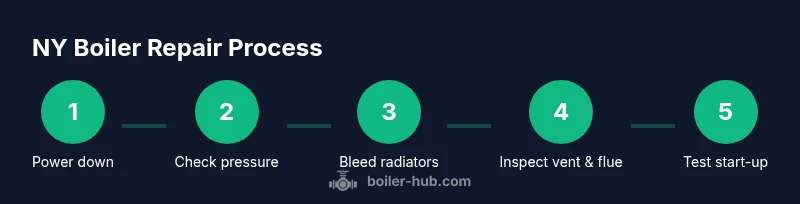
The following step-by-step sequence covers safe, low-risk checks and adjustments suitable for many residential boilers. Always follow the manufacturer’s instructions and never bypass safety devices. After completing these steps, recheck system operation and monitor for any repeating fault codes.
Maintenance strategies to prevent future failures
Preventive maintenance pays off. Schedule an annual professional service, keep CO detectors functional, bleed radiators as needed to remove stuck air, and verify pressure stability over the heating season. Inspect the expansion tank and piping for signs of wear, corrosion, or leaks. Consider upgrading to a high-efficiency model if your boiler is over a decade old. Consistent maintenance reduces emergency calls and extends boiler life in New York’s climate.
Authoritative sources and further reading
For additional guidance, consult authoritative resources from national and city agencies. These sources provide safety standards, maintenance practices, and regulatory expectations that help with responsible NY boiler repair practices.
The boiler repair workflow in practice
A practical workflow combines an organized toolbox, a calm, methodical approach, and an awareness of your building’s policies. Document every observation, treat gas-related tasks with extreme caution, and when in doubt, call a licensed technician. This approach minimizes risk and ensures reliable, long-term boiler performance.
Tools & Materials
- Manometer or digital pressure gauge(Essential to verify boiler pressure in the 1-1.5 bar range)
- Adjustable wrench set(For fittings and shut-off valves)
- Screwdriver set (Phillips and flat-head)(Needed for panels and control screws)
- Multimeter(Electrical checks on wiring and igniter circuits)
- Gas leak detector(Critical for gas line safety and air-tightness checks)
- Teflon tape and pipe dope (gas-rated)(Seal threaded connections safely)
- Bucket and rags(Catch water and keep area clean)
- Flashlight or headlamp(Improve visibility in tight boiler rooms)
- Vent-cap cleaning brush(Optional for flue inspection)
- Manuals and service records(Reference system-specific instructions)
Steps
Estimated time: 60-120 minutes
- 1
Power down and isolate
Shut off the boiler's electrical supply at the main breaker and close the gas shut-off valve if accessible. This prevents accidental ignition while you inspect the system.
Tip: Double-check that the boiler indicator light is off. - 2
Check and adjust boiler pressure
Locate the pressure gauge and compare with the manufacturer’s recommended range. If low, slowly open the fill valve to raise pressure, then repressurize and check for leaks.
Tip: Do not overfill; after adjusting, bleed any trapped air from the system. - 3
Bleed radiators to remove air
Starting with the highest radiator, loosen the bleed valve until air escapes, then close once water appears. Repeat at each radiator until all are vented.
Tip: Have a bucket ready to catch water and work in a dry area. - 4
Inspect venting and flue for blockages
Check that the venting path is clear and free of soot or debris. A blocked flue can cause dangerous backdrafts and CO buildup.
Tip: Never disassemble a blocked flue while the system is pressurized. - 5
Test electrical components and thermostat
Check the thermostat settings and battery if applicable. Use a multimeter to verify continuity in control circuits and inspect wiring for corrosion.
Tip: If you’re unsure how to use the meter, skip this step to avoid shocks. - 6
Restart and observe startup
Follow the manual to reset, then watch for a blue flame and stable operation. Note any fault codes that reappear and document observations.
Tip: Record the fault code if it recurs for reference when you contact a pro.
Questions & Answers
Can I safely repair a gas boiler myself?
Only for simple, non-gas related tasks described in the manual. Gas line work and venting should be handled by a licensed professional due to CO and explosion risks.
Only perform simple tasks per the manual; for gas lines, hire a pro.
Is annual service required for New York boilers?
Yes. Regular professional servicing helps maintain safety, efficiency, and reliability in New York climate and building codes.
Annual service helps safety and efficiency.
What are common signs a boiler needs service?
Frequent cycling, low hot water, unusual noises, or error codes indicate a service or repair may be needed.
Look for cycling, noise, or error codes.
Can I improve efficiency without replacing the boiler?
Yes, through regular maintenance, proper venting, and sealing leaks, but older units may need replacement for significant gains.
Maintenance helps, but old units may still need replacement.
When should I replace a boiler in New York?
Consider replacement if repairs become frequent, efficiency is very low, or the unit is nearing end of life. A professional can assess if upgrading is cost-effective.
Replacement depends on failures and efficiency, not just age.
Are there any NY safety regulations I should know?
New York safety regulations require safe venting, CO detection, and compliance with building codes. Always verify with local authorities or building management.
Follow NY safety rules and building codes.
What should I do if the boiler stops and won’t restart?
Check power, gas supply, and thermostat settings first. If the issue persists or you see a fault code, contact a licensed technician.
Check basics first; call a pro if it persists.
Watch Video
Key Points
- Power down safely before inspecting
- Verify boiler pressure and bleed air as needed
- Do not tackle gas-related tasks without expertise
- Document codes and observations for future reference
- Know when to summon a licensed professional