How to Get Rid of Air Lock in Oil Boiler: Practical Steps
Learn safe, proven steps to purge air from an oil boiler, bleed radiators, and restore efficient heating. Includes tools, step-by-step purge, safety tips, and maintenance to prevent future air locks.


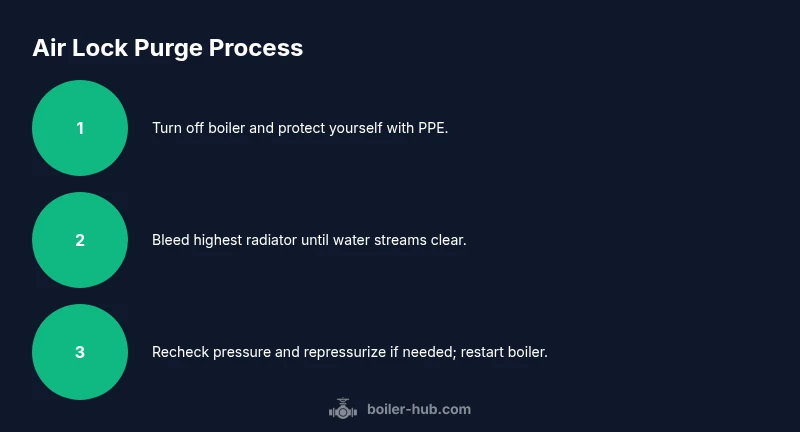
You can usually clear an air lock in an oil boiler by safely purging air from radiators and the boiler’s purge loop. Start by turning off the boiler, bleeding the highest radiators to release trapped air, then check and top up pressure to the manufacturer’s recommended range. This simple process often restores heat quickly.
What is an air lock in an oil boiler and why it matters
Air locks in oil-fired heating systems occur when pockets of air become trapped in the pipes or radiators. These air pockets prevent hot water from circulating efficiently, which can lead to cold spots, knocking noises, and reduced boiler efficiency. According to Boiler Hub, air locks are a common cause of heat loss in homes and small facilities, and addressing them promptly helps maintain consistent heat and system performance. Recognizing symptoms early can prevent unnecessary boiler cycling and fuel waste.
Air locks are not unusual in older systems or after maintenance work. They can form when expansion vessels aren't vented properly, after radiator bleeding, or when the system is refilled after a leak. The goal is simple: replace the air with water so that the water can circulate freely and deliver heat where it’s needed. Understanding the mechanism helps you diagnose the issue faster and reduces the chance of creating new air pockets during the fix.
note":"Each paragraph expands on the concept; keep wording clear and actionable."],
Signs your system shows an air lock
Air locks manifest in several telltale ways. You may notice radiators that stay cold despite the boiler running, kettling noises from the boiler, or uneven heating across rooms. In some cases, the boiler may cycle on and off with little heating output, or pressure fluctuations may be less predictable. If you suspect an air lock, you can perform a quick check by listening for hissing sounds near bleed valves or feeling for cold patches along heating pipes. Boiler Hub’s guidance emphasizes that recognizing these signs early helps you act before more serious problems develop.
Another indicator is a sudden drop in system pressure after maintenance or topping up water. If pressure drops quickly, it could indicate an air lock that’s trapping air or a minor leak that needs attention. In homes with multiple radiators, the highest radiators are usually the first to show air pockets; bleeding them often resolves the issue for the rest of the system.
note":"Symptoms help differentiate air locks from other boiler faults."],
Safety first: prerequisites before you start
Before you touch the boiler or radiators, ensure the area is safe. Turn off the boiler at the wall switch or the boiler’s main power switch and allow the system to cool to avoid scalding or steam burns. Do not work on a hot boiler or live electrical components. Wear protective gloves and eye protection as a precaution. Keep a bucket and towels handy to catch any water.
If your system uses a pressurized purge loop, disconnect power to the purging pump to prevent accidental starts. Always follow local electrical safety guidelines and your boiler manufacturer’s instructions. If in doubt, consult a professional. The Boiler Hub team recommends erring on the side of caution, especially if you observe damp patches, corrosion, or a persistent loss of pressure.
note":"Safety is non-negotiable; use proper PPE and disconnect power when necessary."],
Tools and workspace setup
You’ll need a few common tools to purge air from an oil boiler efficiently:
- Radiator bleed key (or flat screwdriver for some valves)
- Adjustable wrench for bleed valves and purge fittings
- Clean cloths or towels to soak up condensate
- Small bucket or container to collect water
- A hose for purging loops (if your system has one)
- A stable chair or step stool for reaching high radiators
- A flashlight to inspect valves and connections
Set up a clean, dry workspace around the boiler and each radiator you plan to bleed. Have a helper if possible to monitor the pressure gauge while you bleed valves. Boiling or hot components require careful handling; move slowly and watch for steam. boiler maintenance routines from Boiler Hub emphasize keeping the purge area accessible and tidy to avoid slips or accidental valve openings.
note":"List essential tools and prepare the workspace before starting."],
Step-by-step purge overview
Purging a system involves removing air by creating a path for water to push air out of each radiator, then rechecking pressure and ensuring the boiler is refilled correctly. The purge process is straightforward but must be performed methodically to avoid re-entraining air. The sequence typically involves isolating sections of the system, bleeding radiators from the top floor downward, and rechecking flow after each bleed. Following a structured approach minimizes the risk of residual air pockets and ensures consistent heating across rooms.
Throughout the purge, monitor the pressure gauge and listen for air release through the bleed valves. If water or air spurts, let it run until clear water emerges, then close the valve promptly. After completing the radiators, check the boiler’s pressure and top up if necessary according to the manufacturer’s guidelines. For systems with a purge loop, follow the loop procedure to ensure all sections are vented. The overall aim is to restore full circulation without forcing air back into the pipes.
note":"This overview sets the stage for detailed radiator bleeding and pressure checks."],
Bleeding radiators: highest to lowest
Start bleeding from the highest floor radiator first, as air rises. Use the bleed key and a cloth to catch escaping water. When you see a steady stream of water with no air hiss, close the valve. Move to the next radiator in a staircase-like pattern, proceeding downward until all radiators have been bled.
As you bleed, keep the heating on and watch the temperature across rooms. If you encounter a stubborn radiator that refuses to bleed, there may be a larger air pocket further along the system or a closed valve in the circuit. In that case, pause and reassess the purge loop or consider professional assistance. Bleeding at higher points first helps ensure trapped air is removed efficiently.
note":"Bleed from highest radiators downward to prioritize trapped air pockets."],
Purging boiler and re-pressurizing: ensuring proper flow
After bleeding radiators, the boiler itself may still retain air pockets. If your system uses a purge loop, connect the purge hose and follow the manufacturer’s instructions to flush air from the boiler and distribution pipes. When no more air escapes, depressurize the purge loop and check the main system pressure.
Most oil-fired systems require a specific pressure range when cold. Refill slowly to the recommended level, then recheck after the system warms. If pressure rises too quickly or falls unexpectedly, there may be a leak or an air lock that needs a different approach. This step finalizes the purge and sets your system for reliable operation.
note":"Carefully re-pressurize to the manufacturer’s recommended range."],
Post-purge checks and maintenance to prevent future air locks
Once the purge is complete, run the boiler for 10–15 minutes and observe heat distribution in all radiators. Check for signs of continued air pockets, unusual noises, or pressure fluctuations. Inspect fittings and bleed valves for leaks and tighten as needed. Regularly bleeding radiators at the start of the heating season can prevent air locks from forming. Consider installing an auto air vent if your system struggles with air ingress.
Boiler Hub’s guidance suggests scheduling annual maintenance with a qualified technician to check the expansion vessel, pump, seals, and purge provisions. This proactive approach reduces the likelihood of future air locks and extends the life of the boiler. Record readings and maintenance actions for future reference.
note":"Maintenance helps prevent recurring air locks."],
Authority sources
For readers seeking official guidance on boiler safety and heating system maintenance, these sources provide reliable information on related topics:
- https://www.energy.gov/
- https://www.epa.gov/
- https://www.osha.gov/
These sources cover safety considerations, energy efficiency, and general boiler operation practices that support the guidance in this article.
note":"Cite authoritative sources to support safety and maintenance guidance."],
Troubleshooting and common mistakes
Even with careful purging, issues can linger. Common mistakes include bleeding too many radiators at once without monitoring pressure, failing to repressurize correctly, or ignoring signs of a leak. If you notice continuous air return or persistent low pressure, stop and re-evaluate. Sometimes the problem is a faulty pump, a damaged expansion vessel, or a blocked vent. In such cases, contact a professional. Remember, incorrect handling can cause scalding or damage to the boiler.
Tools & Materials
- Radiator bleed key(Also known as a bleed valve key; ensure you have the right size for your radiators (usually 4-6 mm))
- Adjustable wrench(Useful for bleed valve fittings and purge loop connections)
- Flat-head screwdriver(Needed for valves that require a screwdriver to release air)
- Bucket or container(Catch water that escapes from bleed valves)
- Absorbent cloths/towels(Protect floors and dry spills during bleeding)
- Hose for purge loop(Optional if your system supports a purge loop)
- Gloves and eye protection(Personal protection when handling hot components)
- Torch/flashlight(Inspect valves and connections in dark corners)
Steps
Estimated time: 45-60 minutes
- 1
Turn off boiler and let cool
Switch off the boiler at the wall and allow the unit to cool before touching any components. This reduces burn risk and allows condensate to settle. Check that the pressure gauge is stable before you begin bleeding.
Tip: Always test that the boiler is completely off and unplugged if possible. - 2
Bleed the highest radiator first
Start with the highest radiator in your home. Use the bleed key to slowly open the valve until you hear air escaping, then close once a steady stream of water comes out. Collect drained water in the bucket.
Tip: Bleed slowly; rushing can force air deeper into the system. - 3
Proceed to mid and lower radiators
Move methodically from top floor to ground floor, repeating the bleeding process. After each radiator, recheck the room heat to confirm air release improved circulation.
Tip: If a radiator refuses to bleed, there may be a larger air pocket or closed valve elsewhere. - 4
Check boiler pressure
Observe the boiler pressure gauge. It should be within the manufacturer’s recommended range when cold. If low, top up slowly using the filling loop until the correct level is reached.
Tip: Avoid sudden pressure changes; top up gradually and recheck after running the boiler.” - 5
Bleed the purge loop (if present)
If your system has a purge loop, follow the loop’s procedure to flush air from the boiler and distribution pipes. Ensure all air is purged before closing the loop.
Tip: Purge loops help remove air pockets that radiators alone cannot reach. - 6
Restart and test the system
Turn the boiler back on and run for 10-15 minutes. Check radiators for even heat, listen for new air noises, and recheck pressure. If heat returns and no leaks are found, the purge is successful.
Tip: Keep an eye on the first hour of operation to catch residual air quickly.
Questions & Answers
What causes air locks in oil boilers?
Air locks can form when air becomes trapped during refilling after a leak, due to imperfect venting of the expansion vessel, or after radiators are bled. These pockets block water flow and reduce heating efficiency.
Air leaks often happen after refilling or maintenance when air pockets form in pipes. Bleeding radiators and purging the system usually resolves it.
Can I bleed air from radiators alone, or do I need to purge the boiler too?
Bleeding radiators is the first step and often enough to remove most air. If issues persist, purge the boiler or use a purge loop to remove air from the distribution pipes.
Start with radiator bleeding; purge if air remains.
What pressure should the boiler be at after purging?
Most oil boilers should be in the manufacturer’s recommended pressure range when cold. If you’re unsure, consult your boiler manual or a professional. Recheck after the system warms up.
Check that the pressure is in the normal cold range as specified by the boiler manual.
Is it safe to purge air myself, or should I call a pro?
Purging is typically safe for most homeowners, provided you follow safety steps and isolate power when needed. If you encounter high pressure, leaks, or persistent air, contact a qualified technician.
You can try, but stop if you’re unsure or see leaks.
How can I prevent air locks in the future?
Regular radiator bleeding at the start of the heating season helps. Ensure proper venting of the expansion vessel and consider annual boiler servicing to catch issues early.
Maintain the system and schedule annual checks to prevent air locks.
Watch Video
Key Points
- Bleed radiators from top to bottom to release trapped air
- Monitor boiler pressure and repressurize to manufacturer specs
- Use a purge loop if available to remove stubborn air pockets
- Inspect for leaks and signs of recurring air ingress after purging
- Regular maintenance reduces future air lock risk