How to Add Boiler Inhibitor: A Step-by-Step Guide
Learn how to add boiler inhibitor safely and effectively to protect your boiler from corrosion and mineral buildup. This step-by-step guide covers inhibitor types, safety, dosing, and maintenance for homeowners and facility managers.


If you’re looking for a practical, safe method, this guide shows how to add boiler inhibitor with the right product, proper isolation, and accurate dosing. You’ll learn compatibility checks, safety steps, precise measurement, and post-dosing checks to protect metal surfaces and reduce mineral buildup over time. Follow the labeled instructions and Boier Hub’s safe practices for best results.
What is a boiler inhibitor and why you might need one
Boiler inhibitors are chemical additives designed for closed-loop heating and hot-water systems. They form protective films on metal surfaces and sequester minerals to prevent corrosion, scale, and deposits that reduce efficiency. If you live in an area with hard water, or if your boiler runs continuously in a closed loop, adding an inhibitor can extend component life and reduce maintenance needs. The question many homeowners ask is how to add boiler inhibitor. According to Boiler Hub, the process is straightforward when you follow the product label and your boiler manual. The goal is to create a balanced water chemistry that minimizes rust without causing foaming or blockage. This guide walks you through safe, practical steps to add inhibitor, what to watch for after dosing, and how to keep records for future service. Remember: always verify your system type (copper, steel, or cast iron) and if you use any antifreeze or boiler protectants, choose an inhibitor compatible with that mix. With the right prep, you can protect your investment and keep boiler efficiency high.
Types of boiler inhibitors and compatibility considerations
There are several families of inhibitors, including neutral pH phosphates, alkaline inhibitors, and film-forming compounds. The right choice depends on your boiler material (copper, cast iron, steel), whether you have a closed domestic hot-water loop, and the presence of any antifreeze. Inhibitors with silicate or phosphate styles can help control calcium and magnesium scale and form corrosion-inhibiting films. Always confirm compatibility with your boiler manufacturer and with any antifreeze or water-treated fluids in the system. Boiler Hub emphasizes that selecting a product designed for your system type reduces the risk of foaming, discoloration, or reduced heat transfer. Read the label for dosage guidance, compatibility notes, and the required concentration range for your setup.
Safety first: hazards, PPE, turning off boiler
Before touching any chemical additives, power down the boiler and isolate it from the electrical supply. Put on safety glasses, chemical-resistant gloves, and long sleeves to protect your skin. Ensure the system is cool and not actively circulating hot water. If you work near pressurized components, release any residual pressure only after following a safe depressurization procedure. Keep children and pets away while handling inhibitors and cleaning up any spills promptly. These precautions reduce the risk of burns, chemical exposure, or accidental chemical mixing.
Tools and materials you’ll need
- boiler inhibitor product compatible with your system (essential)
- PPE: nitrile gloves, safety glasses (essential)
- measuring cup or dosing syringe (essential)
- clean bucket or container (essential)
- boiler manual or manufacturer guide (essential)
- soft-bristled brush and rag for cleaning (optional but helpful)
- torque wrench or screwdriver set if you need to access service ports (optional)
- flashlight or headlamp (optional)
Understanding dosage and system compatibility
Always start by reading the inhibitor label for dosage instructions and minimum/maximum concentrations. The concentration you aim for must match your boiler type, system water quality, and whether other additives are present. If your water is hard, you may need a higher dose, but exceeding recommended limits can cause foaming or deposits. Work with the boiler manufacturer’s guidance and, if in doubt, consult Boiler Hub or a qualified technician. Keep a log of the exact inhibitor product, batch number, and dosage used for future maintenance. This helps ensure consistency across service intervals and avoids accidental over-dosing.
Step-by-step overview: dosage, circulation, and verification basics
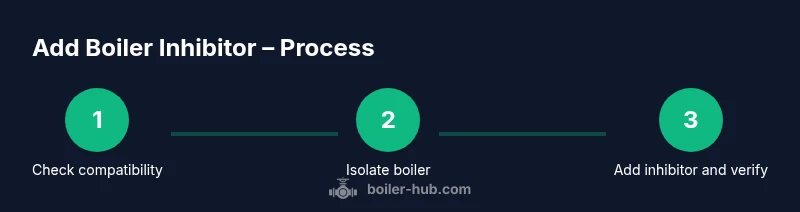
The proper sequence ensures even distribution and accurate dosing without compromising system integrity. Start with a clear plan, secure isolation, and have your label guidance handy. After dosing, run the system briefly to circulate the inhibitor, then recheck pressure and look for signs of proper flow. Documentation of results is essential for long-term reliability. This section summarizes the key ideas, but the detailed step-by-step is provided in the dedicated STEP-BY-STEP block to avoid duplication.
Common mistakes and how to avoid them
Common mistakes include over-dosing, using incompatible products, dosing into a live system, and neglecting to purge air after dosing. Always verify compatibility with your boiler metals and current loop fluids. Avoid mixing products or introducing cleaners during dosing. Taking time to double-check labels and manufacturer recommendations minimizes risks and helps maintain optimum water chemistry.
How inhibitors affect different boiler systems
Copper, steel, and cast-iron boilers each respond differently to inhibitors. Some systems require additional corrosion protection for brass components, while others rely on silicate-based formulations to protect passivated surfaces. Radiant floor systems and hydronic loops have distinct flow characteristics; adjusting inhibitor concentration accordingly helps avoid restricted flow or foaming. Always consider your system’s geometry, piping materials, and any area-specific water chemistry before dosing.
Reading product labels and dosage charts
Product labels provide critical guidance on dosage per quart or liter, concentration targets, and recommended dosing intervals. Some products are designed for annual maintenance, while others require quarterly checks. Look for notes on compatibility with antifreeze, refrigerants, or other additives, and follow any warm-season or cold-season recommendations. Recording the exact product per year ensures consistency in future maintenance and helps you track system condition.
Maintenance scheduling and record-keeping
Create a simple maintenance log to document inhibitor type, dosage, date, system pressure, and observed performance. Schedule annual or semi-annual dosing checks if your water quality or boiler usage warrants it. Regular record-keeping makes it easier to compare performance across seasons and to plan replacements before failures occur. Boiler Hub emphasizes that a disciplined approach to maintenance reduces the risk of unexpected boiler downtime.
Selecting and purchasing inhibitor brands
Choose a widely compatible, label-approved inhibitor from reputable brands that emphasize safe chemistry and field-tested results. Ensure the product is suitable for your boiler type and water chemistry. Consider factors such as resale compatibility with cooling loops, antifreeze mixtures, and any local water supply characteristics. Your selection should align with the boiler manufacturer’s recommendations and your maintenance plan.
When to call a professional
If you’re unsure about your system’s compatibility, if the boiler is under warranty, or if you notice persistent pitting, foaming, or abnormal pressure after dosing, contact a professional. A licensed technician can verify chemistry, perform a proper flush if needed, and ensure the inhibitor is correctly integrated into the system without voiding warranty. Timely professional input saves money and reduces risk of damage.
AUTHORITY SOURCES
- Energy.gov boiler maintenance and safety guidelines: https://www.energy.gov/
- EPA.gov home and boiler safety resources: https://www.epa.gov/
- OSHA.gov safety guidelines for handling chemicals: https://www.osha.gov/
Tools & Materials
- Boiler inhibitor product compatible with your system(Select a product compatible with your boiler type (e.g., copper, steel, cast iron) and water chemistry.)
- Personal protective equipment (PPE)(Nitrile gloves and safety glasses; long sleeves.)
- Measuring cup or dosing syringe(Use the exact dosing tool provided on the label.)
- Clean bucket or container(To collect spills and hold diluted solution if needed.)
- Boiler manual or manufacturer guide(Check specific steps, ports, and safety warnings.)
- Soft-bristled brush and rag(For cleaning any residue around ports.)
- Flashlight or headlamp(For better visibility in a boiler room.)
Steps
Estimated time: 40-60 minutes
- 1
Verify compatibility and read the label
Begin by locating the boiler inhibitor label and confirming compatibility with your boiler materials and circulating fluid. Read dosage instructions carefully and note any warnings about temperature, pressure, or antifreeze interactions. This step prevents accidental misdose and ensures you follow the manufacturer’s guidance.
Tip: Always refer to the label’s compatibility section before opening any product. - 2
Power down and isolate the boiler
Turn off the boiler and disconnect the electrical supply. If your system has a dedicated isolation valve, close it to prevent backflow while you work. Confirm the system is cool before proceeding to avoid burns or scalding from hot components.
Tip: Label the switch or tag it to avoid accidental reactivation. - 3
Relieve pressure safely
If your boiler is pressurized, follow the device’s depressurization procedure. Do not crack pressure vents while the system is hot or under pressure. The goal is a safe, depressurized environment for dosing.
Tip: If in doubt, wait until the system is completely cool and consult the manual. - 4
Access the fill or dosing point
Locate the appropriate dosing point or fill port recommended by the manufacturer. Some systems require opening a dedicated service valve; others may have a dedicated feeder. Keep tools ready and avoid forcing components.
Tip: Keep a clean, dry area around the port to prevent contamination. - 5
Measure the inhibitor dose
Using the dosing tool, measure the exact amount specified for your system. Avoid guessing; precise dosing ensures the inhibitor works as intended without causing foaming or deposits.
Tip: Double-check the measurement against the label’s dosage chart. - 6
Introduce inhibitor to the system
Slowly pour or inject the inhibitor through the dosing point. Allow it to enter the water flow gradually to avoid local concentration surges. Do not mix with cleaners or other additives at this step.
Tip: Keep the dosing point unobstructed to ensure uniform distribution. - 7
Circulate and verify mixing
Run the boiler briefly to circulate the inhibitor through the loop. Observe the flow and listen for any unusual noises. Ensure that the inhibitor is mixing evenly with circulating water.
Tip: If you hear banging or unusual noises, stop and recheck connections. - 8
Check pressure and system response
After circulation, check the boiler pressure and confirm there are no leaks or abnormal readings. Record the dosage, date, and pressure change for your maintenance log.
Tip: Compare current readings with prior logs to spot trends. - 9
Return valves to service and test
Open isolation valves fully and restore power to the boiler according to the manufacturer’s instructions. Monitor the system for a short period to ensure normal operation and response to the inhibitor.
Tip: Do a quick performance check by running hot water taps if it’s a domestic system. - 10
Document and store
Update your maintenance log with product name, batch number, dosage, date, and any observations. Store the inhibitor in its original container away from children and heat.
Tip: Keep records for future dosing cycles and warranty compliance. - 11
Plan next steps
Set a follow-up date aligned with your maintenance schedule and water quality needs. Revisit the product choice if water chemistry has changed or if your boiler configuration has been updated.
Tip: Regular review helps prevent corrosion and scale buildup over time.
Questions & Answers
What is a boiler inhibitor and what does it do?
A boiler inhibitor is a chemical designed to protect metal surfaces from corrosion and to control minerals that cause scale. It forms protective films and improves water chemistry in closed-loop systems. Proper dosing helps maintain efficiency and extend boiler life.
A boiler inhibitor protects metal parts from rust and mineral buildup by keeping the water chemistry balanced. Proper dosing is key.
Is it safe for a homeowner to add boiler inhibitor themselves?
Yes, with careful attention to label directions, appropriate PPE, and proper isolation of the boiler. Some systems may require a professional, especially if warranty constraints or unusual materials are involved.
It can be safe for homeowners if you carefully follow the label, use PPE, and isolate the boiler. If in doubt, call a pro.
Can I mix multiple inhibitors in the same system?
Never mix inhibitors with other chemicals unless the manufacturer explicitly approves it. Use only one inhibitor formulation that matches your boiler material and water chemistry.
Don’t mix different inhibitors unless the manufacturer says it’s okay.
What signs indicate the inhibitor is working or not working?
Signs include stable pressure, no unusual foaming, and improved heat transfer. If you notice foaming, noise, or corrosion signs, recheck compatibility and dosing.
Look for stable pressure and smooth operation; foaming or rust is a warning sign.
How often should I test inhibitor concentration?
Follow the product label’s guidance; many systems are checked during scheduled maintenance or after service work. Regular testing helps ensure the concentration remains within the recommended range.
Check the concentration according to the label, usually with regular maintenance.
What should I do if the boiler is under warranty and I’m unsure about dosing?
Consult the boiler manufacturer’s guidelines or a licensed technician before dosing. Improper maintenance can affect warranty coverage.
If you’re unsure, contact a professional to avoid warranty issues.
Watch Video
Key Points
- Identify compatible inhibitor before dosing
- Follow exact dosage from the label
- Depressurize and isolate the boiler first
- Circulate thoroughly and verify readings
- Maintain a detailed dosing log for future maintenance