How Often Should a Boiler Come On? A Practical Guide
Learn how often should boiler come on, what drives cycling, and practical steps to optimize efficiency. Boiler Hub provides checks, maintenance tips, and guidance on when to call a pro.


According to Boiler Hub, a typical residential boiler cycles on to meet demand and cycles off when the set temperature is reached. In winter, a healthy system may cycle several times per hour, while in milder weather it cycles less often. Frequent short cycling can signal air, pressure, or thermostat issues.
How Boilers Cycle: Understanding the Basics
The cycle of a boiler is a balance between demand for heat and the system's ability to maintain set temperatures. When the thermostat calls for heat, the boiler fires up and begins to raise water temperature in the loop. Once the water reaches the target temperature, the burner shuts off and the system waits for the next demand signal. The question "how often should boiler come on" is best answered by considering your home layout, insulation, and the efficiency class of the boiler. A well-tuned boiler will turn on and off enough to keep comfortable temperatures without wasting energy on constant re-ignition. In many homes, cycling occurs in predictable bursts that align with outdoor temperature changes and interior temperature setpoints. If you notice unusually long off periods followed by rapid re-starts, or vice versa, it may indicate a control issue or a sensor fault. According to Boiler Hub, routine checks of the thermostat, circulator, and pressure can help you gauge normal cycling frequency for your system.
Factors That Influence How Often Your Boiler Comes On
Cycling frequency is not a fixed rule; it shifts with weather, occupancy, and hot-water demand. Dense insulation, smaller living spaces, and efficient radiators reduce heat loss, leading to fewer starts. Conversely, cold outdoor temperatures or high thermostat setbacks drive more frequent cycling to maintain warmth. The type of boiler affects cycle length as well: combi boilers heat water on demand, system boilers rely on a stored supply, and traditional boilers depend on a separate storage tank. In practical terms, households in cold climates often see more frequent cycles than those in milder regions. When evaluating your own boiler, compare observed cycles against typical ranges for your home size and boiler type. This helps you identify whether your frequency is within expected bounds or if adjustments are warranted.
Boiler Types and Cycling: Combi vs. System vs. Conventional
Different boiler configurations have distinct cycling profiles. Combi boilers tend to cycle more often during peaks in heating and hot-water draw because they heat water directly in the unit. System boilers rely on a buffer tank, which can smooth out some cycling but still respond quickly to demand. Conventional boilers, with separate hot water tanks, often show longer cycle intervals but higher energy use during peak calls. The key takeaway is that the same house can display different cycling frequencies depending on boiler type, heat emitters (radiators, underfloor), and whether there is a zone control strategy in place. If you notice a mismatch between your expected and observed cycles, consult the user manual or a professional to verify setpoints and zoning.
Diagnosing Short Cycling: Causes and Quick Fixes
Short cycling—frequent, rapid starts and stops—can waste energy and shorten component life. Common culprits include low water pressure, air in the system, a dirty heat exchanger or filters, improper thermostat placement, and incorrect expansion-tank sizing. Other potential factors include oversized boilers for the load, leaks, or venting restrictions that hinder exhaust. Start with simple checks: verify pressure within the recommended range, bleed radiators to remove trapped air, ensure the expansion tank is functioning, and confirm the thermostat is accurately reading room temperature. If short cycling persists after these checks, a professional diagnosis is warranted to assess the aquastat and overall system balance.
Maintenance Practices to Stabilize Cycling
Preventive maintenance is the best defense against erratic cycling. Schedule an annual boiler service to inspect burners, heat exchangers, and venting. Regularly check and top up water pressure to the recommended range, and replace worn gaskets or seals that can introduce air leaks. Radiator balancing helps equalize flow and minimizes over- or under-heating on individual zones. Finally, ensure expansion-tank pressure matches the system’s requirements and that automatic air vents are unclogged. By maintaining consistent water pressure, clean heat exchange surfaces, and properly balanced zones, you can stabilize how often your boiler comes on and maximize efficiency.
When to Seek Professional Help: Thresholds for Concern
If you notice persistent abnormal cycling after basic checks, or you hear unusual noises, see signs of leakage, or experience significant temperature swings, it’s time to contact a licensed technician. A professional can verify sensor calibration, evaluate the aquastat settings, inspect the venting system, and assess the boiler’s overall sizing for your home. In many cases, addressing a faulty thermostat, pressure imbalance, or a failing expansion tank resolves cycling issues without major replacements. Regular maintenance remains a reliable hedge against disruptive cycling.
Authority Sources and Further Reading
For readers seeking authoritative guidance, refer to energy and environmental agencies that outline safe and efficient boiler operation. This section compiles key external references to support the practical steps above.
Authority Sources
- https://www.energy.gov/eere/buildings/boilers
- https://www.energy.gov/energysaver/heating-and-cooling/boilers
- https://www.epa.gov/iaq/boilers
Boiler cycling indicators and related operating ranges
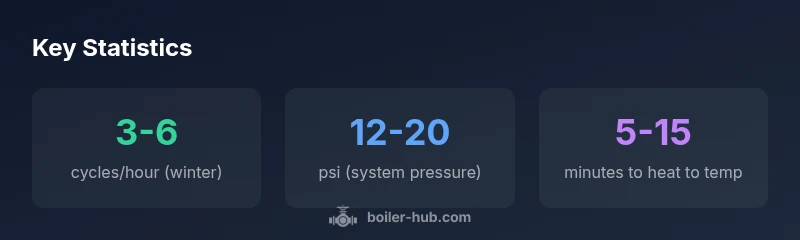
| Aspect | Typical Range | Notes |
|---|---|---|
| Cycle frequency (winter) | 2-8 cycles/hour | Varies with demand and home size |
| System pressure range | 12-20 psi | Most boilers run within this band when cold to near setpoint |
| Heat-up time to target temp | 5-15 minutes | Depends on boiler type and heating load |
Questions & Answers
How often should boiler come on in winter?
In winter, the boiler cycles more as it fights against greater heat loss. A healthy system shows predictable cycles and should not constantly chatter. If you observe frequent short cycles, check thermostat settings, pressure, and expansion tank.
In winter, expect more frequent cycling to maintain warmth, but persistent short cycles mean you should inspect key components.
What is short cycling and why is it bad?
Short cycling is when the boiler turns on and off rapidly. It wastes energy, strains components, and can shorten equipment life. Diagnosing causes like low pressure or air in the system is essential.
Short cycling wastes energy and can harm the boiler; address pressure and air in the system.
Can thermostat location affect cycling?
Yes. If the thermostat is far from the living area or shadowed by heat sources, it may read inaccurately and trigger unnecessary starts or fails to call for heat when needed.
Location matters; place the thermostat where it reads true room temperature.
Will lowering the thermostat increase cycling?
Lowering the temperature reduces overall demand, which can reduce cycling. However, setting it too low can cause the boiler to work harder to reach the desired temperature, potentially increasing cycling.
Lowering the setpoint can help, but set it appropriately to avoid inefficient cycling.
When should I call a professional for cycling problems?
If basic checks (thermostat position, pressure, venting) don’t restore normal cycling, or you hear leaks or see corrosion, schedule a professional diagnostic promptly.
If cycling remains abnormal after checks, call a licensed boiler technician.
How does maintenance affect cycling?
Annual servicing and periodic checks keep the system balanced, reduce eccentric cycling, and extend boiler life by maintaining proper pressure and venting.
Regular maintenance helps keep cycling steady and efficient.
“Boiler cycling is a normal part of heat delivery, but persistent short cycling signals a deeper imbalance that warrants inspection.”
Key Points
- Identify your baseline cycling frequency for your home and boiler type
- Check thermostat placement and calibration to avoid false readings
- Maintain proper system pressure to prevent short cycling
- Regular maintenance reduces unnecessary starts and stops
- Consult a licensed technician for persistent cycling issues