How Often Should an Oil Boiler Be Serviced
Discover how often should an oil boiler be serviced to keep it safe, efficient, and reliable. Boiler Hub analyzes typical maintenance schedules and practical tips for homeowners and facility managers.


Learn how often should an oil boiler be serviced: most oil boilers should be serviced annually by a qualified technician to keep them safe and efficient. If your boiler runs hot, shows warning lights, or powers off unexpectedly, service sooner. Regular annual servicing, plus a CO detector check, helps prevent breakdowns and costly repairs. Boiler Hub's guidance also emphasizes scheduling during a convenient season and combining service with a flue inspection.
Why regular servicing matters for oil boilers
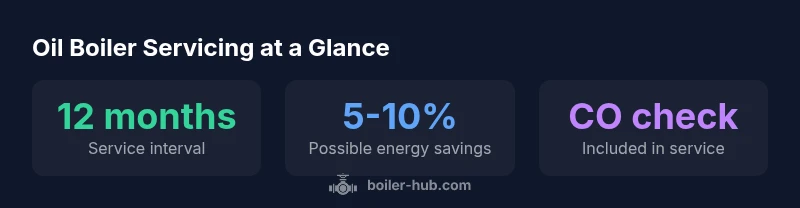
According to Boiler Hub, how often should an oil boiler be serviced is typically answered with a yearly service. This ensures safety, reliability, and sustained efficiency. An annual visit by an OFTEC-registered technician covers burner inspection, safety checks, flue assessment, and internal cleaning. Between visits, homeowners should monitor for signs like unusual flame color, soot at the outlet, or unusual boiler shutdowns. Regular servicing also helps comply with safety regulations and can extend boiler life, especially during the winter months when demand is highest. A clean, well-tuned burner operates more efficiently, producing fewer emissions and reducing fuel waste. By scheduling service in a predictable season, you minimize the chance of weather-driven breakdowns and can plan for potential repairs before peak heating season begins. This section explains the broad rationale behind the standard 12-month cadence and what factors might justify more frequent visits.
What a typical service covers
A standard oil boiler service is more than a quick flame check. It includes a comprehensive safety assessment, burner adjustment, and calibration, as well as a thorough inspection of the fuel line, oil nozzle, pump, and filtration. Technicians inspect the flue and venting to ensure there is no dangerous buildup or leaks and test carbon monoxide detectors and smoke alarms in the property. They also check boiler pressure, thermostat accuracy, electrical connections, and control safety devices. Finally, the technician cleans or replaces air and oil filters, tests ignition, and reviews airtight seals and condensate management. After the visit, you receive a written report detailing any findings, recommended actions, and a schedule for the next service. Regular service notes fuel efficiency changes and potential safety risks, helping homeowners budget for maintenance rather than unexpected repairs.
Factors that affect service frequency
Several variables influence how often an oil boiler should be serviced beyond the standard 12-month rule. Boiler age and build quality matter—the older or lower-cost units may benefit from more frequent checks, sometimes every 6–12 months. Usage patterns matter too: households with heavy winter heating loads or large homes may push the service window earlier in the year. Commissioning history and prior fixes can also influence cadence; if a previous fault was resolved with a recent service, you might extend intervals slightly. Fuel quality, combustion efficiency, and venting condition affect performance and safety; poor-quality fuel can clog nozzles or degrade the burner, warranting more frequent check-ins. Finally, installation specifics such as outdoor weather exposure, chimney integrity, or recent power outages can create conditions where more frequent servicing is prudent.
How to schedule and prepare for servicing
To schedule, verify the technician is OFTEC-registered or equivalent in your region, and request a written estimate that outlines the scope of the service. Gather your boiler’s make, model, and last service date, and have relevant warranty documents on hand. Prepare the workspace by clearing access to the boiler, turning off the supply as advised by the technician, and ensuring there is a safe area for technicians to work. On the day of service, confirm carbon monoxide detectors are functional and note any unusual symptoms from household occupants. After the service, keep the report accessible and set a reminder for the next annual service. Planning ahead can save time and reduce the risk of gaps between services, which Boiler Hub analysis shows correlate with higher maintenance costs.
Common mistakes that invalidate servicing
Common mistakes include using an unqualified contractor, which can lead to improper adjustments or safety failures. Skipping post-service safety tests or neglecting CO detectors after servicing can leave the home at risk. Some homeowners attempt to DIY minor maintenance, which should be avoided for oil-fired systems due to flame, pressure, and fuel hazards. Failing to replace worn components, such as filters or seals, during a service can reduce efficiency and exacerbate emissions. Finally, failing to document the service or neglecting to schedule the next visit can create maintenance gaps that undermine the long-term reliability of the boiler.
Maintenance you can do between services
Between professional visits, homeowners can perform safe, basic upkeep that supports performance. Bleed radiators to remove air pockets and check the boiler pressure regularly against the manufacturer’s recommended range. Keep the area around the boiler clean and free of dust, inspect for signs of fuel leaks, and replace accessible air filters if the model allows. Install or test a carbon monoxide detector on every floor and ensure alarms work. Note any changes in flame color, unusual noises, or performance drops and schedule a service if concerns arise. These small steps help preserve safety and efficiency between annual checks.
When to consider servicing more often
If you have an older boiler or a high-usage building, more frequent servicing—every 6 to 12 months—may be appropriate. Properties with extended periods of inactivity, frequent cold starts, or inconsistent heat distribution might also benefit from shorter cadences. If an appliance has recently undergone fuel changes, nozzle wear, or repairs on the burner, a follow-up service can verify that adjustments remain stable. For households with vulnerable occupants, including children or elderly residents, scheduling flexibility around winter demand is prudent for safety and comfort.
Choosing a servicing professional
Choose a technician with OFTEC registration or equivalent credentials, and ask for current insurance coverage and client references. Request a written quote that outlines the service scope and any parts that may be required. Compare multiple quotes and verify that the technician will perform a CO safety check, a burner tune, flue inspection, and a post-service report. Inquire about arrival windows, warranty on work performed, and whether the provider offers priority service during peak months. Finally, check online reviews and confirm that the technician follows local safety regulations and environmental guidelines.
Quick-reference cadence by region
Note that service cadences can vary by country and local regulations. In regions with stricter CO safety standards or harsher winters, annual service is often paired with an additional mid-year check. Always align your schedule with local guidance and your boiler manufacturer’s recommendations. Boiler Hub recommends confirming the service scope, including safety tests, burner adjustments, and flue integrity, and keeping a proof-of-service record for warranty and regulatory compliance.
Service cadence and considerations for oil-fired boilers
| Aspect | Recommended Frequency | Notes |
|---|---|---|
| Oil boiler service interval | 12 months | Annual safety and efficiency checks |
| Older/high-use boilers | 6-12 months | More frequent checks may be prudent |
| Safety checks included | Always | CO safety, flue integrity, burner calibration |
Questions & Answers
How often should an oil boiler be serviced?
Most oil boilers should be serviced annually by a qualified technician. The frequency may increase for older or high-usage systems. Always follow the manufacturer’s guidance and your local regulations.
Typically, oil boilers should be serviced once a year by a qualified technician. If you have an older or heavily used system, you may need service more often. Always follow your manufacturer's guidance.
Can I service an oil boiler myself?
No. Servicing an oil boiler involves handling fuel systems, burners, and flues, which present fire and CO risks. Use a qualified technician registered with the appropriate body in your region.
No—oil boiler servicing should be done by a qualified technician to avoid safety risks and warranty issues.
What does a boiler service check include?
A typical service includes safety tests, burner adjustment, flue inspection, CO detector check, filter replacement, and a written report. It confirms safe operation and identifies potential issues before failure.
A service includes safety tests, burner tuning, flue check, CO detector test, and a written report on findings.
What are signs I need an emergency service?
If you notice gas odor, abrupt flame color change, soot buildup, unusual noises, or a boiler that's not heating properly, contact emergency services or a technician promptly.
If you smell gas, see a odd flame, or hear banging, call for urgent service right away.
Does servicing affect warranty?
Regular servicing is often required to maintain warranty coverage. Keep records of all services and follow the manufacturer’s maintenance schedule to protect warranty rights.
Yes, keep up with service schedules to protect your warranty.
How much does a typical service cost?
Prices vary by region and complexity, but expect a range that reflects safety checks, burner tuning, and parts. Get multiple quotes and verify what’s included in the service.
Costs vary; compare quotes and ensure CO checks and safety tests are included.
“"Regular oil boiler servicing isn’t just about keeping the heat on—it’s a safety and efficiency investment that reduces risk and extends equipment life."”
Key Points
- Schedule annual oil boiler servicing with an OFTEC-registered technician
- Combine service with a CO check and flue inspection
- Act quickly on warning signs between services
- Keep records and plan ahead for the next service
- Choose a qualified, insured professional