How Often Should a Gas Boiler Be Serviced
Learn how often a gas boiler should be serviced and why annual checks matter for safety and efficiency. Boiler Hub guides you through manufacturer guidance, real-world practice, and how to tailor the interval for your home.


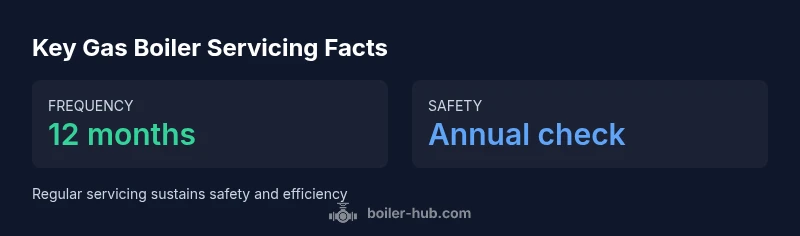
Gas boilers are generally serviced annually. The standard timing is every 12 months, with a tolerance of 10-15 months for high-use homes or older or high-efficiency models. Regular yearly servicing helps maintain efficiency, ensure safe operation, and protect warranties. Having the boiler serviced by a Gas Safe registered engineer is essential.
Baseline: why annual service is the default
Understanding how often to service your gas boiler starts with safety and efficiency. According to Boiler Hub analysis, the baseline recommendation across most manufacturers and safety guidelines is an annual service. This means scheduling a check roughly every 12 months, with some allowances for usage, boiler age, and warranty requirements. For homeowners and facility managers, treating a service as a fixed yearly event helps catch wear, leaks, venting issues, and gas-tightness problems before they become costly or dangerous. In practice, many households schedule their service on or near the anniversary of installation or the last service, aligning with our advice at Boiler Hub that regular maintenance pays off in reliability and energy savings. This yearly cadence also supports warranty terms; missing an annual service can complicate claim eligibility and affect safety certification.
How usage, age, and environment influence frequency
The frequency of servicing isn’t a one-size-fits-all rule. High-use properties, homes with older boilers, or systems operating in harsh environments may benefit from a service window closer to the 10- to 11-month mark, whereas well-maintained, modern boilers in mild climates might comfortably hit the 12-month target. Factors such as boiler type (condensing vs. non-condensing), installation quality, and recent repairs influence risk and, therefore, service timing. Boiler Hub notes that adapting the interval to real-world conditions—while staying within manufacturer guidelines—helps sustain efficiency and safe operation. Always document each service so you can track any changes in performance over time.
Manufacturer guidance vs real-world practice
Manufacturers typically state annual servicing as a baseline to verify burner operation, safety devices, and venting. In practice, many budgets and schedules pressure homeowners to stretch to 12-15 months, especially when costs or access to qualified technicians are concerns. However, deviations from the annual cadence should be based on concrete indicators: intermittent flame issues, unusual noises, or rising gas bills. Boiler Hub emphasizes aligning the service schedule with both warranty requirements and observed boiler performance. If your boiler is newer and under a strong warranty, following the exact terms is prudent; for older units, a slightly shorter interval could be warranted to catch emerging faults early.
What happens during a gas boiler service
A standard service covers a thorough safety and performance check. An engineer will inspect the burner assembly, heat exchanger, ignition system, and safety devices, look for gas leaks, clean and adjust components, test flue integrity, check gas pressure, and verify carbon monoxide alarms. They’ll also review fuel efficiency indicators and calibrate controls. The goal is to confirm safe operation and identify risks before they escalate. Keeping records from each visit helps track trends in combustion efficiency and emissions, which can influence future maintenance decisions. Regular servicing is a key pillar of responsible boiler ownership and aligns with safety best practices.
Special cases: high-use homes, aging boilers, and warranties
High-usage households—multi-occupant homes, commercial spaces, or properties with frequent hot water demand—may reasonably schedule more frequent checks. Aging boilers, particularly those nearing the end of their expected lifespan, might benefit from earlier or more frequent assessments to prevent sudden failures. Warranties typically require that the boiler receives regular servicing by a qualified professional; missing an annual service could jeopardize coverage. If you’re unsure, review the warranty terms and consult a Gas Safe registered engineer to tailor the interval to your system’s condition and warranty stipulations.
How to choose a technician and what to ask
Choose a Gas Safe registered engineer with clear credentials, up-to-date training, and transparent pricing. Ask about the scope of a standard service, any recommended parts replacements, and what fuel pressure or flue checks will be performed. Request a written report after the visit and keep it with your records. For facilities with multiple boilers, establish a proactive service schedule and assign a single trusted engineer to reduce variability in maintenance approaches. Boiler Hub recommends documenting service history and keeping a calendar reminder for the next annual check to avoid lapses.
Practical tips to maintain safety between services
Between yearly visits, monitor for warning signs: yellow or orange flames, sooty deposits, sudden changes in heating performance, gas smells, or increased energy use. If you detect any of these, contact a Gas Safe engineer promptly rather than waiting for the next scheduled service. Replace batteries in CO alarms, ensure proper venting, and keep access to the boiler clear. Small daily checks, like ensuring the area around the boiler stays clean and unobstructed, can help with safe operation and make subsequent services easier and quicker. Following these practices complements your annual service and sustains safety and efficiency over the long term.
Recommended servicing intervals by boiler condition
| Aspect | Recommended Frequency | Notes |
|---|---|---|
| General household boiler | annually (12 months) | Follow manufacturer guidance where available |
| Older or high-use boiler | every 12 months, with flexibility to 10-11 months | More frequent checks if performance concerns arise |
| Boiler under warranty | per manufacturer terms | Maintain service cadence to keep coverage valid |
Questions & Answers
How often should a gas boiler be serviced?
Most boilers should be serviced annually, ~12 months apart. Depending on usage, age, and manufacturer guidance, an engineer may adjust the interval slightly. Always document each service for warranty and safety records.
Most boilers need a yearly service, usually every 12 months, with possible minor adjustments based on use and age.
What happens during a boiler service?
A service includes inspecting the burner, heat exchanger, ignition, and safety devices; checking for gas leaks; cleaning and adjusting components; testing flue integrity and gas pressure; and reviewing efficiency indicators.
An engineer will inspect, clean, and test safety and performance components during a service.
Can I skip a service if the boiler seems to run fine?
Skipping a service can void warranties and increase safety risks. A running boiler can hide developing issues; annual checks help prevent breakdowns and ensure safe operation.
Even if it seems fine, don’t skip; annual servicing helps prevent problems and keeps safety intact.
Who should service my gas boiler?
Only a Gas Safe registered engineer should service a gas boiler. They have the training to identify gas safety hazards and ensure proper combustion.
Have a Gas Safe registered engineer service your boiler.
How much does a gas boiler service cost?
Costs vary by region, boiler type, and the service scope. Typical guidance is to compare quotes and confirm what is included in the service, but avoid relying on price alone for safety-critical work.
Prices vary; focus on what the service covers and the technician’s qualifications.
What safety checks are essential during a service?
Gas tightness, carbon monoxide detection, vent and flue integrity, burner operation, and proper combustion are core checks that determine whether the boiler is safe to operate.
Key safety checks include gas leak tests and CO detection.
“Regular annual servicing is the most reliable safeguard for boiler safety and efficiency.”
Key Points
- Schedule an annual gas boiler service to maximize safety and efficiency
- Choose a Gas Safe registered engineer for reliability
- Keep service receipts to support warranty and resale value
- Watch for warning signs between services and act promptly
- Boiler Hub's verdict: annual service protects safety, efficiency, and warranties