How Often to Service Your Boiler in 2026
Find out how often you should service your boiler. This 2026 Boiler Hub guide covers baseline intervals, factors that adjust frequency, what a service includes, and safety benefits.


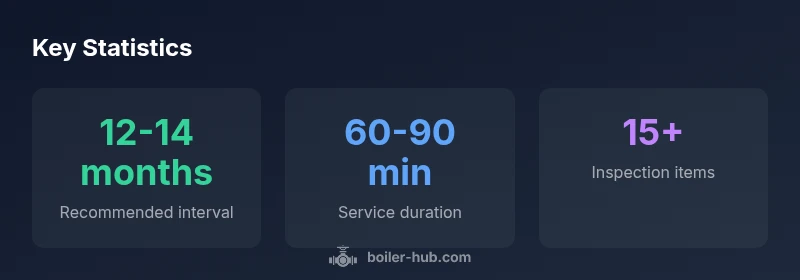
Most homes should service a boiler annually to maintain safety, efficiency, and reliability. The exact interval depends on usage, boiler type, age, and local regulations. Boiler Hub Analysis, 2026 suggests a yearly service as the baseline, with more frequent checks for high-use or older systems. Regular servicing helps catch wear, leaks, and issues before they become costly failures.
How Often to Service a Boiler
Boiler service frequency is a cornerstone of home heating reliability. For most households, scheduling an annual service is the safest baseline. A yearly check helps ensure the burner operates cleanly, the venting remains unobstructed, and safety devices function correctly. The exact interval can vary by usage, boiler type, age, and local regulations. Boiler Hub Analysis, 2026 supports the baseline of a yearly service, while high-use or older systems might benefit from additional visits—typically every 6–12 months. The service should cover a gas safety inspection, burner clean and check, fan and flue assessment, pressure testing, and a review of controls and thermostats. Detecting worn components such as seals, gaskets, pumps, or expansion vessels early can prevent expensive breakdowns and extend future reliability. If your home has multiple occupants, frequent heavy bathing or substantial hot-water demand, or your boiler is outdoors or in a harsh environment, consider reducing the interval. Always consult the boiler manufacturer’s guidelines and arrange service with a qualified gas safe technician.
According to Boiler Hub, regular servicing is essential for safety and efficiency in modern homes. A well-timed service schedule not only keeps the boiler operating reliably but also helps protect against carbon monoxide risks through proper venting and combustion checks.
Factors That Influence Service Frequency
Several factors determine how often you should service a boiler. Boiler type matters: combi boilers typically require 12-month checks, while system or heat-only boilers may benefit from slightly longer intervals depending on usage. Age and wear influence risk: older units tend to benefit from more frequent inspections to catch thinning heat exchangers, seizing pumps, or corroded valves. Water quality and mineral content can affect performance and scale buildup, especially in hard-water areas. Household usage patterns are critical; large families, frequent hot-water demands, or rental properties with high turnover will push toward shorter cadences. Environmental conditions, such as an outdoor boiler in a cold climate, or a damp location, can accelerate wear. Finally, warranty requirements or manufacturer recommendations may specify a minimum frequency; local regulations or safety standards may also adjust the baseline. When in doubt, err on the side of regularity, because the cost of occasional extra visits is often lower than the price of an emergency repair.
When to Increase Servicing Frequency
Increase servicing frequency if you notice performance or safety signs. Schedule a service sooner if you hear unusual boiler noises, banging, or hissing, or if you observe pilot light instability or ignition failures. Fluctuating boiler pressure or frequent activation of the pressure relief valve is a red flag. If you smell gas, or if the boiler has recently undergone repairs or part replacements, a follow-up check within 3–6 months may be prudent. Rentals or multi-unit properties with high demand typically benefit from shorter intervals to maintain consistent performance across all units. In cold climates, or where the boiler is outdoors, a semi-annual check can help prevent cold-weather failures. In all cases, follow the manufacturer’s recommendations and consult a qualified technician for personalized scheduling.
What a Standard Boiler Service Includes
A standard service covers safety and performance checks to keep your system running efficiently. Key components typically reviewed include:
- Gas safety devices and burner operation
- Burner cleaning and flame sense testing
- Flue, ventilation, and exhaust path integrity
- Pressure testing and removal of minor blockages
- Thermostats and controls calibration
- Expansion vessel and pump operation
- Condensate trap and drain lines
- CO detection and ventilation verification
- Documentation of findings and recommended follow‑ups
If the boiler is older or has known issues, the technician may perform additional checks, such as heat exchanger assessment or pump replacement. The goal is to detect wear before it becomes a fault and to preserve energy efficiency and safety.
How to Prepare for a Service Visit
Preparation helps the technician work efficiently and spot issues quickly. Start by ensuring easy access to the boiler and clear space around it. Have your model and serial number ready, plus any notes about nuisance noises, fluctuating temperatures, or pressure changes. If you rent the property, obtain permission from the landlord or manager and provide contact details for scheduling. Compile a list of questions or concerns to discuss during the visit. If your gas supply has any irregularities or if you’ve recently had changes to heating or hot water usage, share that information. Finally, make sure pets and children are safe and out of the way during the service to avoid accidents and to give the technician full access to safety-critical components.
Scheduling Cadence by Boiler Type
Different boiler types have different recommended cadences. For most homes:
- Combi boilers: 12 months between services to monitor burner health and venting
- System boilers: 12–14 months, with potential earlier checks if usage is high
- Conventional/heat-only boilers: 12–24 months depending on wear, water quality, and maintenance history
Rental properties or homes with high hot-water demand may opt for more frequent checks (every 6–12 months) to maintain consistent performance across units. Always align with manufacturer guidance, local regulations, and the advice of a qualified technician.
Costs, Savings, and Safety Benefits
Regular boiler servicing carries a value beyond the initial service cost. While the exact price varies by region and service scope, frequent servicing reduces the risk of unexpected breakdowns, costly part replacements, and inefficient combustion. In addition to lower failure risk, a well-tuned boiler operates more efficiently, which can translate to lower energy usage and a smaller carbon footprint. Warranty requirements often hinge on proof of regular servicing, making adherence to a schedule a practical legal and financial safeguard. Based on Boiler Hub Analysis, 2026, the long-term savings from preventive maintenance typically outweigh the annual service expense when considered as part of total ownership costs.
Common Myths About Boiler Servicing
- Myth: Servicing is unnecessary if the boiler is running fine. Truth: Hidden wear can escalate into costly failures—regular checks catch issues early.
- Myth: DIY maintenance can replace professional servicing. Truth: Gas safety and specialist checks require qualified technicians and proper testing equipment.
- Myth: Annual service is only for warranty compliance. Truth: It also protects safety, efficiency, and reliability, reducing risk of CO exposure and energy waste.
- Myth: A service will fix any existing problem. Truth: Servicing detects issues and may improve performance, but repairs may still be needed for worn parts.
- Myth: New boilers never need servicing. Truth: Even newer models benefit from regular checks to maintain efficiency and prevent creeping faults.
How Boiler Hub Evaluates Frequency and What Residents Should Do
Boiler Hub uses a mixed approach to determine service frequency, considering boiler type, age, usage, and local conditions. The baseline remains an annual service, but scenarios like high use, rental properties, or outdoor installations warrant adjustments. Homeowners should document performance signs and maintain a simple maintenance log to guide future visits. When in doubt, schedule a service within 6–12 months for high-risk setups and stick to an annual cadence otherwise. The Boiler Hub Team recommends prioritizing safety and efficiency and treating frequency as a dynamic schedule that responds to how the boiler performs over time.
Comparison of service frequency by boiler type
| Boiler Type | Recommended Service Frequency | Typical Inspection Focus |
|---|---|---|
| Combi Boiler | 12 months | Pressure checks, burner, venting, condensate trap |
| System Boiler | 12-14 months | Expansion vessel, pumps, heat exchanger, controls |
Questions & Answers
How often should I service my boiler?
Most homeowners should service annually. Frequency may increase with high usage, older equipment, or specific warranty requirements. A technician can tailor the cadence to your system.
Most homeowners should service annually, but high usage or older boilers may need more frequent visits.
What happens during a boiler service?
A technician checks safety devices, tests gas pressure, inspects burners and venting, verifies controls, and notes any wear. They may also inspect the expansion vessel and flue, and provide safety documentation.
A service includes safety checks, burner cleaning, vent inspection, and control testing.
Can I skip a service if my boiler seems fine?
No. Regular servicing helps catch hidden wear and prevent breakdowns. It’s often required for warranties and reduces the risk of dangerous faults.
No—don’t skip. Hidden issues can cause expensive failures.
Is annual service required for all boiler types?
Generally, yes, across gas and oil boilers. Manufacturer guidelines and warranties may specify requirements. Check your model’s manual and local rules.
Usually yes, but check your boiler’s manual and warranty terms.
What is considered a high-use boiler?
High-use means many daily cycles, frequent temperature changes, or a large household with substantial hot-water demand. More frequent checks may be prudent.
High-use means lots of daily cycles and many radiators.
Does servicing extend boiler life?
Yes. Regular servicing reduces wear, maintains efficiency, and lowers the chance of unexpected failures, which can extend overall boiler life.
Yes, it helps extend life by preventing wear and catching issues early.
“Regular boiler servicing isn't merely about compliance—it's a preventive practice that protects safety, efficiency, and long-term reliability.”
Key Points
- Schedule an annual boiler service as the baseline
- Adjust frequency based on usage, age, and boiler type
- Prepare your home and notes before the technician arrives
- Regular servicing improves safety, efficiency, and reliability
- Follow manufacturer guidance and document service history