How Often Should a Boiler Be Serviced by Law in 2026
Understand boiler servicing requirements in 2026: who must service, how often, and how to stay compliant for homes and rentals. A practical, evidence-based overview from Boiler Hub.


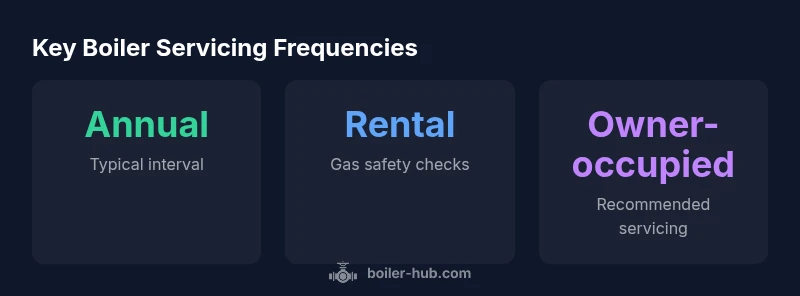
Generally, there is no universal law mandating a fixed boiler service interval for all property types. In many regions, rental properties require an annual gas safety check performed by a licensed engineer, while owner-occupied homes often have no legally mandated service deadline. Always verify local regulations, and check any warranty or insurance requirements that could affect your servicing cadence.
The legal baseline: what 'by law' actually means
In most jurisdictions, there is no universal rule that prescribes a fixed boiler servicing interval for every homeowner. The law often distinguishes between rental properties and owner-occupied homes. For rented dwellings, landlords are commonly required to ensure an annual gas safety check is completed by a licensed engineer and to obtain a certificate of compliance. For owner-occupied residences, there is usually no statutory deadline to service, but neglecting regular servicing can breach warranty terms, insurance requirements, or local safety codes. Boiler Hub analyses in 2026 show that the practical expectation across regions is a yearly cadence for safety checks and preventive maintenance, with some places requiring more frequent actions in high-risk settings.
Who is affected: homeowners vs landlords
Understanding who is bound by the rules helps planning. If you own and live in the property, there is frequently no explicit legal deadline to service; however, you may still be required by lender terms, insurance policies, or product warranties to maintain the boiler. If you rent out a property, the landlord must typically arrange an annual gas safety check and maintain records. Tenants aren’t usually responsible for scheduling the mandatory safety check, but they should cooperate with access. The upshot: for landlords, yearly checks are the baseline compliance step; for owners, servicing remains a critical safety habit, though not always codified by law.
Regional variations you should know
Regulatory landscapes vary widely. Some jurisdictions require written proof of safety checks and service logs, and they may specify who can perform the work. Others leave maintenance to private arrangements between homeowners and service providers. If you reside in an area with safety standards, you may also face regular inspections tied to insurance or energy efficiency programs. Because laws change, it’s essential to consult local housing authorities or a qualified boiler technician who understands the applicable rules. Boiler Hub's analysis for 2026 emphasizes that the safest approach is a predictable annual cadence, plus additional checks after major weather events or if you notice performance changes.
What counts as a service vs a safety check
A service is a preventive maintenance visit where a technician inspects, cleans, tunes, and tests components to preserve efficiency and prolong life. A safety check focuses on identifying hazards—gas leaks, poor ventilation, carbon monoxide risk, flue integrity. In law-driven contexts (e.g., rental properties), the mandated action is often the safety check, sometimes bundled with a general service. For owner-occupied homes, a yearly service is recommended to catch wear and tear before failures occur, but it may not carry a legal penalty if skipped.
How regulations verify and enforce
Enforcement typically relies on certificates or logs kept by the property owner or landlord. A competent professional issues a report after each visit, which becomes part of the property’s compliance record. When authorities audit rental properties, they may require proof of an annual gas safety check and may issue penalties or mandates to remedy deficiencies. Insurance and warranty agreements may also stipulate service intervals; if these documents are not followed, coverage can be jeopardized. The key is proactive documentation.
How to verify a technician's credentials
Ask for current license/registration numbers and proof of competence. Verify credentials with the regulatory body or energy safety regulator in your area. Ensure the technician carries appropriate liability insurance and adheres to safety standards. When possible, choose technicians who can provide a written plan for both safety checks and preventive maintenance.
Keeping records and documentation
Store copies of service reports, gas safety certificates, and any warranty paperwork in a dedicated place (digital and physical). Create a simple calendar reminder for annual servicing. If you rent, ensure tenants have access to the safety certificate; many jurisdictions require that copies be available for inspection by authorities. Maintaining organized records helps you demonstrate compliance during audits and eases future maintenance.
Practical steps for staying compliant in 2026
Start by confirming whether your property is rental or owner-occupied and check the lease, mortgage, and insurance terms for service requirements. Contact a licensed boiler technician to schedule an annual service and safety check. Set reminders or enroll in a maintenance program offered by service providers. Document every visit with a certificate and keep receipts for parts or adjustments. Review local regulations each year, as laws can change.
12-month action plan for compliance
Month 1: verify property status (rental or owner-occupied) and locate your local regulator’s guidance. Month 2-3: select a registered technician and book the annual service. Month 4-6: collect and file all safety certificates. Month 7-12: re-check contract terms with insurers and landlords, and prepare notes for any upcoming regulatory updates.
Service cadence by scenario
| Scenario | Recommended interval | Notes |
|---|---|---|
| Owner-occupied home | Annual servicing (recommended) | Safety and efficiency focus |
| Rental property | Annual gas safety check (legally required in many regions) | Landlord obligations; not a service per se |
| Commercial/industrial boilers | Regulated by sector-specific rules | Consult local regulations |
Questions & Answers
Is boiler servicing legally required for homeowners?
In many places there is no universal legal deadline for homeowners to service a boiler. Laws often apply to rental properties, while owner-occupied homes rely on safety best practices, warranty terms, and insurance requirements. Always check local regulations.
There isn’t a single nationwide rule for homeowners, but safety best practices still apply.
Do rental properties require annual boiler servicing by law?
Most jurisdictions require landlords to arrange an annual gas safety check performed by a licensed engineer and to keep the certificate on file. These checks are legally mandated in many areas for rental properties.
Yes, rental properties typically have annual safety checks mandated by law.
What is the difference between a boiler service and a safety check?
A service includes maintenance, cleaning, and performance checks. A safety check focuses on risk factors like gas leaks and ventilation. Legal requirements often emphasize the safety check, sometimes bundled with a service.
A service is maintenance; a safety check is about safety hazards.
How can I verify a technician’s credentials?
Ask for current license/registration numbers and proof of competence. Verify with the local regulator and ensure the technician has liability insurance and proper safety training.
Ask for licenses and certificates and verify them with the regulator.
What records should I keep after servicing?
Keep the service report, gas safety certificate, and any warranty documents. Store copies digitally and physically and organize them for easy access during audits or insurance reviews.
Save the reports and certificates in a safe place.
What should I do if servicing is delayed?
If safety concerns arise, do not delay—contact a pro immediately. For rental properties, inform the landlord and tenants as required by local regulations and lease terms.
Don’t delay if you suspect a problem—get a pro, and follow local rules.
“Regular boiler servicing isn't just about efficiency; it's a fundamental safety measure that reduces carbon monoxide risks and equipment failures.”
Key Points
- Immediately verify local boiler servicing laws for your property
- Rental properties usually require annual gas safety checks
- Owner-occupied homes should plan for yearly servicing, though not always mandatory by law
- Keep a detailed service log and safety certificates for audits
- Use licensed technicians and verify credentials before any work
- Align servicing with warranty and insurance requirements to avoid coverage gaps
- Set up reminders to maintain an annual servicing cadence
- Laws can change; re-check regulations annually for compliance