Double Boiler Soap Making: A Complete How-To Guide
Learn the safe, reliable way to craft soap using a double boiler. This step-by-step guide covers equipment, safety, temperature control, fragrance choices, curing, and storage for melt-and-pour and cold-process soaps.


Goal: Make soap safely using a double boiler, achieving smooth melt and even heat distribution for consistent texture. Key gear includes a heat-safe double boiler, thermometer, scale, silicone spatula, mold, and safety gloves. Whether you’re making melt-and-pour or cold-process soap, this method minimizes scorching and helps maintain stable temperatures for reliable trace and curing. According to Boiler Hub, careful heat control improves both texture and safety.
What is the double boiler method in soap making?
The double boiler technique uses two stacked pots to heat soap ingredients more gently than a direct flame. The bottom pot holds simmering water, while the upper pot or bowl contains oils, bases, or lye mixtures. This setup minimizes hotspots that can scorch fats, degrade fragrance, or cause uneven trace. The Boiler Hub team notes that steady, indirect heat improves texture and consistency, which is especially valuable for beginners learning to manage temperature, fragrance, and colorants in both melt-and-pour and cold-process soaps. By avoiding direct contact with a hot surface, you reduce the risk of burned oils and crumbly texture, and you create a stable environment for safe handling of additives.
In practice, you’ll typically use a sturdy, heat-safe top vessel placed over a pot of gently simmering water. The water level should never touch the top vessel, and you’ll monitor temperatures with a thermometer to keep ingredients within a safe, workable window. This approach is versatile enough to accommodate basic soap formulations and more complex blends, while giving you a predictable baseline for texture and appearance.
Safety first: always wear PPE when handling lye or hot liquids, keep children and pets away, and work in a well-ventilated area. If you’re new to soap making, start with a simple melt-and-pour base to observe how heat affects texture before moving to a full cold-process batch. The goal is reproducible results, not speed, and the double boiler helps you stay in control of heat and timing.
Safety and PPE for soap making
Soap making, especially when it involves lye in cold-process formulations, requires respect for chemical handling and fire safety. Even with a double boiler, you’ll be dealing with hot liquids and potentially caustic solutions. Personal protective equipment (PPE) is non-negotiable: chemical-resistant gloves, safety goggles, long sleeves, and an apron are standard. Work in a well-ventilated area, away from drafts that could blow fumes toward your face. Never lean over the pot; keep hair tied back and remove scarves or loose clothing that could catch on steam.
If you’re using lye, prepare a dedicated solution container and add lye to water (never the reverse) in a separate, well-ventilated space. Allow the lye solution to cool to a safe working temperature before combining with oils. If you’re melting a base for melt-and-pour, PPE remains important for handling hot containers and any additives you choose to blend in. In all cases, clean up spills promptly and label all containers clearly. The combination of correct PPE and sensible workflow is the foundation of a safe soap-making practice.
Boiler Hub’s guidance emphasizes caution with heat sources, proper tool cleanliness, and documenting recipes to prevent cross-contamination of batches. Keeping a dedicated workspace with clearly labeled supplies helps you maintain consistency and minimize accidental mix-ups across projects.
Temperature control and its impact on soap texture
Temperature is the single most important variable in soap making when using a double boiler. Oils melt at different rates, fragrances can volatilize when overheated, and colorants may change shade or seize if exposed to heat too long. Maintaining a steady range during melting, combining, and trace formation reduces the risk of graininess, separation, or accelerated trace that makes pouring difficult. A good practice is to monitor both the oil temperature and any lye solution temperature, aiming for a harmonized range before combining.
For melt-and-pour bases, heat should be enough to melt and smooth the base without causing bubbling or scorching. For cold-process soap, the oils and lye solution should be within a similar temperature window at mixing to optimize saponification. If temperatures drift, pause and adjust by moving the top vessel away from direct steam or applying a brief, gentle heat. Consistency in temperature translates to uniform texture, cleaner separation of colorants, and a better overall bar.
This approach aligns with expert guidance from the Boiler Hub team, who emphasize controlled heat as a driver of predictable results. When you train your eye to notice subtle changes in viscosity and color as temperatures move, you’ll gain confidence to tweak formulas and improve batch-to-batch consistency.
Work area setup and equipment layout
Organization matters in soap making. Before you start, arrange your tools within arm’s reach and set up a dedicated workspace free from clutter. Place the bottom pot with water on a stable burner, then position the top vessel or heat-safe bowl directly above it. Keep your molds ready at eye level, along with a tray or silicone mat to catch drips. A small fan or good ventilation helps with fragrance dispersion and helps dry air keep your workspace comfortable.
Label each container clearly: separate bowls for lye solution, oils, fragrance, and colorants. A digital scale should sit on a non-slip mat, with tare capability used consistently to ensure precise measurements. The goal is a clean, logical flow: measure, prepare, melt, combine, pour, and cure with minimal backtracking. A tidy station reduces mistakes and speeds up the workflow for both new and experienced soap makers.
Boiler Hub advocates a methodical setup because consistent organization translates to safer handling, better trace, and easier troubleshooting when things don’t go as planned.
Soap bases and formulations: melt-and-pour vs cold-process
A double boiler serves two broad paths: melting a ready-made melt-and-pour base or producing cold-process soap from scratch using oils and lye. Melt-and-pour bases simplify your workflow because they’re already saponified; your role is to melt, customize with color and fragrance, pour into molds, and allow to set. Cold-process soap relies on precise chemistry, where oils are saponified with lye in the controlled environment of your double boiler. The two methods share heat-control fundamentals but diverge on safety practices, curing time, and handling of additives.
When you choose melt-and-pour, you reduce risk and shorten project time, making it ideal for beginners or quick gift batches. If you opt for cold-process, be prepared for longer timelines and rigorous safety protocols—especially when handling lye. In both cases, the double boiler provides even heating, which supports consistent textures and better integration of additives.
Boiler Hub’s perspective emphasizes starting with melt-and-pour to learn heat management, then advancing to cold-process once you’re comfortable with lye handling and curing dynamics. This staged approach helps you develop skills without overwhelming risk.
Fragrance, colorants, and additives in a double boiler
Not all additives behave the same under heat. Fragrance oils generally tolerate gentle heating, but some citrus oils can accelerate separation or fade if overheated. Colorants vary in performance—water-based dyes can separate from oil, while mica or cosmetic-grade pigments usually hold up well when added near the end of the trace stage. If you’re using essential oils, be mindful of scent strength and skin-sensitivity considerations, especially in higher-pH soaps.
To minimize issues, add fragrance and colorants after you reach a stable blend and just before pouring into molds. Stir slowly and evenly to avoid air pockets, which can result in pockmarked surfaces. For melt-and-pour, keep an eye on the base as it cools to maintain a smooth, glossy finish; overcooling can hinder pourability.
The Boiler Hub approach is practical: test additives in small pilot batches to observe behavior before scaling up. Document the amounts, temperatures, and timings for future reference and consistency across batches.
Troubleshooting common problems in the double boiler method
Even with careful control, issues can arise. Common problems include paste or grainy textures, separation of fragrance from the base, and air pockets that create voids or dull surfaces. Graininess often points to uneven emulsification or an overheated base; slow, steady stirring and maintaining the appropriate pouring temperature can fix it. Separation may occur if fragrance or colorants are added too late or at the wrong temperature; mixing thoroughly and adjusting the timing can mitigate this.
If you see separation, pause and re-stir, or re-warm the batch gently to re-emulsify. For air pockets, pour slowly and tap the mold to release trapped air. For cold-process, a longer cure time can help flavors mature and improve hardness. In melt-and-pour, re-melting with a gentle heat can smooth out surface irregularities before final setting.
Boiler Hub stresses that documenting batch-specific quirks helps you identify patterns and avoid repeating mistakes. Keep a simple log: weights, temperatures, additives, and curing times. Over time, you’ll notice which tweaks yield the most consistent results and which soap formulas suit your audience best.
Curing and storage: expectations and best practices
Curing is a critical step for cold-process soap. It allows the soap to finish saponification, harden, and develop a stable pH. Typical cure times range from four to six weeks, though humidity and recipe specifics can alter this window. Proper airflow matters: store bars on a rack in a dry, well-ventilated area away from direct sunlight. If you’re making melt-and-pour bars, curing time is not required, but you should let the bars rest to maximize slip and lather before packaging.
During curing, turn the bars every few days to ensure even drying. Keep bars away from moisture, as humidity can soften finished bars and invite sweating. Label each batch with the formulation and date for easy reference. The longer you cure, the longer the bar will typically last in use, and the better its scent profile may become as fragrances mellow and integrate.
Storage, labeling, and safety considerations for finished bars
Once soaps are cured or set, store them in a cool, dry place away from moisture. Use breathable packaging such as paper or cotton wrap to prevent trapping humidity that could degrade the bar. Label each batch clearly with the mass, ingredients, and safety warnings for people with sensitive skin or allergies. If you’ve used colorants or fragrances, include a note about potential sensitivities and a recommended usage level. For gifts or resale, maintain consistent labeling across batches to reduce confusion and ensure consumer safety.
As with all DIY bath and cosmetic products, follow local regulations for labeling, safety data sheets where applicable, and storage guidelines. The Boiler Hub approach emphasizes practicality and safety, so you can focus on delivering consistent, high-quality soap batches.
Quick-start melt-and-pour batch (example)
If you’re new to the technique, start with a simple melt-and-pour batch to practice heat control and pouring without handling lye. Melt a ready-made base in the top vessel, add a small amount of fragrance and colorant, stir gently, pour into a silicone mold, and allow to set at room temperature. This beginner-friendly project helps you observe how heat affects texture and aroma before moving to more complex recipes. You can adjust the fragrance load and color intensity gradually as you gain confidence.
Real-world tips from experienced soap makers
- Start with a tested base and formula, then adjust one variable at a time (fragrance level, color intensity, or cure time).
- Keep a clean, organized workspace to prevent cross-contamination and ensure consistent measurements.
- Document temperatures, times, and batch outcomes for future reference.
- Use gloves and goggles whenever handling hot liquids or caustic solutions.
- Be mindful of fragrance compatibility with the base and avoid overuse that can cause acceleration or separation.
These practical tips reflect the hands-on lessons shared by seasoned soap makers and reinforced by Boiler Hub’s emphasis on methodical, safe approaches to soap crafting.
Tools & Materials
- Double boiler (or heat-safe pot + heat-safe bowl)(Sturdy setup; top vessel should never touch water.)
- Thermometer (digital or infrared)(Monitor temps for oils and lye solution.)
- Kitchen scale(Weigh oils, butters, and additives precisely.)
- Heat-safe silicone spatula(Stirs without scratching or reacting.)
- Soap molds(Silicone or lined wood; prepare for easy unmolding.)
- Safety gear (gloves and goggles)(Protect skin and eyes from heat/chemicals.)
- Distilled water(For lye solution prep or dilution if needed.)
- Fragrance oil or essential oil(Optional; observe usage limits.)
- Soap colorants(Choose soap-safe pigments.)
- Mold release spray or parchment/paper(For easy unmolding in some bases.)
- Lye (sodium hydroxide)(Only for cold-process; handle with extreme care.)
- Protective apron or lab coat(Extra protection against spills.)
Steps
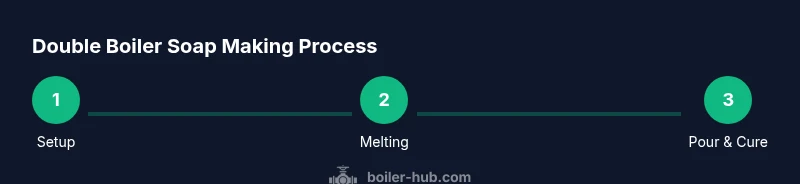
Estimated time: Active: 60-120 minutes; curing: 4-6 weeks for cold-process (melt-and-pour does not require curing)
- 1
Set up the workspace and equipment
Clear a clean, ventilated area. Place the bottom pot with a small amount of water on the stove and bring it to a gentle simmer. Position the top vessel directly above the simmering water and prepare your molds.
Tip: Use a silicone mat to keep the top vessel stable and prevent slipping. - 2
Weigh oils and butters
Weigh your solid fats and liquids accurately on a digital scale. Have your liquid oils ready in a separate container so you can add them to the melted solids as needed.
Tip: Tare the scale with the empty bowl on it for precise measurements. - 3
Melt solid oils in the double boiler
Place solid fats in the top vessel and allow them to melt gradually over medium heat. Stir occasionally to ensure even melting and prevent scorching at the bottom.
Tip: Keep the temperature gentle and avoid boiling the water in the bottom pot. - 4
Prepare lye solution (if using cold-process)
Dissolve lye in distilled water in a well-ventilated area. Allow the solution to cool to a safe handling temperature before combining with oils.
Tip: Always add lye to water, never water to lye for safety. - 5
Combine oils and lye solution at safe temps
When both components are within a compatible temperature range, slowly pour the lye solution into the melted oils and mix with a whisk or immersion blender until trace forms.
Tip: Avoid rushing the blend; steady, deliberate mixing yields a smooth emulsion. - 6
Add fragrance and colorants
Add fragrance oils and colorants once you reach a light-to-medium trace. Stir thoroughly to distribute evenly and minimize streaks.
Tip: Test a small portion first if using new fragrance or colorant. - 7
Pour into molds
Pour the soap mixture evenly into molds. Tap gently to remove air pockets and ensure a flat surface.
Tip: Use a spatula to scrape the sides so you don’t waste product. - 8
Initial setting and insulation
Cover molds and keep in a warm, draft-free area for 24-48 hours to complete saponification and harden slightly.
Tip: Wrap molds in a towel to retain heat and promote steady setting. - 9
Unmold, cut, and cure (cold-process)
Unmold bars, cut into uniform sizes, and place on a rack for curing in a well-ventilated space for 4-6 weeks. For melt-and-pour, curing is not required, but allow bars to rest before use.
Tip: Turn bars every few days to promote even drying. - 10
Store finished bars
Store cured bars in a dry, ventilated area, away from humidity. Label batches with ingredients and date for traceability.
Tip: Keep out of direct sunlight to preserve fragrance and color.
Questions & Answers
What is the double boiler method in soap making?
It uses two stacked vessels to heat ingredients indirectly, reducing hotspots and allowing gentler, more even heating for soap bases and additives.
A double boiler uses two pots to heat ingredients gently for smooth soap bases.
Can I use a regular pot instead of a double boiler?
You can, but heat distribution may be uneven. A dedicated double boiler or a heat-safe bowl over simmering water provides more control.
A regular pot can work, but you'll have less control over heat.
Do I need lye for melt-and-pour soap making?
No. Melt-and-pour bases are already fully saponified. Lye is only required for traditional cold-process soap.
Melt-and-pour doesn't need lye; cold-process does.
How long does cold-process soap take to cure?
Typically four to six weeks in a well-ventilated area; humidity can affect drying time and hardness.
Most cold-process soaps cure for about 4 to 6 weeks.
What safety precautions should I take with lye?
Work in a ventilated space, wear PPE, and add lye to water very slowly; have baking soda handy for spills.
Wear gloves and goggles; add lye to water, never the other way around.
Can I mix fragrance with colorants in the same batch?
Yes, but follow recommended usage rates and test compatibility to avoid separation or scent fade.
You can combine fragrance and color, but test first and follow guidelines.
Watch Video
Key Points
- Plan and document each batch for consistency
- Use a double boiler to prevent scorching and achieve even heat
- Safety first: PPE and proper lye handling are essential
- Understand curing timelines for cold-process soaps
- Record your recipe tweaks to improve future batches