Does a Boiler Need to Be Cold for Service? A Practical Guide
Learn whether your boiler must be cold for service, safety considerations, and how to prepare. Boiler Hub explains temperature factors, pre-call steps, and what to expect during a professional inspection.


Does a boiler need to be cold for service? In most cases, technicians prefer a cooled system to safely diagnose leaks, pressure, and safety devices. If your boiler is reasonably cool to the touch, it’s a good time to schedule, but never delay emergency issues. This guide explains when temperature matters and how to prepare for service.
Why the temperature question matters for boiler service
Does boiler need to be cold for service? In practice, temperature matters for safety and accuracy. According to Boiler Hub, most licensed technicians prefer a cooled boiler to avoid hot surfaces and to ensure reliable diagnostics of pressure, leaks, and safety devices. If the boiler is still warm, a quick cooldown period is usually enough to proceed safely without delaying essential service. The main idea is to minimize burn risk during panel access while giving the tech stable conditions for testing. This means homeowners should plan service after normal shutdowns and residual heat has dissipated, typically within 1-2 hours of shutdown for a residential unit. In commercial or larger systems, cooldown times can be longer depending on boilers and piping. In sum, the goal is a safe, stable, and test-friendly temperature rather than absolute coldness.
Temperature considerations by boiler type
Boilers come in gas-fired, oil-fired, and electric variants, and each has unique temperature profiles during operation. Gas boilers often run hotter during intermittent demand, while electric boilers may heat more gradually. The test procedures used by technicians—checking pressure, heat exchanger integrity, venting, and lockout switches—are influenced by the temperature at which components are measured. For older cast-iron boilers, surface temperatures can stay high for longer, making early cooldown important. Modern modulating boilers manage temperatures with better safety controls, but even these benefit from being cold during inspection of safety valves and seals. In all cases, the underlying principle remains: a cooler, stable system reduces the risk of scalding and improves signal accuracy for diagnostics.
Safety first: preparing for a service visit
Before a service visit, ensure you have a safe, accessible workspace. Turn off power to the boiler at the circuit breaker and, if your manual allows, close the gas shut-off valve only if you know how to do so safely. Never attempt to disassemble pressure vessels or vent dampers yourself. Keep children and pets away from the boiler room, and ensure good lighting and ventilation. If you recently ran the boiler and suspect a burner or gas issue, inform the technician so they can plan appropriate safety steps. A cooled boiler is easier to handle and reduces the risk of burns when panels are opened. If you notice signs of leakage or unusual smells, contact a professional immediately rather than attempting home repairs.
What service technicians do and how temperature affects diagnostics
During a standard service, a licensed technician will inspect the boiler’s burner assembly, heat exchanger, pressure relief valve, expansion tank, and venting. Temperature plays a role in some diagnostics, such as rebound of pressure after shutdown, condensate flow, and the measurement of heat exchanger integrity when the system has cooled. While some checks require the system to be warm for certain tests, reliable readings often demand cooldown to near ambient temperature. The technician may also verify water hardness, system cleanliness, and presence of air in the lines, which are easier to assess when surfaces are not hot. The key is how the temperature affects the accuracy of measurements—not whether the boiler must be fully cold, but whether the conditions are safe and stable for testing.
Before you schedule: a pre-service checklist
Use this checklist to prepare for a boiler service appointment and avoid unnecessary delays. Confirm that you have the boiler model and serial number, instruction manual, and service history ready. Clear the area around the unit and ensure there is space for technicians to work. Note any symptoms such as strange noises, odors, frequent cycling, or water leaks. If you suspect a gas issue, evacuate and call the gas company or emergency services. Have your contact information and preferred appointment window on hand. Finally, ensure the space has adequate ventilation and the room temperature is stable enough to be comfortable for a short cooldown, not a prolonged wait.
Handling boilers in cold climates and waiting times
In cold climates, outdoor components can cause longer cooldown times and extended service switches. If the boiler has been idle in freezing temperatures, allow more time for the system to reach a stable ambient temperature before panel access. If your schedule is tight, discuss with the technician whether a preliminary inspection can occur while the unit is still warm but safe, or if you should arrange a follow-up session after initial cooling. The goal is to balance safety and diagnostic reliability, not to force a full cold start before every visit.
Common mistakes about temperature and service
- Assuming the boiler must be completely cold: partial cooldown is often sufficient and safer.
- Ignoring safety gear: always use protective gloves and eye protection when panels are opened.
- Delaying service because the unit is warm: many issues worsen with delay.
- Not communicating symptoms: leaks and odd odors should be reported before the visit.
- Attempting DIY checks on gas-fired systems: never tamper with shut-offs or burners.
After-service expectations: confirming proper operation
Once the service is complete, confirm that the technician demonstrates that the boiler operates normally, including ignition, burner cycling, pressure readings, and heat delivery. Ask for a written report or checklist detailing any parts replaced, tests performed, and recommended maintenance schedule. If a test shows a persistent leak or abnormal pressure, request immediate guidance. Finally, schedule a follow-up if you notice any recurring issues after the service.
Tools & Materials
- Service appointment with licensed technician(Ensure you have the exact boiler model and serial number handy)
- Owner's manual or model information(Helpful for reference during the visit)
- Thermal protective gear (gloves, eye protection)(Use when panels are opened; do not touch hot surfaces)
- Flashlight(For visibility in tight basement spaces)
- Non-contact infrared thermometer (optional)(Can help verify surface temperatures before service)
- Access to shutdown valves and clear space around boiler(Know how to reach shut-offs safely and keep area unobstructed)
Steps
Estimated time: 15-25 minutes
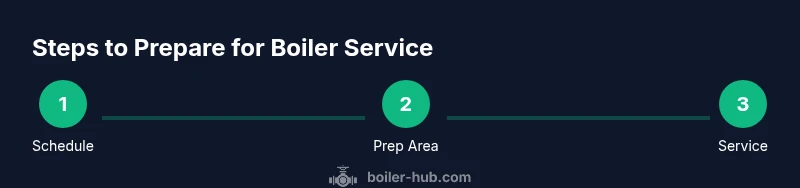
- 1
Schedule the service appointment
Contact a licensed technician and set a clear time window. Share symptoms, boiler type, and any recent operational issues so they can plan for safe access. This upfront coordination helps ensure cooldown considerations are respected.
Tip: Have your model/serial number ready to speed up authorization and diagnostics. - 2
Turn off power and gas safely
Follow the manufacturer’s shutdown procedure to power down the boiler and, if applicable, close the gas supply only if you know how to do so safely. Do not attempt unsafe disassembly or vent work yourself.
Tip: If you’re unsure, wait for the technician instead of risking a gas shut-off mistake. - 3
Clear the boiler area
Remove clutter and create a wide, unobstructed path to the boiler. Ensure adequate lighting so panels and valves can be accessed easily during the service.
Tip: Keep pets and kids away; a tidy workspace reduces trip hazards for the tech. - 4
Locate service panels and shut-offs
Know where the service panels and shut-off valves are located so you can point them out to the technician if needed. Do not open panels or adjust valves beyond what the manual allows.
Tip: If you can safely identify the main shut-off, mention it to the tech to streamline the check. - 5
Prepare symptom notes for discussion
Write down any unusual noises, smells, or performance changes, plus the times they occur. This helps the pro reproduce conditions during diagnostics without relying on memory.
Tip: Include recent energy bills or temperature settings that might influence cycling. - 6
Request a written service checklist
Ask the technician for a written report detailing tests performed, readings taken, and recommended maintenance actions. This creates a future reference and supports warranty considerations.
Tip: Keep a copy for your records and maintenance calendar. - 7
Post-service system validation
After the visit, observe ignition and heating cycles under supervision and verify that water temperature reaches setpoints. If anything seems off, contact the technician promptly for a follow-up visit.
Tip: Only perform tests recommended by the pro; avoid untrained experimentation. - 8
Follow-up maintenance planning
Schedule annual or biennial service based on boiler type and usage. Regular maintenance helps prevent surprises and keeps efficiency high.
Tip: Set reminders for next service to maintain consistent performance.
Questions & Answers
Does a boiler need to be cold for routine service?
Not always, but a cooled system often yields safer access and more accurate diagnostics for pressure, leaks, and safety devices. Some checks can be performed while warm, but safety is the priority.
A cooled boiler usually makes routine service safer and more accurate, but always follow the technician’s directions.
What should I do to prepare before the technician arrives?
Clear the area, note any symptoms, have model details ready, and ensure access to shut-offs if the technician requests. Do not attempt DIY repairs on gas-fired components.
Clear the area, note symptoms, and have model details ready; avoid DIY repairs on gas boilers.
Is it safe to check a boiler's temperature at home?
Only use non-contact tools to observe surface temperatures. Do not touch hot surfaces or open panels unless you’re trained to do so.
Only lightly check surface temperature with a non-contact tool; avoid touching hot parts.
What if my boiler is still warm? Should I wait?
If it’s within a safe cooldown window, you can proceed with the appointment. If you’re unsure about safety, contact the pro for guidance.
If it’s reasonably safe to wait a bit, proceed with the appointment and ask the technician if you’re unsure.
How long does a boiler service typically take?
Most standard inspections take about 60-90 minutes; longer time may be needed if parts require replacement or diagnostic extensions.
Most services take about an hour to an hour and a half, depending on conditions.
What should appear in a service report?
Look for tests performed, readings recorded, any parts replaced, and the recommended maintenance plan or future inspection dates.
The report should list tests done, readings, parts replaced, and a maintenance plan.
Watch Video
Key Points
- Aim for a safe, cooled boiler before service.
- Different boiler types affect cooldown needs and diagnostics.
- Prepare a clear workspace and symptom notes ahead of the visit.
- Request a written report and, if needed, a follow-up service.
- Always rely on licensed professionals for gas boiler work.